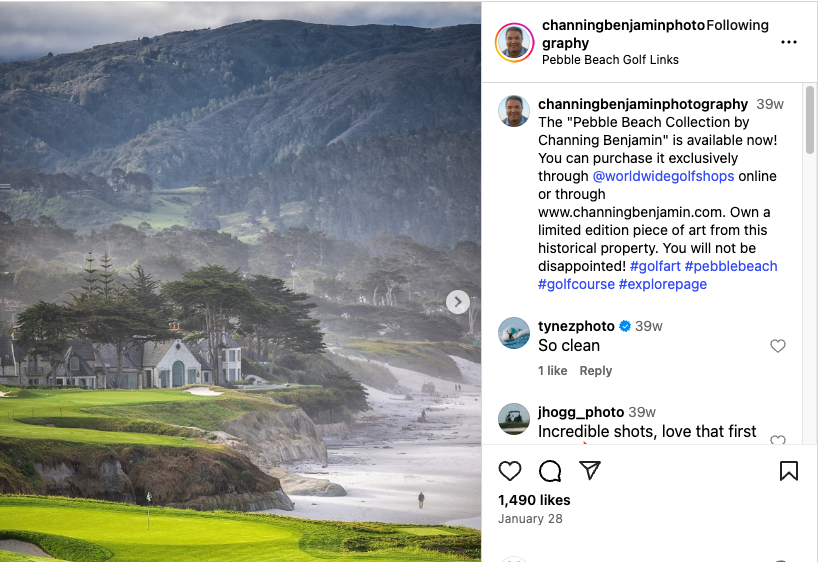
Golf photographer Channing Benjamin has shot over 200 of the world’s most iconic golf courses, including Pebble Beach Golf Links, the Los Angeles Country Club, Castle Pines Golf Club, The Country Club at Brookline, Ladera Golf Club, and more.
He’s also worked with some of the biggest names in golf, from Fred Couples and Gil Hanse, to Cobra Golf and Tom Doak.
But even with such an impressive resume, he’s never stopped pushing himself. One of the biggest things he’s done to increase the value of his work—and his income—is to start using drones.
“I knew I had to start using drones in my golf course work,” Channing says. “It wasn’t even a question. The technology, the perspective—it was too valuable to ignore.”
The impact on his business has been substantial.
“Adding drones increased my income by about 40%,” Channing says. “It elevated what I could offer and what I could charge—almost overnight.”
From Music to Golf Media—and Into the Sky
Before he was shooting golf courses, Channing spent 20 years behind the camera as a live concert video director in the music industry, working for artists like NSync, Pink, Phish, and Prince.
That career took him around the world, helping him build the creative chops and production skills that would define his next chapter in golf.
As a longtime golfer and fan of the game, Channing was always struck by the beauty of the courses he played. Looking for a new creative challenge, he decided to combine his passion for golf with his eye for visuals, and began photographing courses full-time.
“I wanted to show people the game the way I saw it,” he says. “The landscapes, the light, the movement—it’s a beautiful sport.”
When Channing picked up his first drone nearly a decade ago, the technology was still relatively new. But he immediately saw the potential.
“I was already capturing beautiful golf course landscapes from the ground,” he says. “But once I started flying, I realized how much more I could tell the story from above.”
At the time, few people in the golf world were using drones. Channing was ahead of the curve, integrating aerials into his packages and raising the bar for what golf photography could look like.
Elevating a Niche Business with Drones
Channing’s business, Channing Benjamin Photography and Benchmark Medias, specializes in golf course photography and videography. While he still does high-end DSLR work, drones are now a central part of his offerings.
Here’s what a typical shoot might include:
- Flyover footage for each hole
- Cinematic tracking shots of featured holes
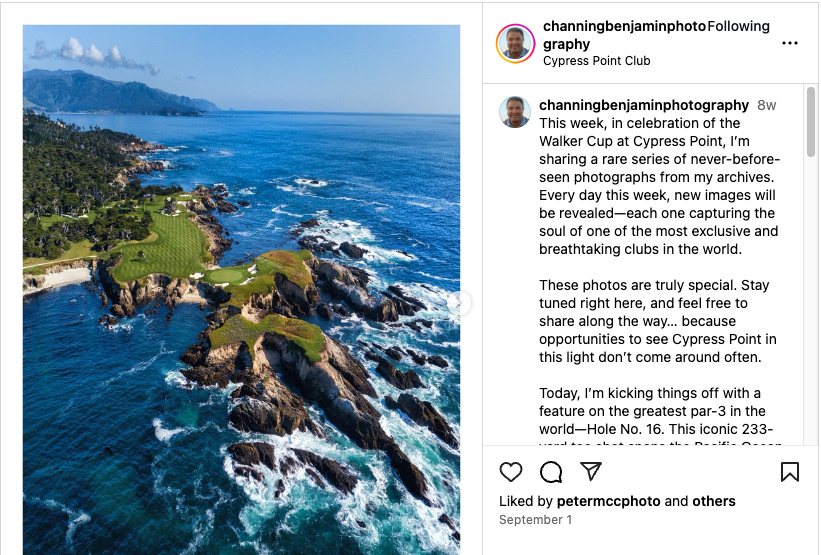
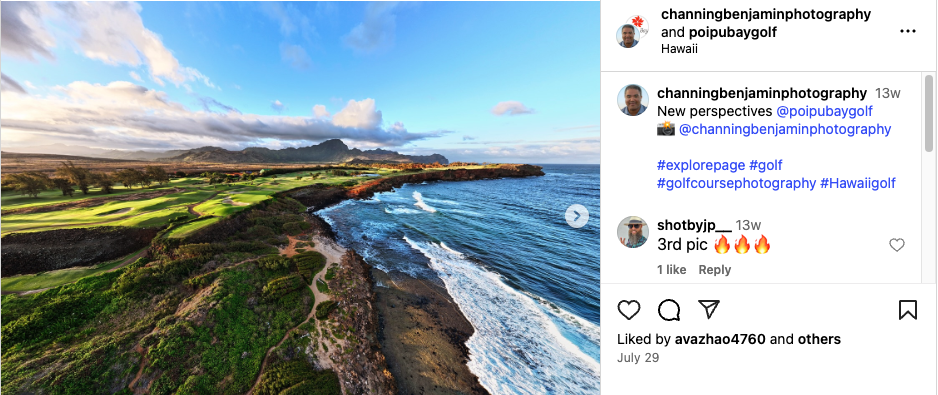
- Aerial stills for marketing, social, or course guides
- Visual documentation of renovations or restorations
- Promotional content for resorts, tournaments, and sponsors
What makes his work stand out is the way he combines his photography skills with deep golf knowledge.
“I know golf,” he says. “So when I shoot a hole, I’m not just getting a pretty picture. I’m thinking like a player. I’m capturing the shape of the shot, the hazards, the movement of the course. That’s the storytelling piece.”
His unique blend of expertise and artistry has earned him clients like Pebble Beach Resorts as an official licensee, as well as features in Golf Digest, Golf.com, and other major golf outlets.
Why Getting Certified Matters
Channing says getting Part 107-certified was essential for his business.
“I work with properties that are incredibly protective of their brand,” he says. “If I show up with a drone and no license, I’m out. But if I show up with my Part 107, it changes the conversation. I’m a professional. They take me seriously.”
When you’re flying drones over top-tier resorts and PGA-level venues, that level of professionalism isn’t optional. It’s essential.
But getting certified wasn’t a straight path. Channing actually failed the Part 107 test the first time around, after trying to prep on his own. That’s when a fellow drone pilot told him about Drone Pilot Ground School.
He signed up for the course, and it was smooth sailing from there.
“After going through DPGS, I was much better prepared,” he says. “It gave me the confidence I needed, and I passed easily the second time.”
Channing’s Advice: Don’t Wait
With years of experience and hundreds of golf courses under his belt, Channing’s biggest piece of advice is simple: start now.
If you want to work for yourself with drones, or as a creative in some other avenue, don’t wait—go ahead and dive in.
“People hesitate because they think drone work is too technical, or they’re afraid of the FAA test,” he says. “But it’s not that hard once you get started—and it opens up so many doors.”
Since launching his business, Channing has used drone media to elevate his work, build long-term relationships with some of the most recognizable courses in the world, and open up new revenue streams—including brand partnerships, video production work, and real estate shoots tied to golf communities.
For those just getting started in drone photography, Channing’s advice is simple: get certified, get out there, and start shooting. Don’t wait until you feel ready.
“You don’t need a huge portfolio to start,” he says. “You need vision, professionalism, and the willingness to learn. The rest will come.”
And there’s one more thing he emphasizes: don’t go it alone.
Channing credits much of his success to the relationships he’s built in the industry, both online and in person. For him, mentorship and collaboration aren’t just side benefits of the job. They’re essential to building a sustainable career in creative work.
Channing encourages new drone pilots and photographers to network intentionally—reach out to people whose work you admire, join communities, attend events, and build real connections.
“You never know who’s going to open a door for you—or who you might be able to help down the road,” he says. “Some of my biggest opportunities came through relationships I never could have planned for.”