October 3, 2025

Drone Business 101: An Introductory Guide

Want to start a drone business?

You’ve come to the right place.

Today, drones are used in a range of industries—from real estate marketing to infrastructure inspections—and the demand for qualified drone pilots has never been higher.

So if you’re thinking about launching your own drone business, this may be the best time ever to get started.

Why?

Because right now we’re seeing:

  • Lower equipment costs
  • Clear FAA regulations, with expanding FAA operations on the horizon for flying Beyond Visual Line of Sight (BVLOS)
  • Growing drone applications across a swath of industries, leading to more and more drone jobs

In this in-depth guide to starting and growing a drone business we cover startup costs, the top drone business ideas, how to start a drone business, case studies, and more.

Here’s a menu in case you’d like to jump around:

Drone Business Ideas for 2025

There are so many different ways to make money as a drone pilot that the amount of options can be overwhelming.

Do you get into aerial photography and videography from the sky? Or do you offer inspection services?

A good rule of thumb is to choose one niche, then expand when you have repeatable work and a clear value proposition.

Or just stick to that first niche, but become an in-depth expert. As you’ll see in the case studies section, some of the most successful drone businesses go deep on a single niche.

Two Big Areas for Starting a Drone Business

Here are two of the biggest spaces where drone jobs are plentiful, and continuing to grow.
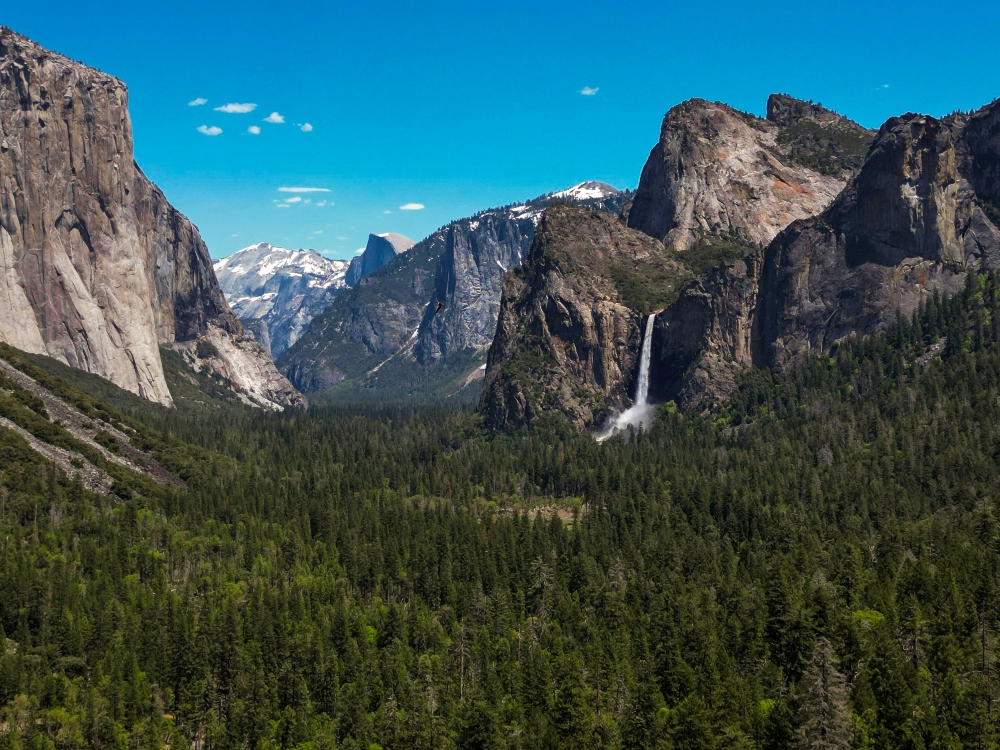
drone-business-photography

Image source

1. Drone Photography & Videography

This is the fastest path to work for many new operators. Typical clients include real estate agents, builders, wedding planners, tourism boards, and small businesses that need marketing visuals.

Differentiate with consistent framing, color work, and fast turnaround.

To start a drone photography business, begin by building a tight portfolio of local, paid examples, and a simple rate card.

  • Real estate marketing. Property listings, aerial neighborhood shots, and virtual tours.
  • Weddings and events. Highlight reels, outdoor ceremonies, and cinematic moments.
  • Tourism promotion. Destination flyovers, resort showcases, and city marketing assets.
  • Corporate and brand content. Promotional videos, ads, and social media campaigns.

2. Drone Mapping

Drone mapping serves construction, surveying, and environmental projects by turning aerial imagery into measurable data products.

Deliverables include orthomosaics, contour maps, and 3D terrain models used for planning, monitoring, and compliance.

  • Construction progress mapping. Regular site maps, volume calculations, and cut/fill checks.
  • Land surveying. Topographic maps, boundary confirmation, and site planning support.
  • Environmental monitoring. Habitat studies, erosion tracking, and disaster assessments.
  • Agriculture mapping. NDVI plant health indices, stand counts, and irrigation analysis.

12 Drone Business Ideas

Here are twelve ideas for drone businesses you could consider starting. (Note that some of these require almost no skill while others require deep training and established expertise.)

1. Real estate photo/video

Listing photos, cinematic walk-throughs, and neighborhood b-roll.

Skill level: Beginner. Requires Part 107 certification and basic photo/video skills, but can be learned quickly with practice.

2. Construction progress mapping

Orthomosaics, cut/fill checks, and stakeholder reports.

Skill level: Intermediate. Requires photogrammetry software knowledge, flight planning, and good data management.

3. Roof and façade inspections

Thermal scans, moisture detection, and maintenance documentation.

Skill level: Intermediate to advanced. Requires training in thermal imaging, inspection workflows, and safety compliance.

4. Marketing content production

Brand films, destination tourism reels, and social assets.

Skill level: Beginner to intermediate. Strong storytelling and editing skills are needed in addition to drone piloting.

5. Agriculture mapping

Stand counts, plant health indices, and variable-rate insights.

Skill level: Intermediate. Requires multispectral or NDVI workflows and knowledge of ag data interpretation.

6. Agricultural spraying

Drones applying pesticides or fertilizers where regulations permit.

Skill level: Advanced. Requires specialized spraying drones, regulatory compliance, and agronomic knowledge.

7. Utilities & infrastructure inspections

Towers, lines, substations, bridges, and stacks.

Skill level: Advanced. Requires safety training, specialized sensors, and experience working in industrial environments.

8. 3D modeling & reality capture

Photogrammetry and LiDAR processing for BIM and as-builts.

Skill level: Advanced. Requires mastery of mapping software, data processing, and 3D modeling workflows.

9. Thermal inspections

Solar PV arrays, building envelope, and mechanical diagnostics.

Skill level: Intermediate to advanced. Requires a thermal payload, training in thermography, and solid data interpretation.

10. Stock media & licensing

Regional aerial libraries for agencies and broadcasters.

Skill level: Beginner. Requires a strong eye for composition and an understanding of media licensing.

11. Drone light shows

Fleet choreography for festivals, holidays, and corporate events.

Skill level: Advanced. Requires fleet management, show-control software, and strict compliance with local authorities.

12. FPV cinematic filming

Action sports, commercials, and unique brand storytelling.

Skill level: Advanced. Requires advanced piloting skills, custom FPV rigs, and strong post-production capabilities.

Drone Business Startup Costs

Startup budgets are flexible.

You can launch lean and upgrade later, or invest up front if your niche demands specialized sensors or a fleet—and you can afford it, of course.

To ballpark your potential costs, most drone pilots spend around $2,500–$10,000 to launch a drone photography business, $8,000–$25,000 for mapping or industrial inspection businesses, and $75,000–$250,000+ for a small drone light show operation.
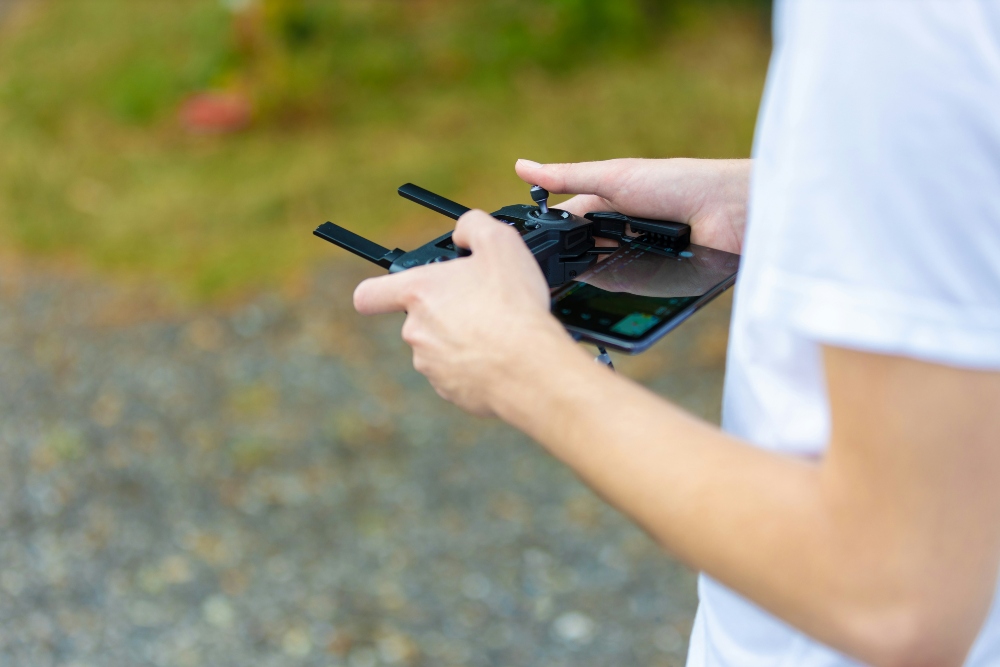
drone-business-startup-costs

Image source

These costs mainly go to hardware and software. The simpler your product, the simpler—and less expensive—your startup costs will be.

Equipment

  • Drones. Entry photo/video drones: $900–$2,500. Prosumer/enterprise units for mapping/inspections: $3,500–$9,000.
  • Sensors & payloads. Thermal: $1,500–$6,000. RTK/PPK capability: $600–$3,000 (integrated or add-on). FPV/cinema rigs: $700–$2,500.
  • Accessories. Batteries, ND filters, chargers, props, hard cases: $300–$1,200.
  • Computing & software. Editing/processing laptop upgrades: $800–$2,000. Photogrammetry/CAD: Free–$300+/month.

Insurance & Licensing

  • FAA Part 107 exam. $175 per attempt.
  • FAA Part 107 test prep. $299 with Drone Pilot Ground School.
  • Liability insurance. $450–$1,200/year for $1M coverage (market and limits vary).
  • Hull insurance. 6–10% of insured equipment value per year (optional but recommended). Learn more about drone insurance.

Business Setup

  • Entity formation (LLC or similar). $50–$500+ depending on state fees.
  • Contracts. Templates or attorney review: $0–$800.
  • Accounting & tools. Bookkeeping, invoicing, CRM: $0–$60/month to start.

Marketing & Sales

  • Website & domain. $100–$400 initial (domain, hosting, theme/plugins).
  • Branding. Logo, basic kit, proposal templates: $0–$600.
  • Ads & directories. Test budget for search/social or industry listings: $150–$750/month (optional).

Training & Ongoing Costs

  • Skill development. Courses for mapping, thermography, or FPV: $200–$1,500.
  • Maintenance & consumables. Props, batteries, firmware time, calibration targets: $150–$600/year.
  • Travel. Mileage, per diem, site PPE: variable by project.

Cost Comparisons by Model

Drone photography business: a lean kit, basic insurance, a simple site, and modest marketing get you live fast. Upgrades are easy once revenue starts.

Industrial mapping/inspections: higher up-front spend for RTK, thermal, training, and processing software—balanced by higher day rates and larger contracts.

Drone light shows: capital-intensive due to fleet size, show-control software, spares, rehearsals, and compliance planning. Strong margins once booked but longer sales cycles.

Typical Ranges by Niche

  • Drone photography business: $2,500–$10,000 all-in to launch.
  • Construction mapping / surveying support: $8,000–$18,000 starter RTK setup; $12,000–$25,000 with advanced software and GNSS base.
  • Industrial/thermal inspections: $7,500–$20,000 depending on thermal payload and training.
  • Drone light show business: $75,000–$250,000+ for a small fleet, control system, spares, and permits.

How to Start a Drone Business

Turn your idea into a real company with a simple, repeatable process.

Start small, specialize, and build systems you can scale.

Step 1. Get Your FAA Part 107 License

You must hold an FAA Part 107 Remote Pilot Certificate to fly commercially in the U.S.

[Use our test prep course Drone Pilot Ground School to help you prepare.]

Passing Part 107 signals professionalism to clients and unlocks insurance and enterprise work.

  • Register for the exam and create an IACRA account for your certificate.
  • Use reputable study materials and take multiple practice tests.
  • After passing, complete your TSA background check and print your temporary certificate.

Step 2. Choose Your Niche and Define Services

Specialization wins early. Pick one lane where you can deliver consistent results.

Align your niche with local demand and your skills.

  • Photography/videography for real estate, events, or tourism.
  • Mapping for construction and land development.
  • Inspections for roofs, solar, utilities, and facilities.
  • Light shows or cinematic FPV for brands and venues.

Step 3. Create a Drone Business Plan

A lean plan keeps you focused and prevents scope creep.

Define what you sell, who you serve, how you price, and how you’ll acquire customers.

  • Services. Deliverables, turnaround times, SLAs.
  • Target market. Ideal customer profile and local demand signals.
  • Pricing. Day rate, per-deliverable, or subscription/retainer.
  • Financials. Startup budget, monthly expenses, break-even point.
  • Marketing. Channels, partnerships, and a simple content plan.

Step 4 Register Your Business and Handle Legal Requirements

Form a legal entity, get an EIN, and set up a business bank account to separate finances.

Do I need an LLC for a drone business? You don’t need an LLC to start, but many owners choose one for liability protection and simple pass-through taxation.

Sole proprietorship is the lightest lift. An LLC adds protection and credibility. Consult a CPA or attorney for your situation.

  • Choose entity type (sole prop, LLC, or corporation) and register in your state.
  • Obtain an EIN and any local business licenses.
  • Draft basic contracts: service agreement, liability waiver, and payment terms.

Step 5. Acquire Equipment and Insurance

Match your kit to your niche and budget. Start lean, upgrade as revenue grows.

  • Core kit. Reliable drone, extra batteries, ND filters, smart controller, hard case.
  • Specialized gear. Thermal sensor for inspections, RTK for mapping, FPV rig for cine work.
  • Insurance. General liability and hull. Many clients require proof of coverage.
  • Costs. Expect a modest starter setup for a photography business and higher costs for mapping/industrial work. We break down startup costs in the next section.

Step 6. Build a Portfolio and Online Presence

Show, don’t tell. A tight portfolio beats a long resume.

  • Produce 5–8 polished, paid examples that match your target services.
  • Launch a simple website with clear offers, pricing ranges, and calls to action.
  • Collect testimonials, before/after examples, and case snippets.
  • Set up Google Business Profile for local discovery and reviews.

Step 7. Start Marketing and Networking

Lead flow starts with outreach and partnerships. Keep it consistent and measurable.

  • Local outreach. Email and call realtors, contractors, roofers, and property managers.
  • Partnerships. Team with agencies, surveyors, and GC firms for recurring work.
  • Directories. List in industry marketplaces and vendor lists your clients use.
  • Ads and content. Test small-budget search ads and publish useful local guides.
  • Follow-up. Use a simple CRM and quote templates to speed response times.

Is a Drone Business Profitable?

Short answer: Yes—when you choose a focused niche, price for value, and keep your schedule consistently booked.

Profitability varies by service type, market, and utilization. Creative work has lower barriers and rates; industrial work pays more but costs more to enter.
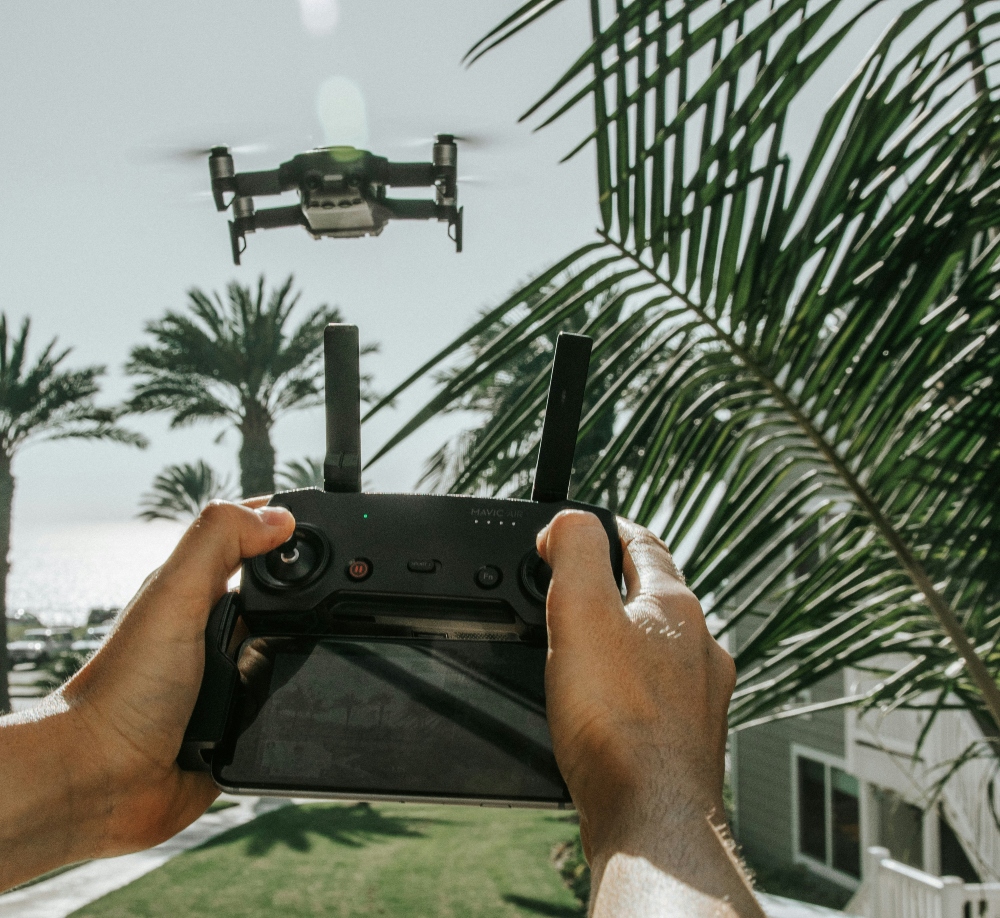
drone-business-profitability

Image source

Profit Margins and Revenue Potential

Day rates and project fees span a wide range. Entry photography often starts at a few hundred dollars per job, while industrial work can reach a few thousand dollars per day.

Recurring contracts, retainers, and bundled deliverables improve predictability and margins.

  • Drone photography business: $200–$600 per shoot (real estate, events); $600–$1,200 day rates for commercial content.
  • Construction mapping: $800–$2,000 per billable day; multi-week progress programs scale higher.
  • Roof/solar/thermal inspections: $300–$1,200 per site; $1,000–$3,000 per day for larger portfolios.
  • Utilities & infrastructure inspections: $1,500–$4,000 per day depending on sensor and site risk.
  • Drone light shows: ~$15,000–$150,000+ per event based on fleet size and choreography.

Factors Affecting Profitability

  • Utilization: Booked days per month drive outcomes more than any single rate.
  • Niche & specialization: RTK mapping, thermography, or confined-space skills command premiums.
  • Pricing model: Day rate vs per-deliverable vs retainer changes margins and cash flow.
  • Ops efficiency: Battery strategy, checklists, and fast post-processing reduce cost per job.
  • Client mix: Repeat clients and programs beat one-off gigs for stability and upsell.
  • Overhead: Insurance, software, travel, and crew add up—price to cover them.
  • Risk & compliance: Safety planning and documentation win higher-value work and reduce rework.
  • Weather & cancellations: Clear terms and deposits protect margins.

Real-World Examples (Scenarios)

1. Solo Real Estate Shooter

8 shoots/week at $250–$400 each over 4 weeks equals $8,000–$12,800 top-line per month. Lean overhead and fast turnaround matter.

2. Small Mapping Provider

6–8 billable days/month at $1,200–$2,000/day equals $7,200–$16,000 top-line, plus processing fees. Higher startup costs but better rates.

3. Drone Light Show Operator

2 shows/month at $25,000–$60,000 each equals $50,000–$120,000 top-line. Capital, staffing, and permitting are significant.

Drone Business Case Studies: Real Pilots Making It Happen

Here are stories from Drone Pilot Ground School students who built real businesses, including how they started, what they offer, and where they are today.

Channing Benjamin | Golf Course Drone Photography

Channing spent two decades directing live concert video before shifting to golf photography, drawn by the challenge of showing courses the way players experience them. When he added drones, his creative range expanded and clients noticed immediately.

About his drones business: Channing specializes in premium golf media, including aerial stills, flyovers, cinematic tracking shots, and renovation documentation for elite courses and resorts. His deep knowledge of golf shapes every shot, elevating storytelling and client value.

“After going through Drone Pilot Ground School, I was much better prepared for the Part 107 test. It gave me the confidence I needed, and I passed easily.”

– Channing Benjamin, Founder of Benchmark Medias

How the business is doing: Though he didn’t share specific numbers, Channing reports that drones boosted his income by about 40% and helped him win marquee clients and features.

Read the full case study

4Blades Digital | Construction Documentation & Mapping

View this post on Instagram

A post shared by 4Blades Digital Media (@4blades_digital)

Calvin Ludwig was a construction project manager who received a drone as a gift, shot a few sites, and realized the value of systematic aerial documentation for field and marketing teams.

He earned his Part 107 by studying with Drone Pilot Ground School, passing the test on his first attempt.

About his drones business: 4Blades operates like a construction subcontractor, delivering orthomosaics, aerial 360s, logistics visuals, progress documentation, and dual-use content for field crews and marketing. Responsiveness and construction literacy are core differentiators.

““I don’t compete on price. I compete on speed and quality.”

– Calvin Ludwig, Founder of 4Blades Digital

How the business is doing: The company consistently generates over a quarter-million dollars in annual revenue, making $20–$30K months. Calvin recently hired his first full-time employee, a strong sign that the company is going strong.

Read the full case study

JBR Life Photography | Real Estate Photography

Jonathon and Beth Russell moved to Maui to build a photography/videography business, then added drones to expand what they could offer.

Jonathon enrolled in Drone Pilot Ground School to prepare for the Part 107 test, and was among the first on Maui to get Part 107 certified when the new FAA requirement launched in 2016.

About their drone business: JBR Life Photography pairs lifestyle storytelling with aerials for real estate and destination clients, leaning on consultative sales and education about hiring FAA-certified professionals. The approach turned one-off shoots into a steady client base.

“My advice for young photographers is to make photography your minor, and business your major.”

– Jonathon Russell, Co-Founder of JBR Life Photography

How the business is doing: JBR grew from zero to 200+ property shoots annually within two years and now receives consistent inbound requests, sustaining the business without heavy outbound prospecting.

Read the full case study.

Drone Business FAQ

Here are answers to the most commonly asked questions about starting and growing a drone business.

Is a drone business profitable?

Yes, when you focus on a clear niche, keep your schedule booked, and price for value. Entry photography can be a few hundred dollars per shoot, while industrial work often pays four-figure day rates. Profitability depends on utilization, overhead, and client mix. Retainers and multi-site programs stabilize revenue and margins.

Do I need an LLC for a drone business?

You don’t need an LLC to start, but many owners choose one for liability protection and simple pass-through taxation. Sole proprietorship is the lightest lift; an LLC adds credibility and separates personal and business assets. State rules vary, so consult a CPA or attorney for your situation. Whichever you choose, set up a separate bank account and written contracts. Learn more about choosing between an LLC and a sole proprietorship here.

How much does it cost to start a drone business?

Most first-time operators spend $2,500–$10,000 to launch a drone photography business. Mapping and industrial inspections typically run $8,000–$25,000 due to sensors, software, and training. A small drone light show operation can require $75,000–$250,000+ for a fleet and control systems. Start lean, buy only what supports the first six months of work, and upgrade from revenue.

Are drones in high demand?

Yes. Real estate, construction, energy, utilities, and public safety all use aerial data and imagery. Demand favors providers who deliver safe operations, consistent quality, and clear documentation. Specialization (e.g., thermal, RTK mapping, confined-space) helps you stand out. Repeat clients and multi-site programs are reliable demand signals.

How to start a drone photography business?

Get your FAA Part 107 certificate, then build a tight portfolio of local, paid examples that match your offer. Publish a simple site with clear packages, turnaround times, and sample deliverables. Pitch realtors, builders, venues, and tourism boards; list in local directories and ask for reviews. Standardize your shot list, color workflow, and delivery templates to scale.

What drone should I buy to start?

Choose a reliable, prosumer model with strong image quality, obstacle sensing, and good flight time. For photo/video, a 1-inch (or larger) sensor and log profile are helpful; for mapping/inspections, consider RTK capability or thermal if your niche requires it. Start with one primary airframe, extra batteries, ND filters, and a hard case. Upgrade only when revenue justifies it.

Do I need drone insurance?

Most commercial clients will require liability coverage, commonly $1M per occurrence. Hull insurance protects your airframe and payload; consider it once your equipment value grows. Keep COIs ready to share, and document ops with checklists and maintenance logs to reduce risk. Some insurers offer per-flight policies, but annual policies are often more economical if you fly regularly.

How should I price my services?

Start with a minimum project fee and a day rate, then offer add-ons (extra locations, rush edits, licensed music, thermal scans). Price to cover overhead: insurance, software, travel, and post-production time—not just flight time. For recurring work, offer monthly or quarterly packages with clear SLAs. Track actual hours to refine pricing and protect margins.

How do I get my first clients?

Leverage your network and target buyers directly: realtors, builders, roofers, property managers, and marketing agencies. Share a tight portfolio, clear packages, and turnaround times; ask for reviews after each job. List on Google Business Profile and relevant directories, and partner with complementary businesses for referrals. Quick responses and clean deliverables lead to repeat work.