How far can a drone fly?
The answer depends on two key factors:
- Range. The farthest you can possibly fly a consumer drone is about 12 miles. The DJI Air 3 and the DJI Mini 4 Pro both have a flight range of 12.4 miles (20 kilometers), which is one of the longest flight ranges of any consumer drone out there.
- Legality. Although the Air 3 can fly over 12 miles, flying that far would probably be illegal, since you must maintain a visual line of sight (VLOS) with your drone according to the FAA’s Part 107 rules. In reality, the farthest you can probably fly your drone legally is only about 1-2 miles, since beyond that it becomes hard to see it.

The DJI Air 3
As you can see, answering the question how far can you fly a drone? is actually a little complicated, since it involves considerations about the type of drone and the location where you plan to fly, as well as other factors, including the weather.
In this guide, we’ll cover everything you need to know to understand how far you can fly a drone.
Here’s a menu in case you’d like to jump around:
- 5 Factors that Impact Drone Flight Range
- How Far Can Each Type of Drone Fly?
- How to Extend Your Drone’s Flight Range
- How Far Can You Fly a Drone—Legal and Safety Considerations
- How Far Can You Fly a Drone FAQ
5 Factors that Impact How Far a Drone Can Fly
Several interconnected factors impact how far a drone can fly from the controller.
While you might think that the battery and transmission range alone dictate a drone’s range, there are actually a few other factors to consider.
[Related read—Long Range Drones: A Comprehensive Guide for Drone Pilots]
Here they are:
1. Battery Life and Capacity
Of course, the drone’s battery life plays a big role in determining how far it can fly. You can only fly about half that amount of time away from you before you need to turn back—and you probably want to do less than half, to be safe.
2. Signal Range and Transmission Technology
The drone’s flight range isn’t just a matter of battery life—it also sets the limit for how far you can fly a drone from the controller.
Transmission technologies determine the maximum distance you can maintain a stable connection with your drone. While Wi-Fi offers convenience, it’s prone to interference and typically has a shorter range. RC systems, commonly used in professional drones, offer more stability and range, often reaching several kilometers under ideal conditions.
Signal interference from buildings, trees, or even other electronic devices can limit the effective range. For longer flights, it’s crucial to choose a drone with robust transmission technology and consider the environment you’ll be flying in.
3. Weight and Aerodynamics
The drone’s total weight, including any additional payloads like cameras or sensors, has a significant impact on its flight range. Heavier drones require more power to stay in the air, which drains the battery faster. Minimizing weight without compromising functionality is key to maximizing range.
Aerodynamics also play a crucial role. Drones with streamlined designs have less air resistance, letting them fly more efficiently and cover longer distances. On the other hand, bulky drones with poorly designed frames can struggle to maintain speed and stability, reducing their effective range.
4. Environmental Conditions
External factors like wind, temperature, and altitude can drastically alter a drone’s flight performance. Strong winds can force the drone to expend more energy to maintain its course, draining the battery faster. High altitudes can also reduce air density, which may affect the drone’s lift and propulsion.
Temperature extremes are another consideration. Cold weather can reduce battery efficiency, leading to shorter flights, while excessive heat can cause components to overheat, thus limiting a drone’s range.
5. Drone Type and Purpose
The type of drone you choose also plays a role in its flight range.
Consumer drones prioritize portability and ease of use, typically offering shorter ranges of 1 to 5 miles, while professional drones may have ranges of 10 miles or more.
Keep reading to learn more about how far you can fly different types of drones.
How Far Can Each Type of Drone Fly?
The flight range of a drone varies significantly depending on its type, which is typically defined by its intended use and technological capabilities.
Drone Flight Range by Category
| Category | Typical Flight Range | Popular Models | Use Cases |
|---|---|---|---|
| Consumer Drones | 1 – 5 miles (1.6 – 8 km) | DJI Mini 3 Pro, Autel EVO Lite+ | Recreational flying, casual photography, travel |
| Prosumer Drones | 3 – 10 miles (4.8 – 16 km) | DJI Mavic 3 Pro, Autel EVO Pro 2 V3 | Professional photography, real estate, mapping |
| Commercial Drones | 10+ miles (16+ km) | DJI Matrice 350 RTK, Parrot Anafi USA | Infrastructure inspection, search and rescue, surveying |
*Note: Actual flight ranges may vary depending on environmental conditions, signal interference, and battery performance. Always consult the manufacturer’s specifications and regulations before planning your flight.
[Related read: Drone Types and Uses: A Comprehensive Guide for Drone Pilots]
Consumer Drones
Consumer drones are designed for recreational use, offering features that make them easy to fly.
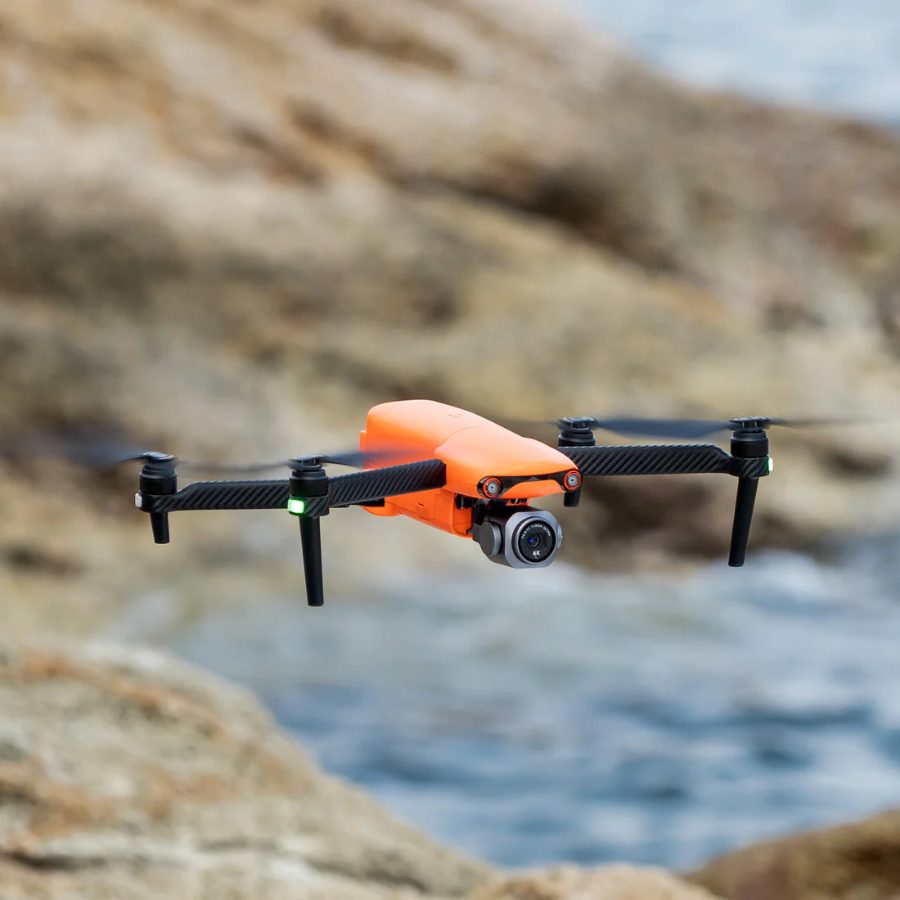
The Autel EVO Lite+
These drones generally have a flight range between 1 to 5 miles (1.6 to 8 kilometers). While this range is sufficient for casual photography and exploration, it may be limiting for users looking to capture footage over large areas or explore more remote locations.
These drones are ideal for users seeking a balance between cost, ease of use, and moderate range capabilities, making them perfect for beginners and casual flyers.
Prosumer Drones
Prosumer drones serve the more demanding needs of enthusiasts and semi-professionals who require enhanced performance, better camera systems, and extended flight ranges. Typically, these drones can cover distances of 3 to 10 miles (4.8 to 16 kilometers), thanks to more robust transmission systems and higher capacity batteries.
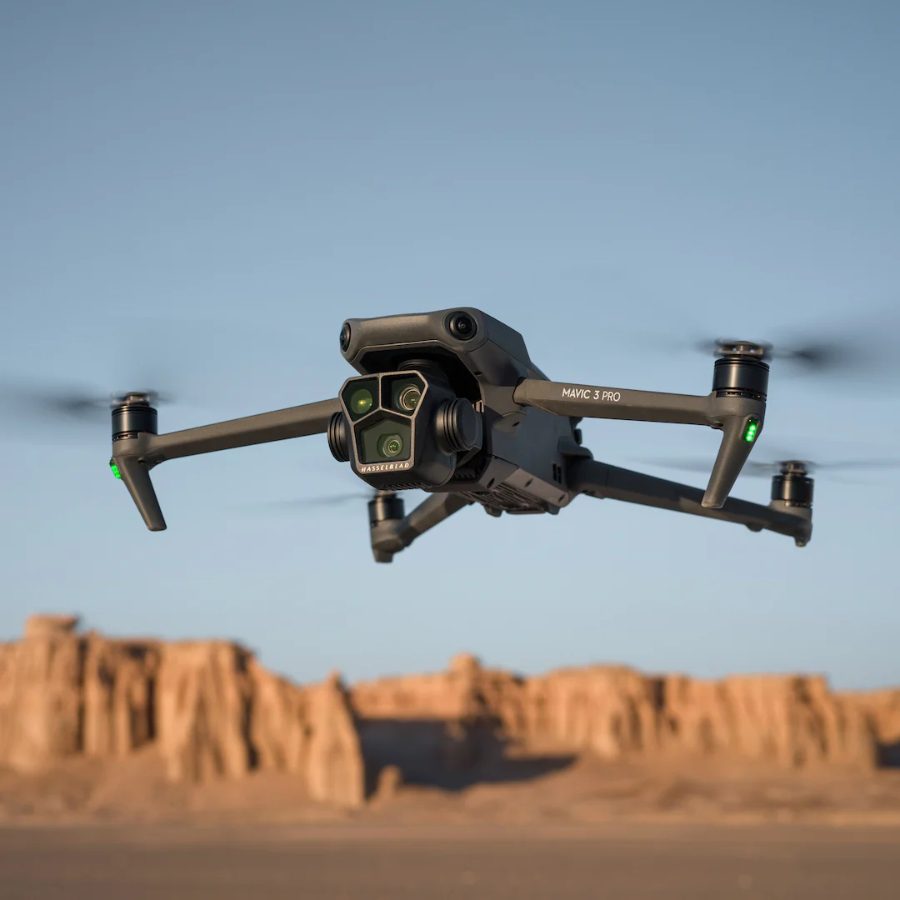
The DJI Mavic 3 Pro
Prosumer drones are good for pilots who require more advanced features for activities like professional photography, videography, as well as some commercial use cases like real estate inspections or drone mapping.
Commercial Drones
Commercial drones are built for specialized applications that demand not only extended range but also exceptional reliability and performance.
These drones can typically fly beyond 10 miles (16 kilometers) and are equipped with advanced navigation systems, high-capacity batteries, and robust transmission technologies to ensure stable operation over long distances.
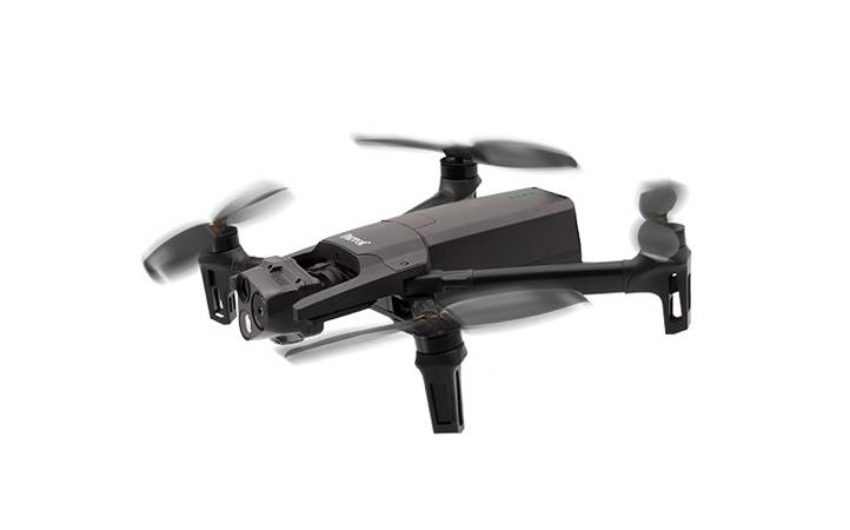
The Parrot ANAFI USA
Commercial drones are not only defined by their flight range but also by their ability to carry specialized payloads, including high-resolution cameras, LiDAR sensors, and thermal imaging systems, making them indispensable tools for a variety of industries.
Some commercial drones like the DJI FlyCart 30—called heavy lift drones or just big drones—are made to carry heavy payloads, and can carry dozens and even hundreds of pounds.
See our list of the top commercial drones on the market.
How to Extend Your Drone’s Flight Range
While every drone has its built-in limitations, there are several strategies you can use to push those boundaries.
In this section, we share practical ways to extend your drone’s flight range through battery management, signal enhancements, and optimized flight techniques.
Battery Upgrades and Management
One of the most straightforward ways to extend your drone’s range is by upgrading to a higher-capacity battery.
Batteries with higher milliampere-hour (mAh) ratings provide more energy, allowing your drone to stay airborne longer. However, it’s important to make sure that any battery upgrade is compatible with your drone model to avoid potential safety issues.
Beyond choosing the right battery, how you manage and maintain your drone’s batteries can also make a big impact on performance.
Here are some tips for optimal battery management:
- Avoid deep discharges. Regularly draining the battery below 20% can reduce its lifespan and efficiency. Aim to land your drone when the battery reaches around 30% to maintain health over time.
- Store batteries properly. Keep your batteries stored in a cool, dry place, ideally at a 50% charge level if they won’t be used for an extended period. This helps prevent degradation.
- Pre-flight warm-up. Cold batteries perform poorly, so if you’re flying in cold conditions, warm the battery to around 77°F (25°C) before takeoff. You can do this by running the drone for a few minutes on the ground or using a battery warmer.
Signal Boosters and Antenna Modifications
Signal strength is another critical factor affecting your drone’s effective range.
If you lose connection with your drone, it will typically initiate a return-to-home protocol, which may limit your ability to fully leverage its battery life and range.
Here are some tips for improving signal transmission:
- Signal boosters. Attachable signal boosters for your controller can amplify the transmission, reducing the chance of signal loss and allowing you to fly further. These devices are usually lightweight and easy to install, making them a convenient option for enhancing range.
- Antenna modifications. Upgrading your drone or controller’s antenna can also significantly improve signal quality. Directional antennas focus the signal strength in a specific direction, making them ideal for long-distance flights, whereas omnidirectional antennas provide better coverage in all directions but with shorter range.
- Avoid interference. When flying, try to stay away from areas with high levels of electromagnetic interference, such as urban environments with lots of Wi-Fi networks or power lines. This can help maintain a stronger and more stable connection.
Flight Techniques
How you fly your drone can also have an impact on its battery life, and thereby on its range.
Here are some tips to help:
- Smooth and steady flight patterns. Abrupt movements, rapid acceleration, and sudden stops can drain the battery quickly. Fly in smooth, controlled paths, and maintain a consistent speed to maximize efficiency.
- Fly higher. Flying at higher altitudes can reduce signal interference from obstacles like trees or buildings. However, make sure you remain within legal altitude limits (400 feet AGL) and maintain visual line-of-sight with your drone.
- Monitor wind conditions. Flying against strong winds requires more power, which reduces range. Plan your flight path to take advantage of tailwinds when flying long distances and avoid headwinds as much as possible.
- Optimize payload. Extra weight, such as added cameras or sensors, can shorten flight time. Remove unnecessary attachments when long range is your primary goal.
By combining these strategies, you can significantly extend your drone’s effective range, enabling longer and more ambitious flights.
In the next section, we’ll cover the legal and safety considerations you should be aware of when flying your drone at extended distances.
How Far Can You Fly a Drone—Legal and Safety Considerations
As we mentioned in the opening to this article, your drone can fly a lot farther than the law allows.
So when we’re talking about how far a drone can fly, it’s important to be aware of the legality around flight ranges so you can know what’s allowed—and what’s not.
[Related read: What Is the Difference Between Absolute and Relative Location?]
Ignoring these rules can lead to fines, loss of your drone, or even more severe consequences. Here, we’ll break down the key legal and safety considerations to keep in mind when planning long-distance flights.
Visual Line of Sight (VLOS
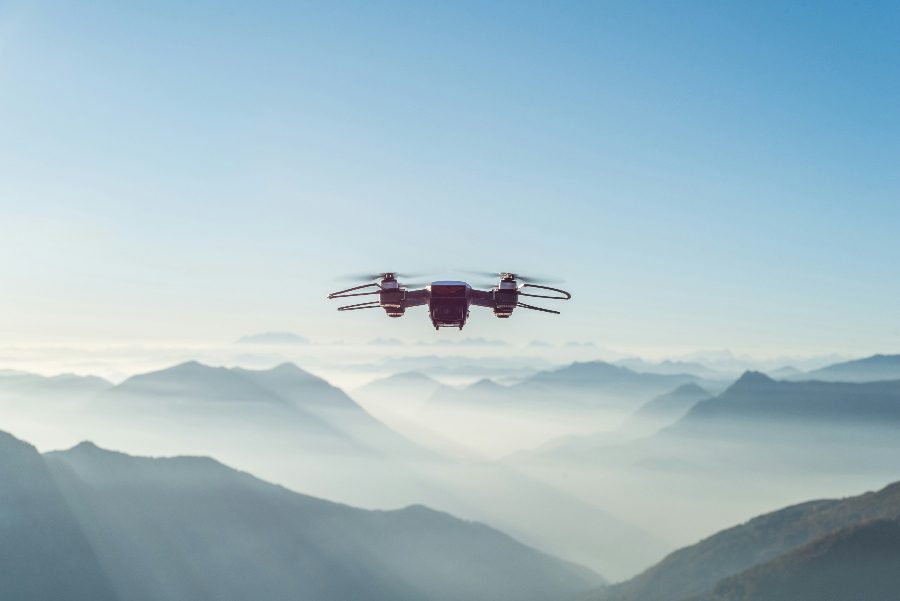
One of the FAA’s main restrictions on how far you can fly a drone is the requirement to keep your drone within Visual Line of Sight (VLOS) at all times.
This means that the operator must be able to see the drone unaided (i.e., without binoculars or similar devices) throughout the flight. While this may seem limiting, it’s a critical measure to prevent collisions and ensure control over the aircraft.
At the moment, the FAA is working on new rules that will potentially make it easier for drone pilots to fly beyond visual line of sight (BVLOS). The rule is called Part 108, and will be released for public comment by the end of 2024.
A note on flying FPV—while it may be tempting to extend your flight range by using an FPV system, it’s actually illegal to do this, even with a spotter. The VLOS requirement is that the pilot must be able to see the drone with their naked eye.
How High You Can Fly
In some cases, flying far can also mean flying high. For most recreational and commercial drone pilots, the maximum altitude is capped at 400 feet above ground level (AGL).
Flying above this height not only increases the risk of interfering with manned aircraft but also complicates maintaining visual contact. Exemptions can be obtained for specific commercial operations, but these require extensive documentation and approval from the FAA.
Safety Guidelines for Long-Range Flights
Flying beyond your drone’s typical range introduces some potential safety risks.
That’s why it’s important to keep safety top of mind by taking these steps:
- Always have a Return-to-Home (RTH) plan. Most modern drones come with an RTH feature that automatically guides the drone back to its takeoff point if the signal is lost or the battery is low. Make sure this function is activated and that the home point is correctly set before takeoff.
- Monitor battery levels closely. Keep a close eye on your battery percentage throughout the flight. Plan your flight path to allow ample time to return home with a comfortable buffer, accounting for wind and any additional power requirements.
- Use a spotter. If you’re using FPV or flying at distances where maintaining direct line of sight is challenging, have a spotter who can keep visual contact with the drone. This is not only a legal requirement in many cases but also a vital safety practice.
- Beware of signal interference. Signal interference can be caused by various factors, including buildings, trees, and electronic devices. Fly in open areas whenever possible, and be mindful of the potential for interference, especially when flying near urban environments or metal structures.
- Avoid flying over people and property. Long-range flights increase the risk of losing control, which can lead to crashes over populated areas. Always plan your flight path to avoid flying over people, vehicles, and structures.
How Far Can You Fly a Drone FAQ
Here are some of the most common questions related to how far you can fly a drone.
How far can you fly a drone?
The distance you can fly a drone depends on its type, battery life, and transmission technology. Consumer drones typically have a range of 1 to 5 miles (1.6 to 8 kilometers), while prosumer models can reach up to 10 miles (16 kilometers). Commercial drones, designed for specialized tasks, can often fly beyond 10 miles (16+ kilometers) under optimal conditions. However, most countries, including the U.S., require that drones remain within the operator’s visual line of sight (VLOS), which usually limits practical range to about 1 to 2 miles (1.6 to 3.2 kilometers) at the most.
What’s the longest distance a drone can fly?
The longest distance a drone can fly is typically achieved by specialized commercial drones with extended battery life and advanced transmission systems. Some models, such as the senseFly eBee X or the WingtraOne GEN II, can cover over 60 miles (97 kilometers) in a single flight with optimized settings and favorable conditions. These are usually fixed-wing drones used for long-range mapping and surveying missions.
What happens when a drone goes out of range?
If a drone goes out of range, it typically initiates a “Return-to-Home” (RTH) function, which guides it back to its takeoff point using GPS. If the drone loses both signal and GPS, it may hover in place, land, or follow a pre-set flight path, depending on its programming. It’s important to be aware of your drone’s RTH settings to prevent it from getting lost or crashing in unfamiliar territory.
How long can drones stay flying?
The flight time of a drone depends on its battery capacity, weight, and environmental conditions. Consumer drones usually have a flight time of 20 to 30 minutes, while prosumer models can stay airborne for up to 40 minutes. Advanced commercial drones, such as the DJI Matrice 350 RTK, can fly for up to 55 minutes on a single charge. Some experimental models using hybrid or solar power can remain airborne for several hours or even days under ideal conditions.
Can you fly a drone out of sight (BVLOS)?
Flying a drone out of sight is known as Beyond Visual Line of Sight (BVLOS) operation. While technically possible, it is regulated and typically requires special permissions or waivers from aviation authorities like the FAA in the United States. BVLOS operations are primarily conducted for commercial purposes, such as long-distance surveying, search and rescue, and infrastructure inspection.
How high can a drone fly?
Most consumer drones are limited to a maximum altitude of 400 feet (122 meters) above ground level by aviation regulations. This rule helps prevent interference with manned aircraft. Some commercial drones can fly higher, but this usually requires special permissions. In unrestricted airspace, drones have been tested to fly up to 10,000 feet (3,048 meters), but such operations are not typical or legal without appropriate clearance.
Can drones fly in strong winds?
While some drones are designed to handle moderate wind speeds, flying in strong winds can be challenging and potentially dangerous. Consumer drones can generally handle wind speeds of up to 15-20 mph (24-32 kph), while prosumer and commercial models can manage winds of up to 25-30 mph (40-48 kph). It’s important to monitor wind conditions and avoid flying in turbulent weather to maintain control and prevent crashes.
Can you extend a drone’s flight range?
Yes, you can extend a drone’s flight range by upgrading its battery to a higher capacity model, using signal boosters, and optimizing flight patterns. However, these modifications should be done cautiously and within the manufacturer’s specifications to avoid damaging the drone or voiding its warranty. It’s also important to consider legal restrictions on flight range and altitude in your area.
Can drones be used in bad weather?
Most consumer and prosumer drones are not designed to operate in adverse weather conditions such as rain, snow, or fog. Water and moisture can damage the drone’s electronic components, and visibility issues can disrupt navigation and signal transmission. Some commercial drones, like the DJI Matrice series, have weather-resistant features and can handle light rain and moderate winds, but it’s always best to check the drone’s specifications before flying in uncertain conditions.
[Related read: Waterproof Drones: What They Are + Best Options by Use Case.]
How do I know if my drone is within range?
Most modern drones provide real-time telemetry data, including distance from the pilot, through the controller or a connected app. You can monitor this information on your screen to ensure your drone remains within safe operating limits. Additionally, some drones have built-in warnings and automated Return-to-Home (RTH) functions that activate when the drone approaches its maximum range.
What should I do if I lose sight of my drone?
If you lose sight of your drone, remain calm and check your controller’s screen for real-time video feed and telemetry data. Use the Return-to-Home (RTH) function if your drone has it, and monitor its location and altitude on the map. Avoid pressing random controls, as this could worsen the situation. If your drone does not return or you cannot regain control, check the last known coordinates on your app to search for it safely.