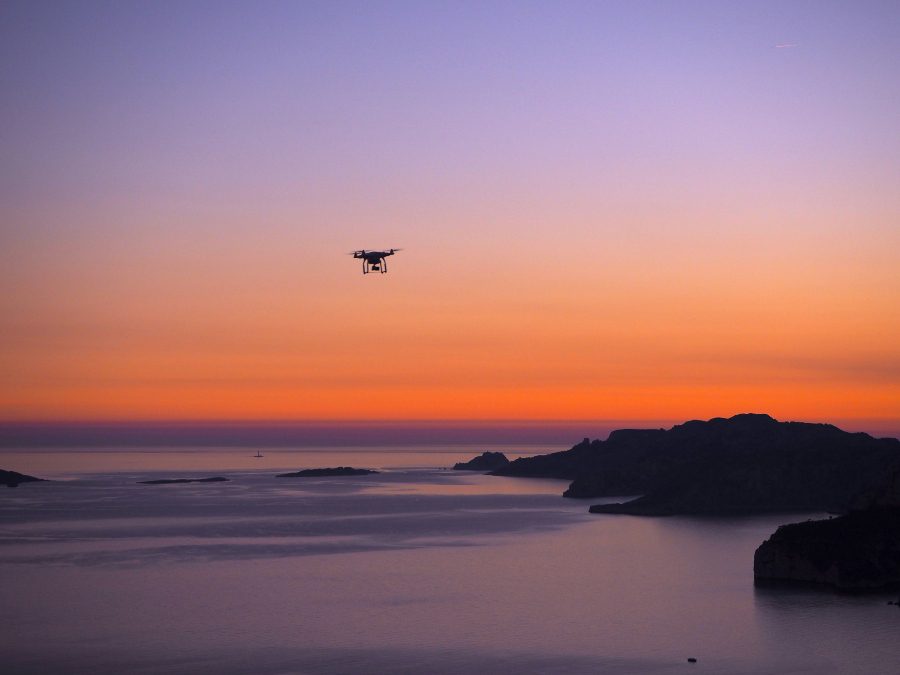
A long range drone is any drone designed to fly over extended distances.
A drone’s range is just a way to talk about how far it can fly. And it can have a big impact on its potential usefulness for certain types of work, including aerial photography, industrial inspections, or search and rescue missions.

In this guide to long range drones we’ll cover the best long range drones on the market, how commercial drone pilots are using long range drones in the field, and a lot more.
Here’s a table of contents in case you’d like to jump around:
- Best Long Range Drones in 2025
- A Brief History of Long Range Drones
- How Does Drone Range Work?
- Regulatory Considerations for Long Range Flying
- 13 Top Use Cases for Long Range Drones
- BVLOS and the Future of Long Range Flight
- Long Range Drone FAQ
Best Long Range Drones of 2025
Here are some of the top long-range drones out there, covering different price points and capabilities. Each drone is reviewed based on maximum range, flight time, camera quality, special features, and overall pros and cons.
1. DJI Mavic 3
The DJI Mavic 3 is one of the best long-range drones on the market, with a maximum range of 9.3 miles (15 kilometers) thanks to its OcuSync 3.0 transmission system.
The Mavic 3 offers up to 46 minutes of flight time, making it ideal for extended aerial photography sessions. It comes with a 20 MP camera with a 4/3″ CMOS sensor for shooting high-quality images and 5.1K video resolution.
- Pros: Long range, superior camera quality, extended flight time.
- Cons: Expensive, not ideal for beginners.
2. Autel Robotics EVO Lite+
The Autel EVO Lite+ is a versatile long-range drone that straddles the line between professional and enthusiast.
It features a maximum range of 7.5 miles (12 kilometers) and up to 40 minutes of flight time. The drone’s 50 MP camera supports 6K video, making it a powerful option for high-resolution content creation.
- Pros: High-resolution camera, long range, affordable compared to premium models.
- Cons: Limited third-party accessory support, occasional app connectivity issues.
3. DJI Mini 3 Pro
The DJI Mini 3 Pro is a compact and budget-friendly long-range drone, offering a maximum range of 7.5 miles (12 kilometers) with a flight time of up to 34 minutes. Its 1/1.3″ sensor provides 48 MP photos and 4K video. Weighing under 250 grams, it doesn’t require FAA registration, making it a convenient option for travelers.
- Pros: Lightweight, no registration needed, affordable.
- Cons: Limited in strong winds, not as robust as larger models.
4. Parrot Anafi USA
The Parrot Anafi USA is designed for professional use, especially in search and rescue or inspection tasks. It has a 2.5-mile (4 kilometer) range, 32-minute flight time, and a 32x zoom camera that allows for detailed surveillance and inspection.
- Pros: Rugged design, advanced zoom capabilities, ideal for inspections.
- Cons: Higher price, shorter range compared to other professional models.
A Brief History of Long Range Drones
Range has always been a top consideration in the development of drones. Throughout the evolution of drone technology, milestones marking improvements in range, battery life, and signal transmission have also had an impact on range.
[Related read: Drone Types and Uses: A Comprehensive Guide for Drone Pilots [New for 2025]]
Here is a timeline of key developments in long-range drone technology:
- 1940s–1960s. Early drone technology emerged during World War II and the Cold War, primarily for reconnaissance missions and target practice in military operations.
- 1980s. Military drones began incorporating advanced navigation systems and longer-range communication technology for surveillance purposes, paving the way for future advancements in the consumer market.
- 1990s. Defense drones such as the MQ-1 Predator were developed, capable of flying hundreds of miles for surveillance and combat missions. These innovations laid the groundwork for long-range capabilities in civilian drones.
- 2000s. The consumer drone market started to emerge, with companies like DJI introducing drones for hobbyists. Long-range capabilities were still limited due to technological constraints and regulatory concerns.
- 2010s. Breakthroughs in battery technology, GPS, and radio frequency transmission enabled consumer drones to achieve ranges exceeding several kilometers. DJI’s Phantom series became popular for long-range aerial photography and videography.
- 2015–2018. Consumer drones began to incorporate military-inspired technologies such as advanced obstacle avoidance and autonomous flight modes, enhancing safety for long-distance flying.
- 2020s. Drones like the DJI Mavic series and Autel EVO series offer ranges up to 9 miles and more. Innovations in communication protocols (e.g., OcuSync) and regulatory changes have continued to push the boundaries of how far drones can fly.

How Does Drone Range Work?
Drone range is determined by several technological factors, including signal transmission methods, onboard power management, and navigation systems. Understanding how these components work together is essential for maximizing a drone’s performance and range.
Here are the six main factors that impact a drone’s flight range:
1. Signal Transmission
The primary factor in determining a drone’s range is its signal transmission technology.
Drones use various methods to maintain communication between the drone and its remote controller:
- Radio Frequency (RF). Most drones rely on RF transmission in specific frequency bands (e.g., 2.4 GHz or 5.8 GHz) to send and receive signals. These frequencies can cover several kilometers, but range may be affected by interference from other electronic devices or physical obstructions.
- Wi-Fi. Some consumer drones use Wi-Fi for short-range communication. While cost-effective, Wi-Fi generally has a more limited range compared to dedicated RF transmission systems.
- OcuSync and Lightbridge. DJI developed proprietary technologies like OcuSync and Lightbridge, which use advanced digital transmission to extend drone range to over 10 kilometers. These systems include features like adaptive transmission and automatic switching between frequency bands to reduce interference.
2. Battery Life and Power Consumption
Power management plays a crucial role in determining how far a drone can fly.
Long-range drones need efficient batteries and power systems to sustain flight over greater distances. Power consumption varies depending on factors like speed, camera usage, and altitude, which drain the battery more quickly and reduce the effective range.
The latest advancements in lithium-polymer (LiPo) and lithium-ion (Li-ion) batteries have significantly improved flight times, which indirectly affects range by enabling the drone to cover more distance on a single charge.
3. Drone Weight and Aerodynamic Design
The weight and design of the drone impact its flight efficiency. Heavier drones require more power to stay in the air, leading to reduced range. Aerodynamic designs also help minimize drag and maximize the distance the drone can travel on a single charge.
4. Environmental Factors
External conditions such as weather, interference, and terrain can significantly impact a drone’s range. Signal interference from buildings or other electronic devices may reduce transmission distance, while strong winds or rain increase power consumption. Flying over varied terrain, such as mountains or dense forests, may also disrupt the signal.
5. Autonomous Flight Capabilities
Modern drones often come with autonomous flight capabilities, such as “Return to Home” (RTH) and automated waypoint navigation, which help extend operational range safely.
These features allow the drone to fly pre-programmed routes or automatically return if the signal is lost, maximizing effective range while reducing the risks of flying beyond the pilot’s control.
6. Regulatory Limitations
Legal restrictions on drone operations, such as line-of-sight rules or altitude limits, can also affect how far a drone is allowed to fly. In the U.S. you can’t fly your drone beyond visual line of sight, which limits its legal flight range to about 1-2 miles.
Regulatory Considerations for Long Range Flying
When flying long-range drones in the U.S., understanding the FAA’s regulations is crucial to staying compliant.
Here are the key things to know:
1. BVLOS Regulations
Flying drones BVLOS is generally restricted under the FAA’s Part 107 regulations, which require the operator to keep the drone within their visual line of sight. For long-distance drone flying, a waiver is needed to operate beyond these limits. Waivers are granted on a case-by-case basis, and pilots must demonstrate measures to maintain safe operation, such as using advanced detect-and-avoid technology or having a network of visual observers.
2. Maximum Altitude Restrictions
The FAA sets a maximum altitude of 400 feet above ground level for most drone operations.
While flying long-range drones, operators must comply with this altitude limit, except in cases where higher altitudes are specifically permitted with a waiver or during operations near tall structures.
3. Recreational vs. Commercial Drone Operations
Rules differ for recreational and commercial drone pilots.
Recreational pilots must follow the FAA’s safety guidelines and fly within visual line of sight, while commercial pilots may apply for waivers to operate BVLOS. Additionally, commercial pilots need to obtain a Part 107 Remote Pilot Certificate to legally conduct business using drones. Following these rules helps avoid fines and legal issues.
4. Obtaining Waivers for Long-Range Operations
For commercial pilots wishing to fly long-range drones you’ll need to secure a BVLOS waiver from the FAA.
The application is lengthy and it can take a long time to actually get a waiver. Successful applications include details on how the pilot will ensure safety during operations, such as using technology for collision avoidance and having contingency plans for emergencies. Demonstrating knowledge of the airspace and compliance with other regulations increases the chances of getting a waiver approved.
13 Top Use Cases for Long Range Drones
Despite current VLOS requirements—which we covered briefly above—recent advancements in Beyond Visual Line of Sight (BVLOS) technology are paving the way for expanded use cases.
And when the FAA finalizes its Part 108 rule for BVLOS operations, we can expect a significant surge in commercial applications that take full advantage of extended flight ranges.
Here are 13 of the main uses for long-range drones.
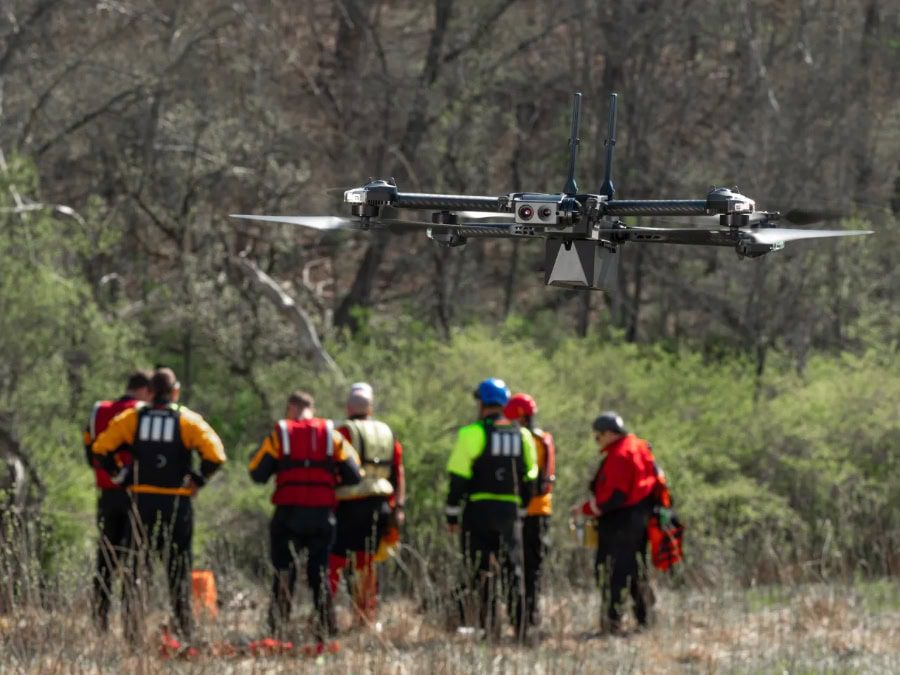
A Search and Rescue team prepares for a mission | Credit: Skydio
1. Search and Rescue Operations
Search and rescue (SAR) missions often occur in remote or dangerous environments where time is critical. Long-range drones equipped with advanced cameras and sensors can quickly scan large areas for signs of missing persons, providing real-time data to emergency teams and reaching places inaccessible by foot or vehicle.
SAR Long Range Use Cases
- Deploying thermal imaging drones to locate people lost in forests or mountainous regions.
- Providing aerial views of disaster zones to coordinate rescue efforts.
- Monitoring areas affected by floods or landslides for survivors.
2. Agricultural Surveys
Long-range agricultural drones enable efficient monitoring of vast farm areas, offering farmers a way to assess crop health and spot issues such as pest infestations or water stress. By flying beyond visual line-of-sight limits, drones can collect comprehensive data that helps optimize agricultural practices and increase yields.
Agricultural Long Range Use Cases
- Using multispectral sensors to monitor crop health across thousands of acres.
- Tracking irrigation system performance over large fields.
- Mapping nutrient deficiencies to guide precision agriculture efforts.
3. Infrastructure Inspection
Long-range drones are transforming the inspection of critical infrastructure, making it safer and more cost-effective. Drones equipped with specialized sensors can detect faults in power lines, pipelines, and railways over extended distances without the need for human inspectors to enter hazardous areas.
Infrastructure Inspection Long Range Use Cases
- Inspecting miles of power lines with thermal and high-resolution cameras.
- Monitoring remote pipelines for leaks or structural issues.
- Examining bridges, dams, and railways for maintenance needs.
4. Mapping and Surveying
Drones with long-range capabilities can cover vast areas quickly, creating high-resolution maps and 3D models. This technology is beneficial for land management, urban planning, and construction projects, allowing surveyors to map hazardous or difficult-to-access areas safely.
Mapping and Surveying Long Range Use Cases
- Generating 3D topographic models for construction site planning.
- Mapping large forested or mountainous regions for environmental monitoring.
- Conducting land surveys for real estate development or government projects.
5. Wildlife Monitoring and Conservation
Long-range drones help conservationists track animal populations, study habitats, and combat poaching. Their ability to observe wildlife from a distance minimizes human interference while still providing valuable data for research and preservation efforts.
Wildlife Monitoring Long Range Use Cases
- Tracking migratory patterns of endangered species over large areas.
- Monitoring poaching activities in protected reserves.
- Surveying animal habitats to assess the impact of climate change.
6. Disaster Management and Relief Efforts
Following natural disasters, long-range drones play a crucial role in damage assessment and relief coordination. They can quickly survey affected areas, providing real-time data to emergency responders and identifying locations in need of urgent assistance.
Disaster Management Long Range Use Cases
- Mapping disaster zones to help plan rescue operations.
- Assessing infrastructure damage after hurricanes, floods, or earthquakes.
- Delivering emergency supplies to isolated communities.
7. Environmental Monitoring
Long-range drones are essential tools for monitoring environmental changes, such as air quality, water pollution, and deforestation. Their ability to cover large and remote areas without human intervention makes them invaluable for scientists studying the impacts of climate change.
Environmental Monitoring Long Range Use Cases
- Measuring air pollution levels in industrial regions.
- Tracking deforestation in tropical rainforests.
- Surveying glaciers or coastal erosion for climate research.
8. Logistics and Package Delivery
While still limited by regulations, long-range drones have significant potential in logistics, enabling faster deliveries, especially to rural or hard-to-reach areas. These drones can cover large distances autonomously, promising a future of more efficient and flexible delivery options.
Logistics Long Range Use Cases
- Delivering medical supplies to remote or isolated locations.
- Transporting packages to rural communities where traditional delivery is slow.
- Providing rapid delivery services for time-sensitive goods, such as pharmaceuticals.
9. Marine Surveillance
Drones equipped with long-range capabilities are useful for monitoring coastal areas and marine activities. This includes detecting illegal fishing, monitoring wildlife, and ensuring the security of maritime borders.
Marine Surveillance Long Range Use Cases
- Monitoring commercial shipping routes for safety compliance.
- Tracking marine wildlife migrations and populations.
- Detecting illegal fishing activities in protected marine areas.
10. Emergency Response
In emergency situations, long-range drones can provide real-time aerial views and data, assisting first responders in evaluating risks and coordinating resources. They can operate in hazardous conditions where traditional methods are not viable.
Emergency Response Long Range Use Cases
- Surveying active fire zones to track the spread of wildfires.
- Monitoring chemical spills to assess the extent of environmental contamination.
- Providing real-time footage to emergency teams during hazardous situations.
11. Pipeline and Power Line Monitoring
Long-range drones are ideal for inspecting pipelines and power lines that span great distances, reducing the need for manual inspections. They can detect issues such as leaks, corrosion, or thermal anomalies, helping to prevent costly outages or environmental damage.
Pipeline and Power Line Monitoring Long Range Use Cases
- Flying over oil and gas pipelines to check for leaks.
- Inspecting electrical transmission lines for potential faults.
- Monitoring high-voltage towers for signs of wear or damage.
12. Surveying Hazardous Areas
Drones with extended range can safely survey hazardous or difficult-to-reach areas, providing data that would be dangerous for human inspectors to gather. This includes areas with toxic chemicals, active volcanoes, or unstable geological conditions.
Surveying Hazardous Areas Long Range Use Cases
- Mapping volcanic craters to study volcanic activity.
- Inspecting contaminated sites to assess environmental risks.
- Surveying landslide-prone areas for early warning detection.
13. Border Patrol and Security
Long-range drones assist in monitoring large border areas and enhancing security at sensitive sites. They can cover extensive perimeters to detect unauthorized activities and improve situational awareness for security personnel.
Border Patrol Long Range Use Cases
- Patrolling remote border regions to prevent illegal crossings.
- Monitoring critical infrastructure, such as oil refineries or power plants.
- Providing aerial surveillance for large public events or demonstrations.
BVLOS and the Future of Long Range Flight
The future of drone technology is rapidly evolving, with significant advancements on the horizon that promise to extend flight ranges and open up new possibilities for both recreational and commercial use.
From breakthroughs in battery technology to regulatory changes that will redefine airspace management, the next few years will be transformative for long range drones—and for the drone industry as a whole.
Below, we explore the key technological and regulatory trends that will shape the future of long-range drone operations.
1. The FAA’s Part 108 Rule for BVLOS
The regulatory landscape is set to undergo significant changes with the introduction of the FAA’s Part 108 rule, which will establish the framework for Beyond Visual Line of Sight (BVLOS) operations in the U.S.
This rule is expected to provide clearer guidelines and certification processes for long-range drone flights, enabling more widespread adoption of BVLOS operations for commercial purposes.
Part 108 will also introduce new requirements for drone pilots, such as additional training and certification, as well as specific technical standards for drones used in BVLOS operations. As these rules come into effect, we can expect a significant expansion in the scope and scale of drone missions, leading to new business models and operational efficiencies across multiple industries.
2. Advancements in Battery Technology
One of the biggest limitations to drone flight range is battery life. But research into new battery chemistries and configurations is set to revolutionize this aspect of drone performance.
Innovations such as solid-state batteries promise to offer significantly higher energy densities, increasing flight times without adding weight. Additionally, hybrid power systems that combine traditional batteries with solar or hydrogen fuel cells are being explored, potentially enabling drones to fly for several hours or even days without recharging.
These developments will drastically expand the operational capabilities of drones, making them more viable for long-range missions like environmental monitoring or infrastructure inspection.
3. Improved Signal Transmission Technologies
Signal transmission is another critical factor that limits how far a drone can fly.
Emerging technologies such as 5G and satellite-based communication systems are poised to enhance signal strength and stability, enabling reliable control and data transmission over greater distances. These advancements will be particularly beneficial for Beyond Visual Line of Sight (BVLOS) operations, where maintaining a strong, uninterrupted signal is essential for safety and mission success.
As these technologies become more widespread, we can expect drones to operate seamlessly over vast areas, even in challenging environments with complex terrain or high interference levels.
4. Integration of AI and Autonomous Flight
AI is playing an increasingly important role in drone technology, particularly in enhancing autonomous flight capabilities.
AI-driven flight control systems can optimize flight paths, manage power consumption more efficiently, and respond dynamically to changing environmental conditions, all of which contribute to extending flight range. Furthermore, AI enables advanced obstacle detection and avoidance, making long-range flights safer and more reliable, even in complex or unpredictable settings.
As AI continues to evolve, we can anticipate more autonomous, longer-range missions that require minimal human intervention, from automated agricultural surveys to complex search and rescue operations.
5. UTM and Advanced Air Traffic Management
Unmanned Traffic Management (UTM) systems are being developed to safely integrate drones into national airspace alongside manned aircraft.
These systems will enable real-time tracking and coordination of drones, particularly for BVLOS operations and flights over densely populated areas. Advanced UTM systems will allow for dynamic rerouting, altitude adjustments, and conflict resolution, ensuring that drones can safely navigate over long distances without risking collisions or violating airspace restrictions.
As UTM infrastructure becomes more sophisticated, it will support the expansion of drone operations across various sectors, including logistics, emergency response, and infrastructure monitoring.
Long Range Drone FAQ
Here are some of the most commonly asked questions about long range drones.
Which drone has the longest range?
The DJI Mavic 3 and DJI Air 3S are among the drones with the longest range, offering up to 9 miles (15 kilometers) or more in ideal conditions. The exact range depends on the transmission system, environmental factors, and local regulations.
How far can a consumer drone fly?
Budget-friendly consumer drones typically have a maximum range of .6 to 3 miles (1 to 5 kilometers). While this range may be shorter than premium models, it is suitable for casual flying, photography, and some hobbyist activities.
What type of drone is best for long-distance flying?
Long-distance flying requires drones equipped with high-quality transmission systems, strong batteries, and advanced navigation features. Drones like the DJI Mavic series and Autel EVO are popular choices for their superior range, camera quality, and intelligent flight modes.
Are there legal restrictions on long-range drone flying?
Yes, most countries, including the U.S., impose regulations on long-range drone flights. For instance, flying Beyond Visual Line of Sight (BVLOS) requires special permissions or waivers from the FAA in the U.S.
How can I maximize my drone’s flight range?
You can increase your drone’s range by upgrading antennas, using signal boosters, optimizing the flight path, and flying in open areas with minimal interference. Ensuring proper battery management also helps extend flight time.
What is the maximum drone distance without a license?
For recreational drone pilots, the FAA typically restricts flights to within Visual Line of Sight (VLOS), which is around 1 to 2 miles. BVLOS flights require a Part 107 certification or special authorization.
Do weather conditions affect drone range?
Yes, weather conditions like strong winds, rain, and extreme temperatures can impact a drone’s flight range and battery performance. Clear weather with minimal wind offers the best conditions for maximizing range.
What factors influence the actual flight range of a drone?
The actual flight range depends on factors such as signal strength, battery life, transmission system, drone weight, and environmental conditions. Obstacles and interference can also reduce the effective range.
Can I use a long-range drone for commercial purposes?
Yes, long-range drones can be used for commercial purposes like aerial photography, inspections, and mapping. However, commercial operators need a Part 107 certification and may require waivers for BVLOS operations.
What are some affordable long-range drones?
Some budget-friendly options for long-range drones include the Holy Stone HS720 and the Hubsan Zino. These drones offer decent flight range and camera quality at a more affordable price point than high-end models.
How do drone signal boosters work?
Drone signal boosters enhance the strength of the transmission signal between the drone and the remote controller. This can help increase the maximum flight range by reducing signal interference and dropouts.