Drone videography has revolutionized the way we capture and experience visual content. From breathtaking aerial shots in filmmaking to detailed inspections to aerial property tours in real estate, the versatility of drone video has made it a crucial tool across a range of industries. This guide explores what drone videography entails, its practical applications, and how mastering this skill can be both rewarding and profitable. Here’s a table of contents in case you’d like to jump around:
 In real estate, drones are used to create attractive aerial tours of properties, giving potential buyers a comprehensive view of the estate. This is particularly effective for showcasing large properties or those with stunning surroundings.
 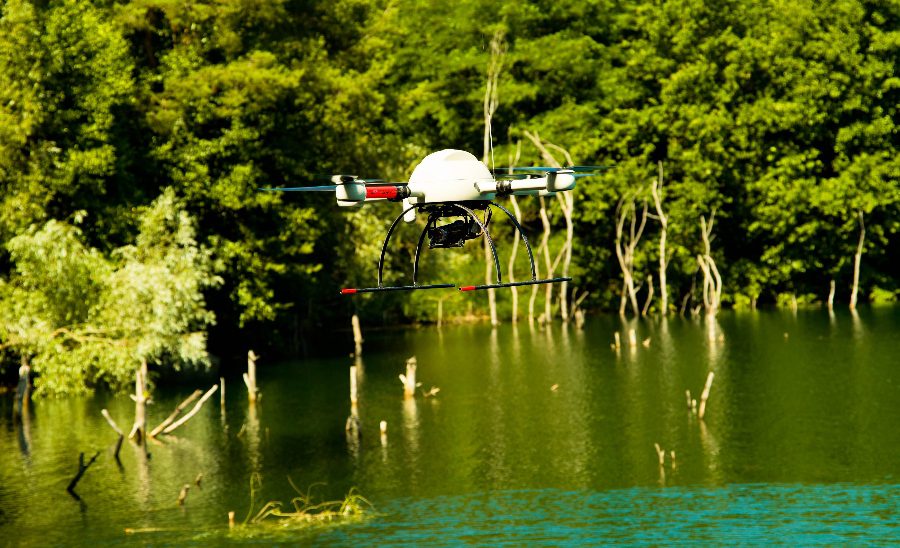 Drones play a crucial role in environmental conservation and wildlife monitoring, allowing videographers and researchers to document natural habitats and behaviors without intruding or causing stress to wildlife.
 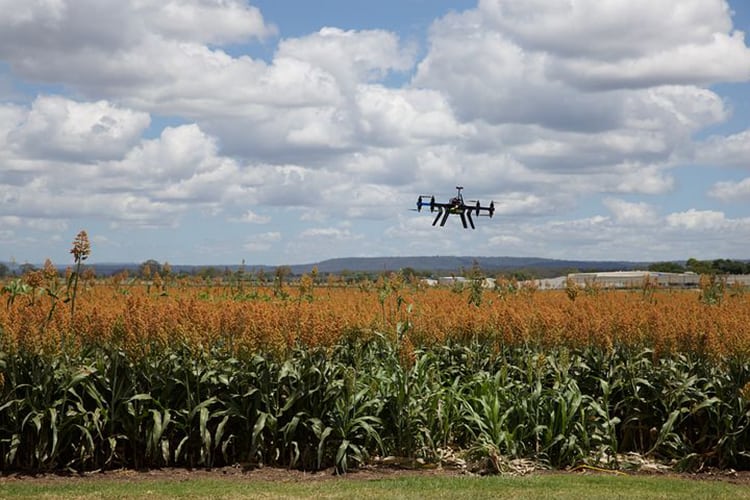 Drones in agriculture help monitor crop health, irrigation, and field conditions, making farm management more efficient.
- Is Drone Videography Profitable?
- How Are Drones Used for Videography?
- Best Drones for Videography
- Essential Equipment for Drone Videography
- Developing Technical Skills for Drone Videography
- Practical Flight Training
- Drone Videography FAQ
Interested in starting your own aerial videography business? Our Aerial Photo & Video for Drone Pilots course takes you step by step through the process of shooting and editing professional-quality drone footage. This course covers everything from camera settings to post-production techniques. Plus, as a UAV Coach reader, you can save $50 with code DRONE50.
Is Drone Videography Profitable?
Selling drone videography services is one of the most common ways for commercial drone pilots to make money. And it’s not going away any time soon. According to Drone Industry Insights, drone videography—characterized as “Photography & Filming”—is one of the top applications for commercial drone services. But is it profitable? Yes, absolutely—but there are a few factors to consider when answering this question, which we’ll cover below.1. How Good Are You?
No surprise, the amount you can make selling your aerial videography and photography is closely tied to your skill level. If you’re just getting started, you won’t be able to charge nearly as much as you will when you’re more skilled and experienced—and have the portfolio to show it.2. How Good Is Your Gear?
You may be quite good at flying and shooting aerial video, but the quality of your deliverables could be hurt by the type of drone you’re using, or by your experience with using sophisticated professional software for post-production. The point is, when considering the profitability of doing drone videography, you have to factor in whether you’re willing to invest in good hardware—drones, lenses, and accessories, depending on the type of niche you choose—as well as software.3. Consider the Market
Is there a demand for drone videography in your area? If not, you may not be able to charge as much—or maybe you can create that demand by educating people on the value aerial shots can provide. On that note, if you consider a sector like real estate, sometimes realtors need to be shown how aerial videography can help them sell houses more quickly. Then they’ll be willing to invest in it. The same can be true for weddings and other common drone videography niches. Even if there isn’t a current market in your area for selling drone video to these sectors, you could work to create one. To survey the local market, start by Googling to see who else is offering aerial services in your area and what their prices are. This will give you a sense of pricing and offerings in your area, helping you understand what you might be able to make.So How Much Can You Actually Make?
Anywhere from $25,000 to $250,000 a year. It’s a huge range—and that’s because it’s all up to you and the market. You may want to do drone videography as a side hustle, or you may want to take it on full time and go really high end, building out a company that employs other people. There is a lot of money to be made doing aerial videography if you have the skills and gear for it, and you find the right niche (or niches) where you can charge a premium for your services.How Are Drones Used for Videography?
Drones are used in videography to capture aerial shots that would be impossible to capture from the ground. Equipped with high-resolution cameras, drones can film from various altitudes and angles in the air, enhancing visual storytelling and offering insights you can’t get without an aerial vantage point. And these days, there’s a huge range of drones out there, ranging from inexpensive selfie drones all the way to high-end cinematography drones. For many, the first thing that comes to mind when they hear the phrase “drone videography” is movies—and drones have definitely had a major impact there. But there are so many other industries that use drone videography these days. Keep reading for a list of the top 13.The Top 13 Sectors that Use Drone Videography
1. Movies and T.V.
Aerial shots used to be somewhat rare in movies, and only possible in productions with big budgets. And that’s because they were expensive. For a single aerial shot, a production would have to rent out a helicopter or airplane at a high cost. But aerial shots are everywhere in T.V. and cinema these days. That’s because drones offer a quieter, more flexible, and cost-effective solution, making aerial cinematography more accessible to filmmakers.2. Real Estate and Commercial Property
In real estate, drones are used to create attractive aerial tours of properties, giving potential buyers a comprehensive view of the estate. This is particularly effective for showcasing large properties or those with stunning surroundings. 3. Event and Sports Coverage
Drones offer a dynamic way to capture events and sports, providing bird’s-eye views that add value to traditional coverage. Whether it’s capturing a live outdoor event, a large festival, or a sports match, drones can maneuver to angles that provide spectators and viewers a compelling overview.4. Environmental and Wildlife Monitoring
Drones play a crucial role in environmental conservation and wildlife monitoring, allowing videographers and researchers to document natural habitats and behaviors without intruding or causing stress to wildlife. 5. Emergency Response and Public Safety
In emergency situations, drones are invaluable for both planning rescue missions and providing live video feeds to command centers. They help assess the situation, guide emergency teams, and monitor ongoing public safety issues.6.Agriculture
Drones in agriculture help monitor crop health, irrigation, and field conditions, making farm management more efficient. 7. Construction and Infrastructure Inspection
Drone video is used for recording inspections in a range of infrastructure and assets, including buildings, bridges, and roads, ensuring safety and compliance by capturing detailed aerial imagery.8. Insurance
Insurance companies use drones to inspect properties for claims processing, especially in areas affected by natural disasters.9. Marketing and Advertising
Drone video can help create compelling promotional content, recording striking visuals for commercials and advertising campaigns.10. Tourism
Tourism boards and agencies use drones to produce attractive videos showcasing travel destinations and attractions.11. Architecture and Urban Planning
Drone video can help architects and urban planners visualize projects and document construction progress with aerial views.12. Archaeology
In archaeology, drone videography can help explore historical sites from above, providing insights without disturbing the site.13. Wedding Photography
Increasingly popular in wedding photography, drone videography and photography helps capture unique perspectives of ceremonies and receptions.Best Drones for Videography [New for 2024]
Choosing the right drone for videography requires understanding what features contribute to high-quality footage. Here are some key factors to look for when choosing a drone for videography:- High-resolution 4K cameras with adjustable settings for professional-quality footage.
- Flight time should be sufficient—at least 20 to 30 minutes—to ensure you can get the coverage you need.
- Special flight modes including autonomous flight modes and tracking features can help you get dynamic shots that will set you apart from competition.
- Portability and ease of transport for on-location shoots is important to consider, since the more you have to carry around, the harder it is to do your work.
- Transmission range may be important depending on the type of drone videography you plan to do. This would matter more for wildlife aerial videography or cinematic shots where flying longer distances will matter.
Amateur Level
Price range: $300 – $1,000 Target user: These drones are suitable for pilots just starting out or those using drones for simple video tasks. Drones in this category typically offer decent camera resolutions and basic flight capabilities. 1. DJI Mini 4K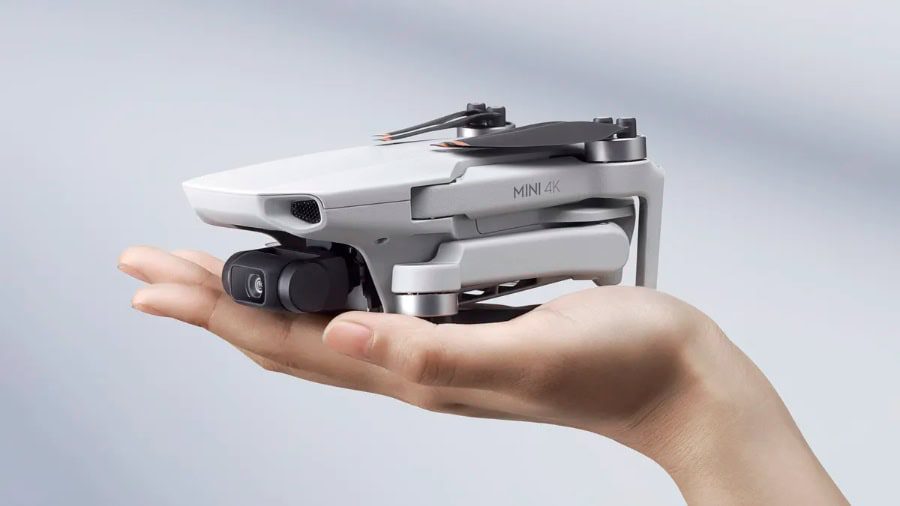 Credit: DJI
Price ≈ $300
2. DJI Mini 4 Pro - Camera: Features a 4K UHD camera with image stabilization for crisp aerial footage.
- User-friendly features: Includes beginner-friendly options like GPS follow-me and auto-return to ensure easy navigation and safety.
- Flight time: Up to 31 minutes of flight time per battery charge, ideal for extended shooting sessions.
Price ≈ $7,000  Here’s the list:
 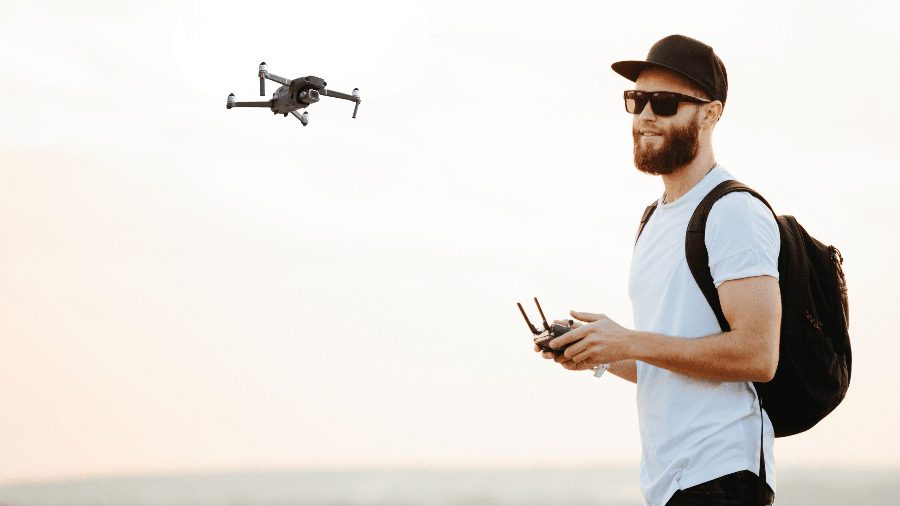 Here are the steps you need to take to become a high-quality drone videographer:
- Camera: 4K HDR video with 32x zoom capabilities for detailed inspections and filming.
- Thermal imaging: Ideal for more specialized videography needs like wildlife documentation.
- Flight time: Approximately 32 minutes with quick charge technology.
- Camera: Equipped with an advanced camera system capable of capturing up to 6K video at 60 fps for ultra-high-definition footage.
- Sensors: Includes omnidirectional obstacle sensing for enhanced safety and equipment protection during complex aerial maneuvers.
- Flight time: Offers up to 40 minutes of flight time, providing more time for shooting in varied conditions and locations.
- Transmission: Utilizes DJI’s O3+ transmission technology, offering reliable and clear video transmission up to 9 miles (15 km) away.
- Camera support: Supports heavy, cinema-grade cameras for professional film production.
- Flight time: Up to 50 minutes depending on payload, offering extended shooting intervals.
- Agility: High agility and precision flight capabilities, suitable for dynamic shooting environments.
Essential Equipment for Drone Videography
To be successful in drone videography it’s crucial to have the right tools. To help you understand what you need, this section covers the essential equipment required to produce high-quality drone videos. Here’s the list: 1. Drones with Camera Integration
The core of your setup is the drone itself. Use the section above on the best camera drones as a jumping off place, but make sure to do your own research and find a platform that fits your needs, skills, and—maybe most importantly—budget.2. Gimbals and Stabilizers
A reliable gimbal is vital for drone aerial videography. Gimbals stabilize the camera, even during turbulent flights, ensuring that your video output remains smooth and free of jarring movements. Most high-quality drones come with integrated gimbals, but upgrades are available for more specialized needs.3. Multiple Batteries and Charging Hub
Drone batteries typically last between 20 to 30 minutes, though some high-end drones have an even longer battery life. For continuous shooting, carrying multiple batteries and a charging hub is recommended to keep your drone operational throughout the day without significant downtime.4. High-Quality Camera Filters
Camera filters are essential for managing light exposure and enhancing the visual quality of your footage. ND (Neutral Density) filters, for example, can help control the amount of light that enters the lens, which is particularly useful in bright conditions to avoid overexposed footage.5. Video Editing Software
Software is a crucial component for your work with drone video footage. After you collect raw aerial footage you’ll need to process it using professional editing software so you can create a polished, professional video for your client. Here are two things to consider when it comes to choosing your video editing software:- Key features. Look for features that support 4K video, color grading, stabilization, and multi-track editing to enhance your aerial footage.
- Integration with drone footage. Ensure the software you choose can handle the file formats your drone produces. Some software offers direct integration with drone footage, streamlining the editing process.
- Adobe Premiere Pro for comprehensive editing tools.
- Final Cut Pro for seamless integration with Apple products.
- DaVinci Resolve for advanced color correction and audio post-production capabilities.
6. Additional Accessories
You’ll also need additional accessories like spare propellers, a well-padded carrying case for safe transportation, and an SD card with high write-speeds for capturing and storing high-resolution video files.Developing Technical Skills for Drone Videography
Becoming a skilled drone videographer involves more than just obtaining a certification. While you can get certified to fly drones without actual flying proficiency, mastering drone videography requires dedicated practice and technical understanding. Here are the steps you need to take to become a high-quality drone videographer: