What to Do at the Scene of the Shooting
1. Ensure Your Safety
- Do not confront the shooter. Your safety comes first. Move away from the area immediately if you suspect someone fired at your drone.
- Avoid escalating the situation. Confrontations can escalate, especially if firearms are involved.
[Need help with the FAA’s Part 107 test? We’ve trained over 70,000 drone pilots + our students have a 99%+ pass rate. Learn how we can help you get ready now.]
2. Identify the Shooter’s Location
- Note where the shot came from. If safe, observe where the shot originated without putting yourself in harm’s way. Avoid approaching the location.
- Take photos or videos from a safe distance. Documenting the surroundings, particularly the shooter’s position, can be useful for future investigations.
3. Do Not Engage with the Shooter
- Avoid direct confrontation. Even though it might be tempting to approach the person responsible for shooting your drone, it’s critical to avoid doing so. Leave interactions to the police.
- Let law enforcement handle the situation. Any confrontation could put you at further risk, and law enforcement officers are best equipped to handle such situations legally.
4. Retrieve the Drone—If Safe to Do So
- Only collect the drone if it’s safe. If the shooter is still nearby or appears hostile, do not attempt to retrieve the drone. Wait until law enforcement arrives or leave it behind for now.
- Document damage to the drone. Take clear photos or videos of any visible damage to the drone from a safe distance.
5. Contact Local Law Enforcement
- Report the incident immediately. Call 911 or the appropriate local authorities to report the destruction of your property.
- Provide key details. Give law enforcement officers the drone’s location, description of the shooter if possible, and any other relevant information (time, place, and other witnesses).
- Request an incident report. Having an official report will be crucial for insurance claims and potential legal actions.
6. Collect Witness Statements
- Ask bystanders for information. If there are witnesses, gather their contact information or have them provide statements to law enforcement officers.
- Get video or photo evidence from witnesses. Bystanders may have captured the incident on their phones, providing crucial evidence.
7. Preserve Flight Logs
- Secure drone flight logs. If the drone is recoverable, make sure to save any flight logs, as they can provide evidence of your drone’s legal flight path and altitude.
- Use the drone’s app to store information. Many drone apps automatically store flight data, which can show the legality of your operation and help refute claims of trespassing or spying.
[Related read: CUAS Explained—How It Works and What’s Legal in the U.S.]

What to Do After You Leave the Scene
1. Review Flight Logs and Evidence
After leaving the scene, immediately review your drone’s flight logs and gather any additional evidence that may help your case. If your drone has automatic data storage through an app, make sure that the flight path, altitude, and other relevant information is securely stored.
2. Contact Your Insurance Provider
If your drone is insured, initiate the claims process. Provide all documentation such as police reports, witness statements, and flight logs. Use photos or video evidence to support your claim and clearly describe the damage.
3. Report the Incident to the FAA
Shooting down a drone is a violation of federal law, so file an official report with the FAA. Visit the FAA DroneZone to learn more about filing complaints and providing evidence of illegal actions.
You should also let your local Flight Standards District Office (FSDO) know, since they oversee enforcement of FAA rules in your area.
To contact your FSDO call (800) 255-1111 or file a report online at hotline.faa.gov.
4. Consult with an Attorney
If you believe legal action is warranted, consider consulting with an attorney who specializes in drone law or property damage. They can guide you on potential legal claims and next steps, such as filing a lawsuit for damages.
5. Replace or Repair Your Drone
If your insurance claim is successful, use the payout to either repair or replace your damaged drone. Be sure to select a reputable repair service or follow the manufacturer’s instructions for replacement parts.
6. Report to the Local Authorities (If Applicable)
In some cases, a local ordinance may have been violated in addition to federal laws. If local law enforcement did not respond on the scene, file an additional report with them to ensure full documentation of the incident.
7. Prepare for Any Media Inquiries
If the incident gained public attention, you may be contacted by media outlets. Be cautious about what you share, and always prioritize your safety and legal standing when answering questions.
Proactive Measures: How to Avoid Being the Target of a Drone Shooting
Shooting at drones—no matter where they’re flying—is illegal. Period.
We’ll cover why it’s illegal in the next section. In this section, we want to focus on what you can do to try and avoid having your drone shot at.
Here are some steps you can take to try and avoid having your drone shot at when you’re working in the field:
- Wear a professional vest. Don visible attire that identifies you as a commercial drone operator. This can include vests with identification or company logos.
- Use a cone. A traffic cone or some other clear indicator that you’re there to do work can help people understand that you’re not sneaking around trying to spy on them—you’re there on business.
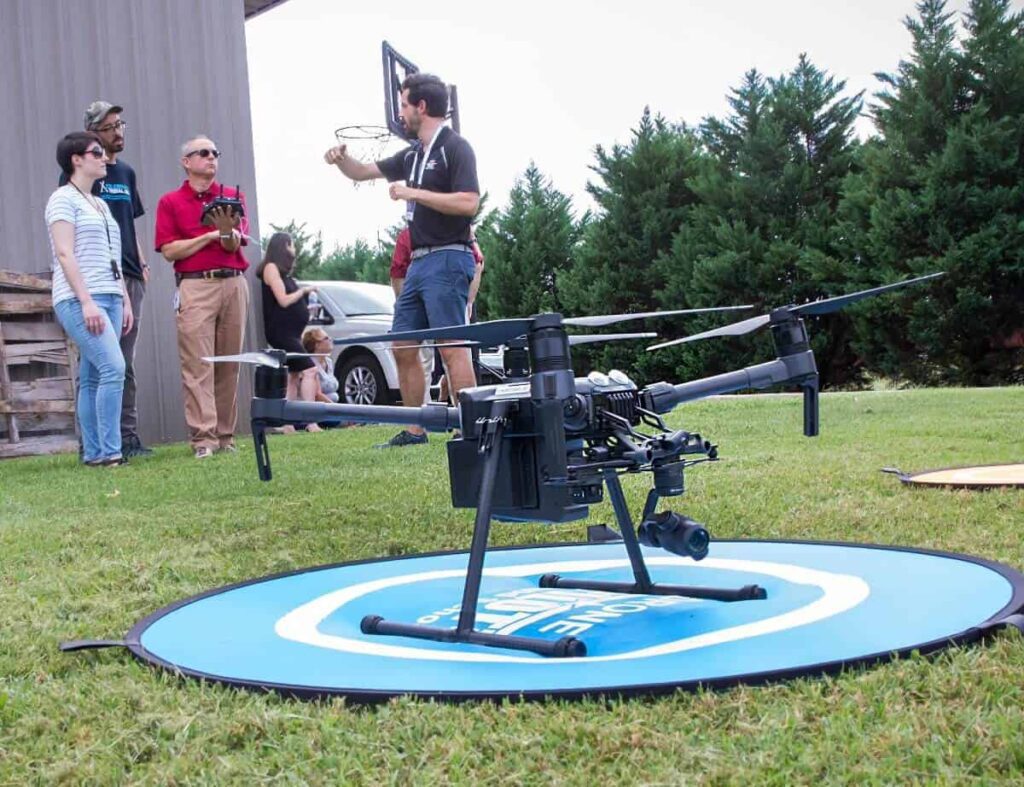
- Use a launch pad. A launch pad for takeoff/landing, ideally with your company’s logo on it, is one more way to indicate that you’re part of a professional operation.
- Carry your Part 107 certification. Always have your Remote Pilot Certificate (commonly called a drone license) with you when flying. This serves as proof of your qualification and purpose for flying.
- Professional appearance and conduct. Present yourself in a professional manner and use marked vehicles or equipment when possible. This helps establish your presence as official and work-related, not recreational or invasive.
Notes on where and how you fly:
- Fly in open areas. If you can, avoid flying over private property or crowded public spaces where drones are often unwelcome. Instead, choose open, less populated areas where your activities are less likely to be perceived as invasive.
- Don’t hover over people’s homes. To avoid sparking people’s paranoia, make sure to avoid hovering over private property for extended periods. Even if it’s legal, it can cause concern for property owners.
- Notify nearby residents. If your work requires you to fly near people’s homes, consider notifying residents in advance and/or on the day of your mission. Doing this can help alleviate concerns and reduce the likelihood of hostility.
Want to do more to spread the word in your community?
Here are a few things you can do to help reduce the likelihood of a drone being shot down in your area:
- Engage in community education. Participate in or organize community events to educate the public about the benefits of drones and safe drone operations. Increased public awareness can lead to better acceptance and reduced hostility.
- Join pilot groups. Connect with other drone pilots in local or online communities to share resources, collaborate on safety initiatives, and advocate for drone operations within the community.
- Share online resources. Distribute helpful information via social media or local forums about drone laws and responsible flying.
- Collaborate with local law enforcement. Partner with local authorities to promote safe flying zones and clarify the legality of drone use.

Can You Shoot Down a Drone Over Your Property? The Legality of Shooting at Drones
No, you are not allowed to shoot down a drone over your property. Or over anyone else’s property, for that matter.
It is illegal to shoot down a drone over your property in the U.S. Drones are classified as aircraft, and under federal law, damaging or destroying an aircraft is a criminal offense, even if it’s flying over private property.
The FAA governs U.S. airspace, not property owners, and that means that shooting down a drone is a violation of federal aviation law.
Here are key points to know:
- Federal airspace rules. All airspace in the U.S. is regulated by the FAA, and private property rights do not extend into the airspace above your land. (It’s true that in some instances property owners have argued for avigation rights over their land—but these are unusual, and they still don’t allow you to shoot at aircraft, including drones.)
- Potential consequences. Shooting a drone could result in charges of property damage, endangerment, or violation of federal law under the Aircraft Sabotage Act.
- State laws may vary. Some states have introduced specific laws regarding drone use—but these still don’t permit property owners to destroy drones.
- Alternative solutions. If you suspect illegal activity, contact local law enforcement or report the drone to the FAA rather than taking matters into your own hands.
Now let’s dive a little deeper into the legality surrounding shooting at drones.
Federal Law Related to Shooting Down Drones
The bottom line is that property owners concerned about drone operations should not take matters into their own hands. Instead, they need to report suspected illegal activities to the FAA or local law enforcement.
Under federal law, shooting down a drone is illegal and classified as a serious offense. Drones are considered aircraft by the FAA, and damaging or destroying an aircraft violates federal regulations, including the Aircraft Sabotage Act.
- FAA jurisdiction. The FAA governs all airspace in the U.S., and shooting a drone in flight is a federal crime. The FAA emphasizes that property owners do not have the right to shoot down or damage a drone.
- Aircraft Sabotage Act. This law makes it a federal offense to willfully destroy any aircraft, including drones. Violating this law can result in significant penalties, including fines and imprisonment. Learn more about the Aircraft Sabotage Act on the Cornell Law School website.
- Potential criminal penalties. Individuals who shoot down a drone could face felony charges for property damage, reckless endangerment, or violating federal law. Such actions are punishable by up to 20 years in prison and large fines under U.S. law.
- Local laws and preemption. Although some states have enacted specific drone laws, federal law preempts these, meaning property owners cannot claim self-defense to justify shooting drones. Violators are subject to federal prosecution.
State and Local Laws Related to Shooting Down Drones
While federal law makes it illegal to shoot down drones, some states and localities have passed their own regulations related to drone use and interference.
It’s important for drone pilots to be aware of these variations to avoid potential conflicts.
- State-specific drone restrictions. Some states have enacted laws prohibiting harassment of drones or limiting drone operations in certain areas, such as near airports or correctional facilities. Check your state’s specific drone laws before flying.
- Private property rights. In certain states, property owners have more explicit rights regarding drones that fly over their land, though shooting them down is typically not allowed. Instead, owners may have the right to file complaints about perceived invasions of privacy.
- Local ordinances. Municipalities may have their own rules for flying drones in public spaces, parks, or near events. Drone operators should research any applicable local laws before taking off.
Always check with local authorities to ensure you’re in compliance with both state and local drone regulations to minimize legal risks.
Learn more about the drone laws in your state.
Consequences for Shooting Down a Drone
Shooting down a drone can result in severe legal consequences, both criminal and civil.
Under federal law, drones are considered aircraft, and damaging them can lead to charges under 18 U.S. Code § 32, which prohibits the destruction of aircraft.
Violators can face fines and prison sentences. Additionally, drone owners can file civil lawsuits seeking compensation for damages, and individuals may also be liable under state property or firearm discharge laws.
Even in cases of privacy concerns, taking violent action against a drone is rarely legally justified.

Drone Shot Down FAQ
Here are some of the most commonly asked questions surrounding shooting at drones, and what to do if someone shoots your drone.
Can You Shoot Down a Drone Over Your Property?
No, you cannot legally shoot down a drone, even if it is flying over your property. Under U.S. federal law, drones are considered aircraft, and damaging them can result in criminal penalties.
What Should I Do If Someone Shoots My Drone?
If someone shoots your drone, prioritize your safety, report the incident to law enforcement, document the damage, and collect witness statements. Filing a police report will help with insurance claims or legal action.
Is It Legal to Shoot Down Drones in the U.S.?
No, shooting down drones is illegal under U.S. federal law. Destruction of aircraft is a federal offense, and those responsible could face heavy fines and imprisonment.
What Are the Penalties for Shooting Down a Drone?
Penalties can include criminal charges under 18 U.S.C. § 32, which can lead to imprisonment and significant fines. Additionally, drone owners may seek civil damages for property destruction.
How Can I Avoid Conflict While Flying My Drone?
Fly your drone responsibly, indicate you’re part of a professional operation, avoid hovering over private property, and stay clear of sensitive areas. If necessary, communicate with property owners to reassure them of your legal operation.
What Rights Do Property Owners Have Regarding Drones?
Property owners do not have the legal right to destroy drones flying over their land. However, they can report drones suspected of trespassing or violating privacy to local authorities.
Can Local or State Laws Permit Shooting Down Drones?
No state or local laws can override federal regulations on drone operations. Shooting down a drone is illegal regardless of local ordinances, as federal law governs airspace regulation.
What Should I Do If a Drone Is Spying on Me?
If you believe a drone is invading your privacy, do not take physical action against it. Instead, document the incident and contact local law enforcement to address the issue.
Is It Legal to Use Jammers to Disable Drones?
No, using signal jammers to disrupt drones is illegal under federal law, as it interferes with communication systems. Only federal agencies have the authority to use such devices.
Can I Fly Over Private Property Without Permission?
Yes, in most cases, flying over private property is legal as long as the drone stays within FAA guidelines for altitude and safety. However, it’s advisable to avoid lingering over private spaces to prevent concerns.
What Should I Do If a Drone Crashes on Private Property?
If your drone crashes on private property, seek the owner’s permission to retrieve it. Avoid trespassing and explain your situation to avoid conflict.
Are There Legal Protections for Commercial Drone Operators?
Yes, commercial drone operators flying under FAA regulations have legal protections. However, they must follow all rules, including avoiding restricted airspace and maintaining line-of-sight.