The Remote ID rule applies to all drone operations for any drone that weighs .55 to 55 pounds. It has been in effect since September 16 of 2023.
If your drone falls in that weight range you have to comply with Remote ID regardless of whether you’re flying for work or fun.
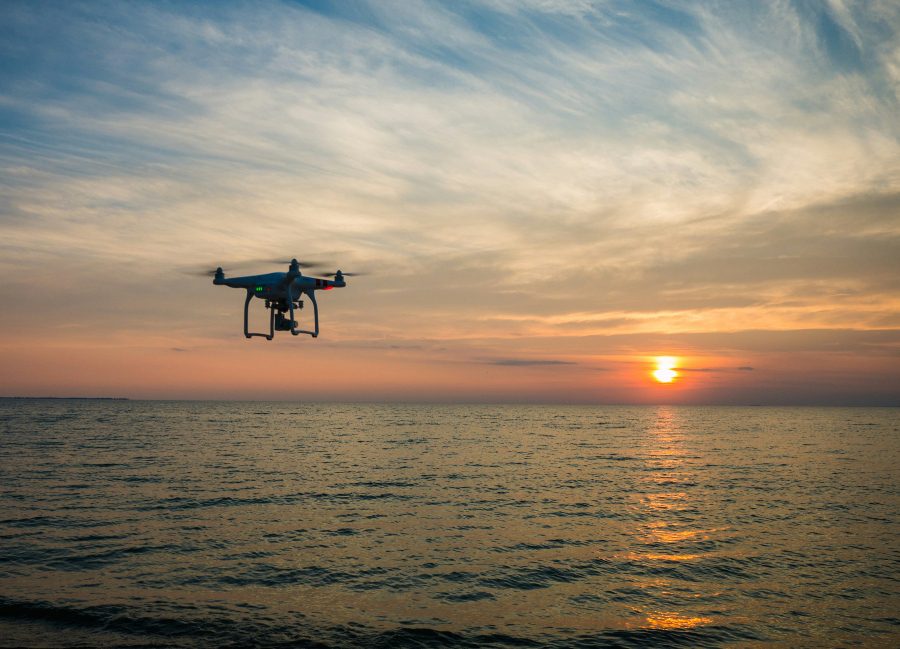
Image source
In this guide to the FAA’s Remote ID rule we’ll cover what Remote ID is, the three ways to be compliant, a short history of Remote ID, and then address common questions.
Here’s a table of content in case you’d like to jump around:
- What Is Remote ID?
- How to Be Compliant with Remote ID
- Remote ID Modules
- A Brief History of Remote ID
- Remote ID FAQ
What Is Remote ID?
Remote ID operates as a digital license plate for drones, broadcasting the following information:
- Drone identification. This includes the unique identifier of the drone, which can either be a serial number assigned by the manufacturer or a session ID that changes with each flight.
- Control station (remote pilot) location. The latitude, longitude, and altitude of the drone’s takeoff point or the current location of the pilot or control station.
- Drone location. The current latitude, longitude, and altitude of the drone during its operation.
- Drone altitude and velocity. Information about the drone’s altitude above ground level or sea level, as well as its velocity (speed and direction).
- Time mark. Timestamp for each piece of data sent, indicating the specific time the information was recorded.
- Emergency status. Alerts about any abnormal status or emergency situation the drone may be experiencing, which can help in coordinating immediate response efforts if necessary.
- Type of ID transmission. Whether the ID information is being broadcast directly from the drone or transmitted through an internet connection to a remote ID service provider.
This data helps air traffic controllers, other pilots, and law enforcement ensure that airspace is safely managed and that drones are operated within legal and regulatory frameworks.
It also aids in accountability and traceability of drone operations, contributing to public safety and privacy protections.
Where Did Remote ID Come From?
The concept of Remote ID emerged from the growing need to ensure that drones, like crewed aircraft, could be identified quickly and reliably while in flight.
Remote ID helps keep the skies safe by preventing unauthorized or potentially hazardous drone operations. It also opens avenues for more complex drone applications, like package delivery and transportation.
This need became increasingly significant as drones became more popular and capable, raising concerns about airspace safety and security. The initiative aligns with global aviation standards which aim to integrate unmanned aircraft systems safely into the airspace without impacting the operational efficiency of crewed aviation.
Before the FAA mandated Remote ID compliance, some companies were already providing ways for drone pilots to broadcast their drone’s location in order to help keep the skies safer.
Companies like DJI created Aeroscope, which allows authorities to monitor and track drones in real-time by receiving data transmitted by each drone. Similarly, AirMap offered solutions integrating telemetry data that could support airspace safety and compliance with regulations. Another notable example is Unifly, which developed platforms that enable the tracking and management of drones, enhancing airspace safety and compliance by visualizing and managing drone operations.
How to Be Compliant with Remote ID
There are three ways to comply with Remote ID:
- Fly a Drone Equipped with Standard Remote ID
- Fly a Drone Equipped with a Remote ID Broadcast Module
- Fly in a FRIA (FAA-Recognized Identification Area)
Keep reading to learn more about each one.

1. Fly a Drone Equipped with Standard Remote ID
The most straightforward way to comply with Remote ID is Standard Remote ID—that is, flying a drone that is manufactured with built-in Remote ID capabilities or that has these capabilities via a firmware update.
Drones with Standard Remote ID broadcast identification, location, and performance information both to other airspace users and to a Remote ID USS (UAS Service Supplier) network.
Operating a Standard Remote ID drone is one of the primary methods to comply with FAA’s Remote ID regulations. These drones have built-in capabilities to broadcast identification and location information during flight, which can be received by other parties through personal wireless devices.
Steps for Compliance with Standard Remote ID:
- Buy a Standard Remote ID drone OR update your drone’s firmware. Choose a drone that meets the FAA’s requirements for Standard Remote ID. This drone will have the capability to broadcast its ID, location, altitude, and control station location in real-time. OR update the firmware on your drone so it becomes compliant with Remote ID.
- Register your drone. Ensure that your drone is registered with the FAA, and the registration number is marked on the drone. This step is crucial for linking your drone to its Remote ID broadcasts.
- Verify broadcast functionality. Before your first flight, check that the drone’s Remote ID broadcast is functioning correctly. This can usually be verified through the drone’s companion app.
- Keep firmware updated. Regularly update your drone’s firmware to ensure it includes the latest Remote ID functionality enhancements and security updates.
- Understand the information being broadcasted. Familiarize yourself with the information your drone broadcasts. This typically includes the drone’s ID, latitude, longitude, altitude, velocity, and takeoff location, which helps in maintaining transparency and accountability.
Find a list of compliant drones on the FAA’s official Remote ID page.
Benefits of Using a Standard Remote ID Drone
As we mentioned, Standard Remote ID is by far the easiest way to go for compliance.
Here are the main benefits to going this route:
- Compliance ease. Automatically complies with FAA regulations, simplifying operational requirements.
- Enhanced safety. Helps in maintaining situational awareness for both operators and nearby manned aircraft.
- Increased accessibility. Allows for operations in areas where Remote ID is mandated, enhancing operational scope.
2. Fly a Drone Equipped with a Remote ID Broadcast Module
For drones that do not have built-in Remote ID, pilots can attach an FAA-approved broadcast module. This device sends out the drone’s ID, location, altitude, and take-off location.
If you go this route, make sure the module doesn’t obscure any required markings on the drone.
Steps for Compliance with a Remote ID Broadcast Module:
- Select an FAA-approved broadcast module. Choose a broadcast module that meets the FAA’s specifications and has been approved for use. You can find a list of approved modules on the FAA’s website (we also have some of the top modules listed below in this article).
- Install the module. Attach the module to your drone following the manufacturer’s instructions. Ensure that it is securely mounted and does not interfere with the drone’s operation or alter its center of gravity.
- Activate the module. Activate the module so it begins broadcasting. This typically involves configuring it through a related smartphone app or integrated software.
- Test the broadcast. Before taking off, test the broadcast to ensure it is working correctly. This check can usually be performed through the app connected to the broadcast module.
- Update as necessary. Keep the module’s firmware updated to ensure continued compliance and functionality.
3. Fly in a FRIA (FAA-Recognized Identification Area)
Don’t want to deal with Remote ID and just want to fly for fun or practice? Then you can fly in a FRIA.
FRIAs are places where you can fly without having to use Standard Remote ID or a broadcast module. These are specific geographic areas recognized by the FAA where drones without Remote ID can fly legally.
Understanding FRIAs
FRIAs are typically established at locations where model aircraft are traditionally flown, such as model airfields or specific community-based organization sites. These areas provide a controlled environment for flying drones that may not have Remote ID capabilities.
Steps for Compliance by Fly in a FRIA:
- Locate a FRIA. Identify an FAA-recognized identification area near you. The FAA provides a directory of all approved FRIAs, accessible here on its website.
- Understand the rules. Each FRIA may have specific rules and operating hours. Familiarize yourself with these guidelines to ensure you comply with all local regulations.
- Register your intent. Some FRIAs require you to register your intent to fly in advance. Check the specific requirements for the FRIA you plan to use.
- Follow community-based guidelines. Adhere to the safety guidelines and operational procedures established by the community-based organization managing the FRIA.
Benefits of Flying in a FRIA:
Flying in a FRIA offers several benefits:
- Allows the use of drones without Remote ID.
- Supports traditional model aircraft flying.
- Enables educational and recreational drone activities under controlled conditions.
Additional Remote ID Compliance Tips
Here are a few more things to keep in mind on the compliance front with Remote ID:
- Ensure that any Remote ID device or module is always operational during flight.
- Regularly check for firmware updates for both your drone and any Remote ID modules to ensure compliance with the latest regulatory changes.
- Refer to the FAA website for updates and further guidance on Remote ID and other regulatory requirements.
Remote ID Modules
If your drone doesn’t come with Standard Remote ID and it can’t be equipped with Remote ID via a firmware update, you’ll have to use a Remote ID module in order to fly.
Modules come in two types: standalone and add-on. Each serves unique needs depending on the drone’s existing capabilities and the pilot’s requirements.
Keep reading for the top models of each type on the market.
Standalone Remote ID Modules
Standalone Remote ID modules are complete units designed to work independently and are often used with drones that do not have integrated Remote ID capabilities.
Here are the top standalone modules on the market:
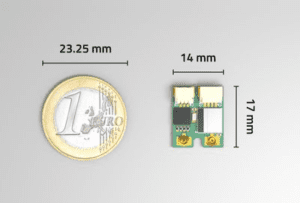
- Dronetag Beacon. Designed for ease of use, the Dronetag Beacon is plug-and-play, making it ideal for hobbyists and professionals alike. Specifications: Up to 3 hours of continuous operation, USB-C rechargeable, compatible with any drone model.
- Z-RID Lite Broadcast Module. This lightweight module is perfect for smaller drone operations, offering essential Remote ID functionalities without the bulk. Specifications: 1.2 mile (2 km) range, 10 hours battery life, weather-resistant.
- Z-RID Broadcast Module. Offers enhanced capabilities and extended range for professional use, particularly in complex environments. Specifications: 5 km range, rugged design, supports multiple frequencies for global compliance.
- Dronetag Mini. Known for its compact size and reliability, the Dronetag Mini fits seamlessly onto any drone and provides comprehensive data broadcasting. Specifications: Bluetooth and Wi-Fi connectivity, up to 12 hours of operation, mobile app compatibility for real-time tracking.

The Z-RID Lite
Add-On Remote ID Modules
Add-on modules are designed to enhance existing drones that may have limited Remote ID capabilities or need additional features to meet specific regulatory or operational demands.
Here are the top add-on modules on the market:
- Dronetag BS. Specifically designed as an enhancement for drones with basic Remote ID, this module adds more robust broadcasting features. Specifications: integrates with drone’s native systems, extended battery life to match drone’s endurance, provides advanced encryption for secure data transmission.
- FlightID Pro. Enhances commercial drones with advanced broadcasting and tracking capabilities. Specifications: FAA-compliant, automatic data logging, and real-time transmission up to 4 km.
- AeroBeacon X2. Ideal for drones used in professional cinematography and industrial inspections. Specifications: dual-band transmission, integrates seamlessly with most UAV control systems, and includes enhanced encryption for secure operations.
A Brief History of Remote ID
In this section we’ll cover the history of Remote ID here in the U.S., leading up to the creation of the FAA’s Remote ID rule.
Then we’ll look at Remote ID throughout the world, and how the concept has developed alongside technology to make that concept a reality.
US Remote ID Development—From Idea to the FAA’s Remote ID Rule
- 2015—Early discussions. The concept of Remote ID began to take shape within the drone industry and regulatory circles in the US as a response to growing concerns over safety, security, and privacy. This was in conjunction with the increasing popularity of recreational and commercial drone use.
- 2016—FAA’s Pathfinder Program. The Federal Aviation Administration (FAA) initiated the Pathfinder Program, which included industry partners to explore potential technological solutions, including Remote ID, to address various operational challenges posed by drones.
- 2017—UAS Identification and Tracking ARC. The FAA established the UAS Identification and Tracking Aviation Rulemaking Committee (ARC) to provide recommendations on the identification and tracking of drones. Its final report included a strong recommendation for establishing a Remote ID system.
- December 2019—Notice of Proposed Rulemaking (NPRM). The FAA released its NPRM on Remote ID, proposing that it become mandatory for all drones in U.S. airspace to transmit certain data (such as identity and location) to ensure visibility to other airspace users and law enforcement.
- 2020—Public and industry concerns. The NPRM received a substantial amount of feedback during the public comment period, with over 53,000 comments. Concerns were raised about privacy, the cost of compliance, and the technical challenges of implementing Remote ID systems.
- April 2021—Final rule effective. Despite the controversy, the final Remote ID rule was published and became effective in April 2021. This rule mandates that all drones sold and operated in the US must carry Remote ID capability by September 2023.
- 2021-2023—Industry adaptation. Drone manufacturers began to integrate Remote ID technology into new models, and solutions for retrofitting existing drones were developed. The industry worked to address the concerns of hobbyists and commercial operators alike regarding compliance costs and privacy issues.
- 2023—Extension and further development. Due to industry feedback and ongoing technological developments, the FAA extended the compliance deadline to March 2024. This extension was aimed at allowing more time for manufacturers and operators to adapt to the new requirements effectively.

International Remote ID Development
In reality, the development of Remote ID regulations was a global initiative, and seen as a crucial aspect of the global integration of drones into national airspaces.
Below is an overview of major milestones that have shaped the landscape of drone regulation and Remote ID implementation worldwide.
- 2007—Japan’s early adoption. Japan was among the first nations to implement drone-specific regulations, setting a precedent for Remote ID concepts by requiring operators to maintain visibility and control over their drones.
- 2015—European Aviation Safety Agency (EASA) framework released. EASA released its “Prototype” Commission Regulation on Unmanned Aircraft Operations, which included proposals for electronic identification and tracking of drones across EU member states.
- 2016—NASA’s UTM trials. NASA began testing its Unmanned Aircraft Systems Traffic Management (UTM) concepts, which included digital services for drone identification and tracking, crucial components of Remote ID systems.
- 2017—Canada’s interim order. Transport Canada issued an Interim Order for the operation of non-recreational drones, which laid the groundwork for future Remote ID requirements by introducing strict regulations on drone operations in Canadian airspace.
- 2019—FAA’s NPRM on Remote ID: The U.S. Federal Aviation Administration (FAA) published a Notice of Proposed Rulemaking (NPRM) for Remote ID, outlining the requirements for remote identification methods and data transmission standards.
- 2021—European Union implementations. The European Union implemented new regulations that required drones to be equipped with Remote ID systems, marking a significant step in standardizing drone operations across its member countries.
- 2023—International Civil Aviation Organization (ICAO) global framework. ICAO proposed a global framework for drone Remote ID, aiming to standardize the requirements and practices for drone identification worldwide.
Remote ID FAQ
Understand the essentials of Remote ID requirements for drones with these frequently asked questions.
Can I fly without Remote ID?
No, unless you are flying within an FAA-Recognized Identification Area (FRIA).
All drones required to register with the FAA (that is, weighing between .55 and 55 pounds) must have Remote ID to fly in most airspace. This includes both standard Remote ID broadcast from the drone and a broadcast module that can be added to drones without built-in Remote ID.
Is Remote ID different for commercial drone pilots and recreational flyers?
No. The Remote ID requirements apply universally to all drone operators, whether commercial or recreational.
Is Remote ID enforced?
Yes. Remote ID is enforced by the Federal Aviation Administration (FAA). Non-compliance can result in legal penalties, including fines and restrictions on future drone use.
What are the penalties for not complying with Remote ID?
Failure to comply with Remote ID requirements can result in civil penalties, including fines. The FAA may also pursue enforcement actions against non-compliant operators.
How much does Remote ID cost?
The cost of Remote ID depends on the method of compliance. Purchasing a drone with built-in Remote ID typically does not add a significant cost to the drone itself. For older drones, adding a Remote ID broadcast module might cost anywhere from $50 to $200, depending on the manufacturer and features.
Is Remote ID expensive?
Not necessarily. The cost and complexity of implementing Remote ID can vary. New drones often come with Remote ID built-in, requiring no additional cost or effort. For older models, adding a Remote ID module is straightforward and relatively affordable.
How do I get Remote ID for a drone?
To equip your drone with Remote ID, you can either purchase a new drone that comes with Remote ID built-in, use a drone that can get Remote ID via a firmware update, or use a Remote ID broadcast module on an existing drone. If you use a module, always make sure the module meets FAA specifications.
Does Remote ID allow anyone to track my drone?
No. Remote ID broadcasts are designed for visibility by the FAA and authorized bodies, not for public tracking. While the information is accessible, its primary purpose is to enhance safety and compliance with airspace regulations.
Can I disable Remote ID?
Disabling Remote ID is illegal during flight in national airspace where Remote ID is required. Doing so can result in legal actions from the FAA.
Where can I find a list of approved Remote ID modules?
The FAA maintains a list of approved Remote ID modules on their official website. It is crucial to ensure that any module you purchase is on this list to comply with legal requirements.