VLOS, EVLOS, and BVLOS are all acronyms in the drone industry that describe how far a drone is from the pilot’s Line of Sight (that’s the LOS in all three acronyms).
Understanding these terms is essential for drone operators, especially those conducting industrial inspections, as they determine how far a drone can be flown while still complying with regulations and maintaining safety standards.
In general, drone pilots must fly within Visual Line of Sight (VLOS). Flying BVLOS and EVLOS is prohibited unless you receive special permission from the FAA.

What does VLOS stand for? VLOS stands for Visual Line of Sight.
This means the drone is operated within the visual range of the pilot, allowing them to see the drone without any visual aids other than corrective lenses (like glasses or contact lenses). Maintaining VLOS is an FAA requirement under the Part 107 rules to ensure that the operator can directly monitor the drone’s surroundings, respond to hazards, and avoid collisions.
What does BVLOS stand for? BVLOS stands for Beyond Visual Line of Sight.
In BVLOS operations, the drone is flown outside the pilot’s direct visual range, typically relying on technology such as cameras, GPS, or sensors to navigate and observe the environment. BVLOS is particularly valuable for inspecting large-scale facilities, remote infrastructure, or hazardous areas where maintaining a direct line of sight is impractical.
What does EVLOS stand for? EVLOS, or Extended Visual Line of Sight, serves as a middle ground between VLOS and BVLOS.
In EVLOS operations, the drone remains visible to the pilot or a team member, but the distance may be greater than in standard VLOS operations, often requiring the use of multiple observers to maintain visual contact. This mode allows for more flexibility than VLOS while still offering a level of direct oversight that BVLOS does not. It can be advantageous in industrial inspections that cover larger areas but still require some level of visual monitoring to ensure safety and compliance.
In this guide we’re going to cover the basics of VLOS, BVLOS, and EVLOS. Use the menu below to jump around, or keep reading to learn more about all the topics we cover.
- The Basics of VLOS (Visual Line of Sight)
- Understanding BVLOS (Beyond Visual Line of Sight) Operations
- EVLOS: The Middle Ground Between VLOS and BVLOS
- Regulatory Considerations for BVLOS Operations
- BVLOS Technological Advancements
- FAQ: VLOS, EVLOS, and BVLOS in Drone Operations
The Basics of VLOS (Visual Line of Sight)
VLOS, or Visual Line of Sight, refers to the ability of a drone pilot to see the drone clearly while it’s in flight.
This direct visual line with the drone allows the pilot to be aware of the drone’s position, direction, and surrounding environment, ensuring safe navigation and avoiding obstacles. Flying VLOS is a requirement of the FAA’s Part 107 rules, since it lets the pilot maintain control over the drone and respond quickly to any changes or hazards in the environment.
Typical VLOS Distance
The typical VLOS distance for drone operations is generally considered up to about a third of a mile feet from the pilot.
But this distance can vary depending on factors like:
- Size and color of the drone
- Lighting conditions
- The pilot’s visual acuity
Example: A small or dark-colored drone may be harder to see at a distance, while bright sunlight or poor weather conditions can further reduce visibility.
Regulations often specify that the drone must remain within the pilot’s VLOS at all times, meaning that if visibility is compromised due to factors like fog, rain, or low light, the operator must either adjust the flight path or bring the drone closer.
VLOS Drones and Their Design
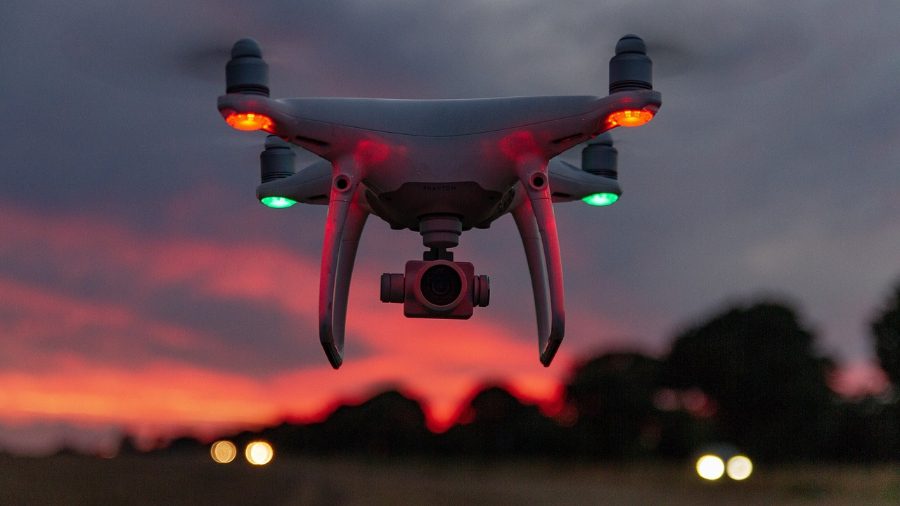
Some drone’s have features that make it easier to maintain visual contact, including:
- Being equipped with bright LED lights
- High-contrast colors
- Larger frames that enhance visibility over greater distances
These design elements can help pilots keep the drone within the visual line of sight, even in challenging environments.
Understanding BVLOS (Beyond Visual Line of Sight) Operations
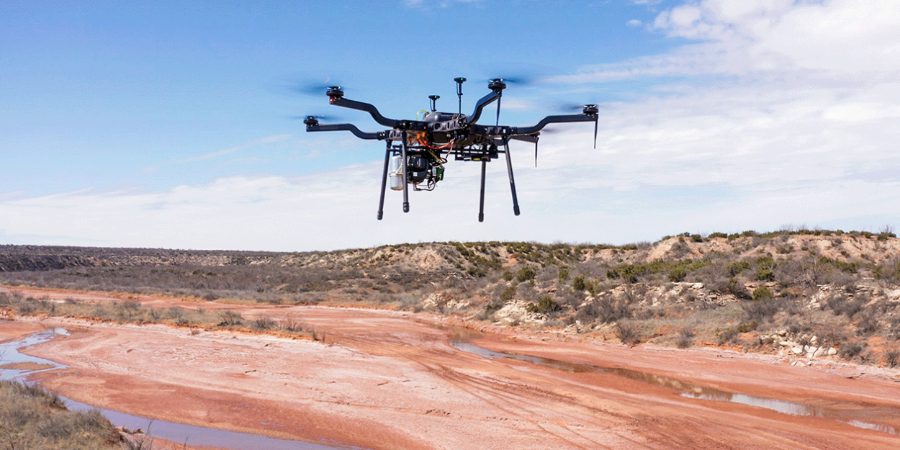
BVLOS stands for Beyond Visual Line of Sight, describing drone operations where the drone is flown beyond the direct visual range of the pilot.
Technology like GPS, cameras, sensors, or real-time telemetry let the drone fly safely beyond the limits of human eyesight, opening up new possibilities for long-range drone ops and complex tasks that would be impossible under VLOS restrictions.
The Importance of BVLOS Operations for Commercial Drone Operations
BVLOS (Beyond Visual Line of Sight) operations offer significant advantages for a range of commercial drone applications, especially when extended range is crucial.
For inspecting large facilities like industrial plants or vast construction sites it can be impractical to maintain a visual line of sight. Flying BVLOS allows commercial drone pilots to cover wide areas efficiently, reaching hard-to-access locations without requiring the operator to constantly reposition themselves.
Additionally, remote inspections of infrastructure such as pipelines, transmission lines, or offshore platforms greatly benefit from BVLOS.
Drones can travel long distances to reach inspection sites, reducing both time and costs compared to traditional methods like helicopters or manual inspections. This extended range significantly boosts operational efficiency and safety, as drones can navigate hazardous or inaccessible areas without placing personnel at risk.
BVLOS Regulations and the Role of the FAA
While BVLOS operations offer significant advantages, they also come with stricter regulatory requirements.
FAA regulations dictate that drone operators must obtain a waiver to perform BVLOS flights legally. This BVLOS waiver requires operators to demonstrate that their operations can be conducted safely, taking into account factors such as air traffic, terrain, and potential obstacles.
The FAA’s regulations aim to ensure that BVLOS flights do not pose a risk to other aircraft or people on the ground. This often involves implementing advanced safety measures, such as automatic collision avoidance systems, real-time telemetry, and reliable communication links.
Additionally, operators may need to establish protocols for maintaining situational awareness and ensuring that the drone can be safely returned to VLOS if necessary.
EVLOS: The Middle Ground Between VLOS and BVLOS
EVLOS, or Extended Visual Line of Sight, falls between VLOS (Visual Line of Sight) and BVLOS (Beyond Visual Line of Sight).
In EVLOS operations, the drone remains visible, but not necessarily to the primary pilot alone. Instead, a team of observers positioned along the flight path helps maintain visual contact with the drone.
This collaborative approach lets you fly at greater distances than VLOS while still ensuring that someone maintains a visual line of sight to monitor the drone’s position and surroundings.
How EVLOS Differs from VLOS and BVLOS
While VLOS requires the drone to stay within the pilot’s direct visual range at all times, and BVLOS allows the drone to operate entirely outside visual contact, EVLOS strikes a balance between the two.
In EVLOS, the pilot works with a network of visual observers who communicate with the pilot to help track the drone’s movements. This setup extends the operational range beyond standard VLOS but does not reach the full autonomy of BVLOS. It provides a level of oversight that can be beneficial in scenarios where safety concerns or regulatory requirements prohibit fully BVLOS flights.
When EVLOS is the Best Choice
EVLOS can be particularly useful in situations where inspections cover a larger area than VLOS allows but do not necessitate a full BVLOS approach. For example, inspecting moderate-sized industrial sites such as warehouses, storage yards, or manufacturing plants may benefit from EVLOS operations.
Using observers stationed strategically around the site, operators can safely cover more ground than VLOS would permit without needing the more stringent approvals associated with BVLOS.
Another scenario where EVLOS is advantageous is during linear inspections of infrastructure, such as railways or highways, where the drone needs to follow a relatively long path. Observers can be positioned along the route to maintain a continuous line of sight, ensuring compliance with regulations while still enabling extended coverage.

Credit: Voliro
EVLOS Regulations and Compliance
Regulatory requirements for EVLOS operations can vary, but they typically involve having a sufficient number of trained visual observers to cover the entire flight path.
The observers must be able to communicate with the pilot in real time and alert them to any potential hazards. In some regions, authorities may have specific guidelines regarding the maximum distance allowed for EVLOS or the number of observers required based on the flight’s scope and location.
EVLOS provides a flexible solution for drone operators who need more range than VLOS offers but want to avoid the complexities of BVLOS compliance. By leveraging a coordinated team approach, EVLOS ensures that the drone remains within sight while extending operational capabilities for various industrial inspection tasks.
Regulatory Considerations for BVLOS Operations
FAA regulations play a significant role in determining the conditions under which BVLOS operations can be conducted.
Understanding these rules is essential for operators seeking to leverage BVLOS capabilities for industrial inspections, as compliance ensures safety and legal adherence.
BVLOS FAA Rules and Regulations
The Federal Aviation Administration (FAA) sets the guidelines for BVLOS drone operations in the U.S.
Under standard Part 107 regulations, drone flights are generally limited to Visual Line of Sight (VLOS), meaning operators must obtain a special exemption, known as a BVLOS waiver, to conduct BVLOS missions legally.
The waiver process is lengthy, time-consuming, and often expensive, requiring drone pilots to demonstrate that their BVLOS operations will not pose a risk to other aircraft, people, or property.
To comply with FAA regulations, operators must implement various safety measures, including:
- Detect-and-avoid technology. Using sensors, radar, or other systems to detect nearby obstacles and avoid collisions.
- Reliable communication systems. Ensuring the drone can communicate with the ground control station at all times, even over long distances.
- Emergency protocols. Establishing procedures to safely return the drone to a visual line of sight or land it in case of a malfunction.
The FAA evaluates BVLOS waiver applications on a case-by-case basis, considering factors such as the location of the operation, the drone’s capabilities, and the operator’s experience and safety record.
Best Practices for Securing Approval
When applying for a BVLOS waiver, the following best practices can increase the chances of approval:
- Conduct thorough risk assessments. Identify all potential risks and outline specific mitigation strategies to address them. The more comprehensive the risk assessment, the more confidence regulators will have in the safety of the operation.
- Invest in advanced safety technologies. Using detect-and-avoid systems, reliable communication links, and other advanced technologies can demonstrate a commitment to safety and regulatory compliance.
- Provide detailed documentation. Include all necessary documentation, such as flight plans, pilot qualifications, and safety protocols, in the waiver application. The more complete and detailed the application, the better the chances of approval.
- Leverage successful case studies. Reference past BVLOS operations or case studies where similar waivers were granted. This can help demonstrate precedent and show that the proposed operations are feasible and safe.
BVLOS Waiver Example
Use case: Power line inspections for a utility company.
Overview: A utility company seeking to inspect power lines across remote areas might apply for a Part 107 waiver with a specific BVLOS exemption by detailing how their drones are equipped with high-resolution cameras, collision avoidance systems, and long-range communication capabilities. They would also need to outline emergency procedures in case of equipment failure and demonstrate that trained visual observers can assist if the drone needs to return to a visual line of sight.
What might be included in the waiver application:
- Operational description. An outline of the planned BVLOS flights, including location, purpose, and duration.
- Risk assessment. An analysis of potential risks associated with the operation and the measures taken to mitigate them.
- Safety protocols. Documentation of safety procedures, including emergency landing plans, detect-and-avoid systems, and communication methods.
- Operator qualifications. Information on the drone pilot’s training, certifications, and experience with BVLOS flights.
Learn more about Part 107 waivers.
Credit: Valmont
BVLOS Technological Advancements
Modern drone technology has significantly enhanced the capabilities of BVLOS operations, making them safer and more efficient.
Innovations in sensors, cameras, AI, and other advanced systems enable drones to perform complex tasks while maintaining compliance with regulatory requirements. These technological advancements extend operational range, improve situational awareness, and support a variety of industrial applications.
Advanced Sensors for Enhanced Safety and Navigation
Drones equipped with advanced sensors play a critical role in VLOS, EVLOS, and BVLOS operations.
Technologies like LiDAR and infrared cameras allow drones to detect obstacles and measure distances with high precision, enabling automatic collision avoidance even in complex environments. For instance, during a BVLOS inspection of remote infrastructure, a drone can use its sensors to autonomously avoid power lines, trees, or other obstacles while maintaining its flight path.
High-Resolution Cameras and Imaging Systems
High-resolution cameras and specialized imaging systems enable drones to capture detailed visual data during inspections.
This is crucial for tasks that require close examination of industrial assets, such as detecting structural damage or identifying potential safety hazards. In VLOS and EVLOS operations, cameras provide real-time footage that the pilot or observers can monitor, while in BVLOS operations, they allow operators to maintain situational awareness and inspect areas that are out of visual range.
Some drones are also equipped with thermal cameras or multispectral imaging sensors, which can be used to detect heat signatures, identify leaks, or assess vegetation health in agricultural applications. These imaging technologies expand the range of possible use cases for VLOS, EVLOS, and BVLOS flights, making drones a versatile tool across various industries.
AI and Machine Learning for Autonomous Operations
The integration of AI and machine learning into drone technology has led to greater automation and improved decision-making capabilities.
AI-powered algorithms enable drones to autonomously plan flight paths, identify objects, and make real-time adjustments based on environmental conditions. In the context of BVLOS drone operations, AI can facilitate safer flights by analyzing sensor data to predict potential obstacles and reroute the drone accordingly.
Machine learning algorithms can also be used to enhance data analysis after inspections, automatically identifying anomalies or defects in the captured footage. This reduces the time required for manual data review and helps operators make informed decisions more quickly.
Industry Trends and Emerging Technologies Shaping the Future
Here are the biggest industry trends and emerging technologies shaping the future of BVLOS:
- Drone-in-a-box solutions. Autonomous systems like those from Skydio and DJI are making it easier for operators to deploy drones remotely, enabling on-demand inspections and monitoring without requiring on-site personnel.
- Advanced AI and machine learning. These technologies continue to enhance automation and data analysis, allowing drones to perform complex tasks with minimal human intervention. AI-driven obstacle detection and avoidance are also improving safety for BVLOS operations.
- Remote ID and airspace management. Regulatory advancements, such as Remote ID requirements, are laying the groundwork for safer integration of drones into the airspace, facilitating broader adoption of BVLOS capabilities.
- Integration of 5G technology. High-speed, low-latency communication networks like 5G will enable more reliable data transmission between drones and ground control, supporting real-time monitoring and control over longer distances.
FAQ: VLOS, EVLOS, and BVLOS in Drone Operations
Here are some of the most common questions people ask about BVLOS, VLOS, and EVLOS.
What is VLOS?
VLOS stands for Visual Line of Sight. It refers to the requirement that a drone must be operated within the direct visual range of the pilot, allowing the pilot to see the drone without any visual aids (other than corrective lenses). VLOS ensures that the operator can monitor the drone’s position and respond to potential hazards in real time.
What is BVLOS?
BVLOS stands for Beyond Visual Line of Sight. In BVLOS operations, the drone is flown outside the pilot’s direct line of sight, relying on technologies such as GPS, cameras, and sensors for navigation. BVLOS allows drones to cover larger distances and perform tasks that are impractical for VLOS operations, such as inspecting remote infrastructure.
How do you get a BVLOS waiver?
To obtain a BVLOS waiver in the U.S. you must submit an application to the FAA. The application should include detailed information about the proposed operation, a risk assessment, safety protocols, and the qualifications of the drone pilot. The FAA evaluates each application on a case-by-case basis, considering factors like the location, potential hazards, and the safety measures in place. Learn more here.
How far can you fly VLOS?
The typical range for VLOS operations is up to 1,640 feet (500 meters) from the pilot, although this distance may vary depending on factors such as the drone’s size, color, lighting conditions, and the pilot’s visual acuity. Regulations generally require that the drone remains visible to the pilot at all times, meaning this distance can be shorter in poor visibility conditions.
What is EVLOS?
EVLOS stands for Extended Visual Line of Sight. In EVLOS operations, the drone is flown beyond the pilot’s direct line of sight but remains visible to a network of visual observers stationed along the flight path. This allows for extended range while still maintaining visual oversight and regulatory compliance.
What are common use cases for BVLOS operations?
Common BVLOS use cases include inspecting remote or large-scale infrastructure, such as oil pipelines, wind farms, and power transmission lines. BVLOS is also used in emergency response scenarios, like Drone as First Responder (DFR) programs, where drones are deployed to survey incidents before ground units arrive.
What kind of technology is used to enable BVLOS operations?
Technologies such as detect-and-avoid systems, GPS navigation, high-resolution cameras, and artificial intelligence (AI) are commonly used to facilitate BVLOS operations. These technologies help ensure safe flight paths and compliance with regulatory requirements, even when the drone is beyond the pilot’s line of sight.
Are there different regulations for VLOS, EVLOS, and BVLOS?
Yes, each mode has its own regulatory requirements. VLOS typically has fewer restrictions since the drone is kept within the pilot’s sight. EVLOS regulations may require additional visual observers, while BVLOS operations often need special waivers and must comply with stricter safety standards, including the use of advanced technology to avoid collisions.
What industries benefit the most from BVLOS operations?
Industries such as energy, construction, agriculture, and public safety benefit significantly from BVLOS operations. For example, energy companies can use BVLOS drones to inspect remote pipelines, while public safety agencies may implement BVLOS-enabled DFR programs for emergency response.
Can any drone be used for BVLOS operations?
Not all drones are suitable for BVLOS operations. Drones used for BVLOS typically need specialized equipment, such as long-range communication systems, detect-and-avoid technology, and reliable power sources. Many commercial drones designed for BVLOS, like drone-in-a-box solutions, are specifically built to handle the requirements of extended-range operations.