
Brushed and brushless motors are the two primary types of electric motors commonly used in drones.
These motors are also used in RC vehicles, and countless other applications.
- A brushed motor operates using physical brushes that make contact with a commutator, enabling the flow of electricity and generating motion.
- A brushless motor eliminates the need for brushes by using an electronic controller to manage power distribution, offering a more advanced and efficient solution.

While both motor types serve similar purposes, their design differences significantly affect performance, maintenance requirements, and longevity. Brushed motors are often simpler and more affordable, while brushless motors deliver superior efficiency and durability.
In this guide to brushless and brush motors we’ll cover the difference between the two, pros and cons for each, and a lot more.
Here’s a menu in case you’d like to jump around:
What’s the Difference Between Brushless and Brushed Motors?
Brushed motors are a traditional motor type that operates by using physical brushes and a commutator to transfer electrical current to the rotor.
The brushes remain in constant contact with the commutator, which rotates, creating the electromagnetic forces that turn the motor. While simple and cost-effective, this design leads to significant wear and tear on the brushes, requiring regular maintenance and eventual replacement.
Brushed motors, on the other hand, are commonly found in low-cost drones, toys, and older RC vehicles due to their affordability and ease of use.
Why the Brushless vs. Brushed Motor Debate Matters
The choice between brushed and brushless motors can greatly impact performance.
For drone pilots, the decision affects flight time, stability, and payload capabilities.
Brushed motors might be suitable for beginners or budget-friendly applications, but brushless motors dominate in professional and high-performance scenarios where efficiency, torque, and reliability are critical.
Understanding the differences between these motor types helps you make informed decisions, whether you’re upgrading your drone, assembling an RC vehicle, or choosing components for industrial equipment.
Brushed vs. Brushless: A Quick Comparison Chart
| Feature | Brushed Motors | Brushless Motors | Best Use Cases |
|---|---|---|---|
| Cost | Lower initial cost, affordable for basic applications. | Higher upfront cost due to advanced components. | Toys, budget drones, and low-power devices. |
| Efficiency | Lower efficiency due to friction from brushes. | High efficiency with minimal energy loss. | High-performance drones, electric vehicles, robotics. |
| Maintenance | Frequent maintenance needed due to brush wear. | Minimal maintenance required; longer lifespan. | Devices that require consistent, reliable performance. |
| Torque | Sufficient for basic applications, but less powerful. | Higher torque, suitable for demanding tasks. | Payload lifting, racing drones, industrial tasks. |
| Noise | Louder operation due to physical brushes. | Quieter operation, ideal for discreet applications. | Environments where noise reduction is important. |
The Inner Workings of Brushless Motors
Brushless motors, as the name implies, eliminate the need for physical brushes.
Instead, they use an electronic control system to manage the commutation process, where electric currents are sequentially sent to the motor’s coils to create rotation.
The absence of brushes means reduced friction and wear, leading to greater efficiency, quieter operation, and a longer lifespan. Brushless motors are often used in advanced drones, electric vehicles, and industrial equipment where precision and durability are critical.
Mechanical and Functional Differences: A Side-by-Side Comparison
- Construction. Brushed motors feature brushes and a commutator, while brushless motors rely on electronic controllers and permanent magnets.
- Wear and Tear. Brushed motors experience high wear due to constant brush-to-commutator contact, whereas brushless motors are virtually maintenance-free.
- Efficiency. Brushless motors are more energy-efficient, converting more electricity into usable mechanical power compared to brushed motors.
- Operational Lifespan. Brushless motors offer significantly longer lifespans due to their frictionless design, making them ideal for applications requiring reliability.
- Applications. Brushed motors are commonly used in low-cost drones and toys, while brushless motors dominate industries such as drone operations, automotive, and industrial robotics.

Brushless vs. Brushed Motors in Drones
Drones rely on powerful motors to achieve flight, stability, and precision, making the choice between brushed and brushless motors a critical decision for operators.
Whether you’re flying a recreational drone, a high-speed FPV racer, or an industrial-grade UAV, understanding the strengths and limitations of each motor type can help optimize performance and efficiency.

Why Motors Matter in Drone Performance
Motors are the lifeblood of a drone, responsible for generating lift and enabling precise maneuverability.
The quality and type of motor directly impact a drone’s ability to perform efficiently, maintain stability, and execute complex flight paths. For drones, motor efficiency and durability are key, ensuring that they can reliably complete missions without mechanical failure.
Whether it’s a hobby drone for recreational flying or an industrial drone for inspections, the motor determines key performance factors like flight time, payload capacity, and overall responsiveness. This makes the choice between brushed and brushless motors a crucial decision for drone operators.
While brushed motors are gradually being phased out of high-performance drones, they remain relevant in entry-level and disposable drone markets. Innovations in motor design and manufacturing are likely to further expand the capabilities of brushless motors, cementing their role as the industry standard for drone propulsion.
Brushless vs. Brushed Motors: Key Considerations for Drone Pilots
Brushless motors are the standard for most modern drones, especially in commercial and industrial applications.
They offer higher efficiency, longer lifespans, and lower noise levels compared to brushed motors. Brushless motors also provide consistent torque and power, making them ideal for tasks like heavy-lift delivery or high-speed FPV racing.
On the other hand, brushed motors are often found in beginner or budget drones due to their lower cost and simpler construction. While they are less efficient and wear out faster due to friction from brushes, they are adequate for lightweight drones or entry-level use cases.
For drone operators, the choice between these motor types often comes down to specific requirements such as torque, power efficiency, and cost. Brushless motors excel in demanding scenarios, while brushed motors remain viable for short-term or low-budget projects.

Performance Metrics for Drones
The motor type directly influences a drone’s flight performance.
Brushless motors are more efficient, converting more electrical energy into mechanical energy while generating less heat. This translates to longer flight times and increased payload capacities. For drones used in professional applications, such as aerial mapping or inspection, this efficiency is a critical advantage.
Conversely, brushed motors generate more heat due to friction and tend to wear out faster, which can lead to shorter flight durations and less consistent performance. For hobbyists, these limitations may be acceptable, but for commercial operators, reliability and efficiency are essential.
Costs and Maintenance in Drone Operations
Brushed motors are significantly cheaper upfront, making them an attractive option for hobby drones or budget-conscious buyers.
But their higher maintenance requirements, such as frequent brush replacements, add to long-term costs. For commercial operations where uptime is critical, this can be a disadvantage.
Brushless motors, while more expensive initially, offer better durability and require minimal maintenance. Their extended lifespan and consistent performance make them a cost-effective choice for professionals in industries like logistics, construction, and agriculture.
Use Cases: Which Motor Type Fits Your Drone?
- Hobby drones. Brushed motors are commonly used in small, lightweight drones for recreational flying due to their low cost.
- FPV racing drones. Brushless motors dominate in FPV racing, providing the high torque and speed required for competitive flying.
- Industrial drones. Brushless motors are standard in industrial drones, enabling them to carry heavy payloads, operate in challenging conditions, and perform tasks like mapping and inspections.
Brushed vs. Brushless Motors: Which Is More Efficient?
Brushless motors are widely regarded as more efficient than their brushed counterparts due to their design.
Unlike brushed motors, which rely on physical brushes to transfer electrical energy to the rotor, brushless motors use electronic controllers to manage the power flow. This eliminates friction caused by brush contact, reducing energy loss and wear.
The reduced friction also means that brushless motors generate less heat, which improves thermal management and enhances overall performance. This efficiency translates into longer operational times, making brushless motors particularly valuable in applications like drones, where battery life is a critical factor.

Efficiency in Real-World Applications
In drone operations, efficiency is crucial for maximizing flight time and reducing power consumption.
Brushless motors allow drones to achieve longer flights without compromising on performance.
For instance, mapping drones equipped with brushless motors can cover expansive areas while maintaining consistent power output, which is critical for professional applications.
Brushless motors also excel in high-torque scenarios, such as carrying payloads or operating in windy conditions.
Their precise electronic control allows for greater adaptability and energy savings compared to brushed motors. This is why brushless motors are often the go-to choice for commercial drones, RC vehicles, and industrial machinery where efficiency and reliability are non-negotiable.
Key Metrics Highlighting Brushless Motor Efficiency:
- Energy loss. Brushless motors experience significantly lower energy loss due to the absence of friction from brushes.
- Thermal performance. Lower heat generation improves durability and allows for longer continuous operation.
- Power conversion. Brushless motors convert a higher percentage of electrical energy into mechanical motion, maximizing output.
- Flight time. In drones, brushless motors extend flight duration by efficiently utilizing battery power.
Torque and Performance in Brushed vs. Brushless Motors
Torque generation is a critical factor when evaluating motor performance, particularly for applications like drones, RC vehicles, and industrial equipment.
Brushed motors typically deliver consistent torque at lower speeds, making them suitable for applications where smooth, reliable torque is required. This is due to their straightforward design, which uses brushes to maintain constant electrical contact with the commutator.
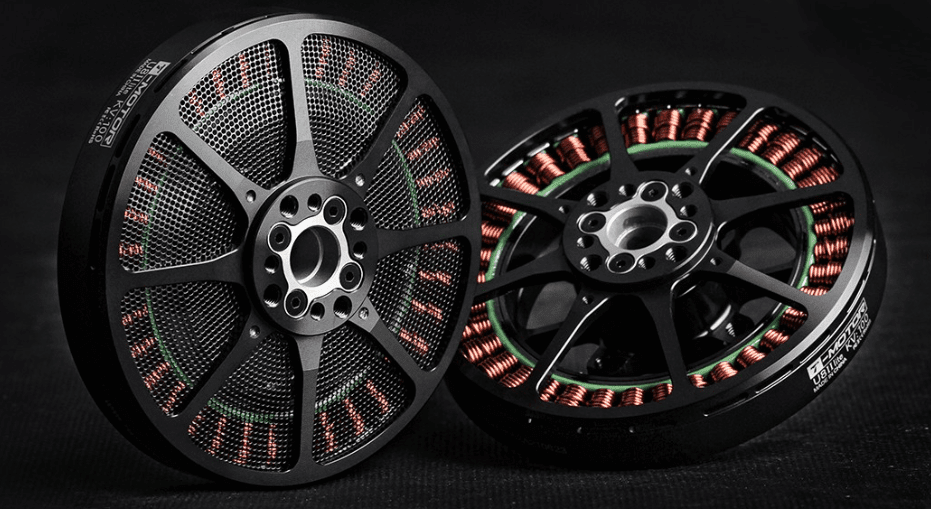
Brushless motors, on the other hand, excel at generating high torque while maintaining energy efficiency.
By using electronic controllers to precisely manage power delivery, brushless motors can achieve greater torque output without the friction or wear associated with brushes. This makes them ideal for tasks that demand rapid acceleration, heavy payload lifting, or operating in high-speed environments.
Performance Insights
When selecting a motor based on performance, the specific application will dictate which type is best.
Brushed motors are often preferred for cost-sensitive projects or tasks requiring simple, low-speed torque. For example, small drones used for basic recreational purposes may benefit from the affordability and simplicity of brushed motors.
Brushless motors, however, are the better choice for high-performance needs. In drone operations, brushless motors are commonly used for tasks like carrying payloads in delivery drones, maintaining stability in windy conditions, or achieving high speeds in racing drones. Their precision and durability make them the go-to option for professionals requiring reliable, powerful output.
Key Factors in Torque and Performance:
- Low-speed torque. Brushed motors provide smooth torque at lower speeds, suitable for simple and steady operations.
- High-speed performance. Brushless motors deliver superior power and torque at higher speeds, ideal for racing drones and industrial tasks.
- Payload capacity. Brushless motors excel at handling heavy payloads, ensuring consistent performance during demanding missions.
- Durability. Brushless motors offer better long-term performance due to their lack of physical wear points, unlike brushed motors.