Big Drones & Heavy Lift Drones: A Comprehensive Guide for Drone Pilots [New for 2026]
Heavy lift drones—also simply called big drones or large drones—are UAVs specifically designed to carry substantial payloads, far exceeding the capacity of most consumer drones.
The DJI FlyCart 30
Unlike smaller drones, which are typically used for photography or recreational purposes, heavy lift drones are made for industrial and commercial applications.
These drones have tough airframes, powerful motors, and advanced stabilization systems to ensure smooth and reliable operation—even in rugged, demanding conditions.
A typical heavy lift drone can carry loads ranging from several pounds to hundreds of pounds. These drones are used in a range of industries today, from hauling construction materials, to delivering medical supplies, to conducting large-scale agricultural tasks.
In this guide we’ll dive into the world of heavy lift drones, sharing the top big drones on the market, the main ways these drones are being used, and more.
Here are four of the top things people ask about—and worry about—when it comes to working with big drones.
1. Are Heavy Lift Drones Expensive?
Yes, they usually are.
Prices can range from $10,000 for consumer-grade models to over $100,000 for advanced industrial drones. The cost depends on factors like payload capacity, flight range, and integrated technology, such as cameras, LiDAR sensors, and autonomous navigation systems.
While the initial investment may seem high, many businesses find that heavy lift drones deliver substantial returns by reducing labor costs and improving operational efficiency.
2. Do Big Drones Have Their Own Regulations?
Operating heavy lift drones can come with regulatory challenges, particularly in urban and industrial environments. In many countries, aviation authorities require special permits for large drones due to their potential safety risks.
In the U.S., drones that weigh more than 55 pounds can’t be operated under the Part 107 rules.
Instead, you have to follow special rules, including:
Registration: Drones weighing 55 pounds or more must be registered through the FAA’s paper-based registration process, rather than the online system used for lighter drones.
Exemption or Special Airworthiness Certificate: Operators must either:
Apply for an exemption under Section 44807 (formerly Section 333)
Apply for a Special Airworthiness Certificate
Pilot Requirements: Pilots operating drones over 55 lbs must obtain:
A remote pilot certificate
A 3rd class medical certificate
Operational Limitations: These drones cannot be flown under standard Part 107 rules, which typically allow operations below 400 feet, in visual line-of-sight, and in Class G airspace without special authorization.
Exemption Duration: If granted, exemptions for operating drones over 55 lbs typically last for 24 months.
Specific Use Cases: Heavy drones are often used in specialized applications such as agricultural spraying, which may fall under additional regulations like Part 137 for agricultural aircraft operations.
Safety is a big concern when flying large drones, especially in densely populated areas or near critical infrastructure.
Heavy lift drones require rigorous pre-flight checks to ensure that all components are functioning properly. Operators must also account for environmental conditions like wind speed, temperature, and visibility, which can significantly impact drone performance.
To enhance safety, many manufacturers are equipping large drones with features like redundant propulsion systems, real-time obstacle avoidance, and emergency landing protocols. Additionally, investing in proper training for operators and having a comprehensive insurance policy in place can help mitigate risks.
4. Insurance and Liability Considerations
Given their size and value, heavy lift drones typically require comprehensive insurance coverage.
Policies should include liability insurance to protect against damages caused to third parties, as well as hull insurance to cover damage to the drone itself. For businesses, having the right insurance is not just a safety measure but often a regulatory requirement, ensuring smooth operations in case of accidents.
Heavy Lift Drones vs. Regular Consumer Drones
Heavy lift drones are fundamentally different from standard drones in several key areas, making them better suited for specific types of work.
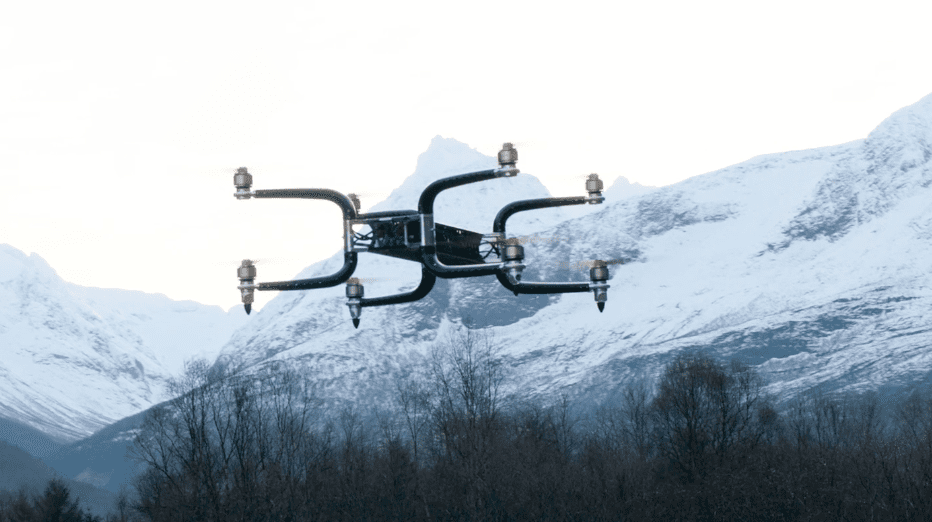
The Griffin 300
Here are the three major differences between the two types of drones:
1. Size and Payload Capacity
Heavy lift drones are designed to carry significantly larger payloads, often exceeding 200 pounds, compared to standard drones that typically handle a few pounds at most. This makes heavy lift drones ideal for industries like construction, logistics, and agriculture.
2. Cost
Due to their advanced capabilities and larger size, heavy lift drones are a lot more expensive than standard drones.
While a consumer-grade drone may cost a few hundred or a few thousand dollars, heavy lift drones often start in the tens of thousands, with high-end models reaching six figures.
3. Use Cases
Standard drones are commonly used for photography, recreational flying, and small-scale inspections, whereas heavy lift drones are built for industrial tasks such as lifting building materials, delivering supplies, or conducting aerial surveys over large areas.
When to Use a Big Drone Over a Normal Drone
The decision to use a heavy lift drone instead of a standard consumer drone depends on the requirements of your mission.
Here are some scenarios where heavy lift drones are often the preferred choice:
Delivery on a job site. For transporting tools, equipment, or materials like concrete, heavy lift drones are indispensable in construction sites where cranes or other machinery are impractical.
Delivery for disaster relief. Heavy lift drones can deliver large quantities of food, water, and medical supplies to areas inaccessible by traditional vehicles.
Precision agriculture. In agriculture, heavy lift drones can carry multispectral sensors or precision sprayers to monitor and treat large areas efficiently.
Film and cinematography. For productions requiring high-end cameras or specialized rigs, heavy lift drones provide the payload capacity and stability needed for cinematic shots.
The DJI Agras T50 and T25
Top 6 Applications for Heavy Lift Drones
Big drones have a lot of uses these days—here are the top six.
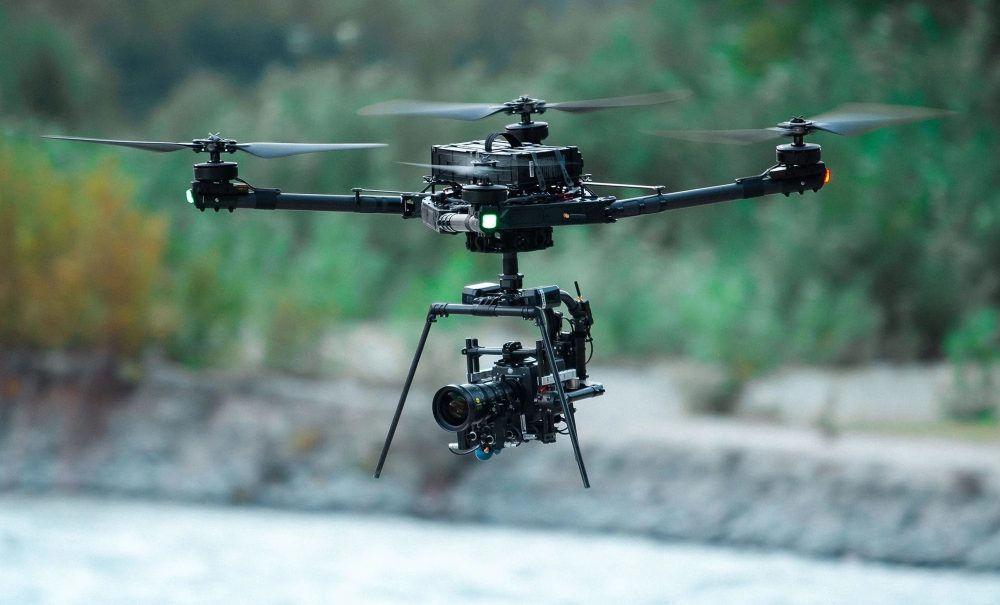
The Freefly Alta X
1. Logistics and Delivery
Heavy lift drones are revolutionizing logistics by enabling the efficient transportation of goods in both urban and remote areas.
These drones can carry substantial payloads, making them ideal for last-mile delivery and emergency supply drops.
For example, Zipline’s drones have been instrumental in delivering medical supplies to remote villages in Africa, showcasing their transformative potential in logistics.
Common use cases in logistics and delivery:
Last-mile delivery. Transporting packages directly to customers in urban and rural areas.
Medical supply delivery. Providing critical supplies such as vaccines or blood to remote locations.
Emergency food delivery. Supplying essential food items to disaster-stricken areas.
2. Agriculture and Environmental Monitoring
Heavy lift drones are a game-changer for agriculture, enabling tasks like precision spraying, seeding, and crop health monitoring.
They also play a critical role in environmental studies by carrying advanced sensors for data collection.
Drones like the DJI Agras series allow farmers to optimize field management while minimizing environmental impact.
Common use cases in agriculture and environmental monitoring:
Precision spraying. Applying fertilizers or pesticides with greater efficiency and accuracy.
Seeding operations. Dropping seeds to restore vegetation in large fields or deforested areas.
Wildlife monitoring. Surveying wildlife populations in hard-to-reach areas for conservation efforts.
3. Emergency Response and Disaster Relief
Heavy lift drones play a vital role in emergency scenarios, particularly for disaster relief and search-and-rescue missions.
Their ability to transport heavy payloads ensures lifesaving support in critical situations.
Common use cases in emergency response and disaster relief:
Search and rescue. Locating survivors in disaster-stricken areas using thermal imaging cameras.
Medical kit drops. Delivering lifesaving supplies like medicines, water, or defibrillators.
Relief supply delivery. Transporting food, water, or shelter equipment to inaccessible regions.
4. Construction and Infrastructure
In construction, heavy lift drones streamline operations by transporting materials to hard-to-reach areas.
They reduce the need for cranes and improve safety for workers on challenging sites.
For example, heavy lift drones have been used to string powerlines in mountainous regions, saving time and reducing risks.
Common use cases in construction and infrastructure:
Material transport. Lifting heavy construction materials such as steel beams and cables.
Stringing powerlines. Deploying drones to string lines in mountainous or remote regions.
Remote site construction. Providing tools and resources to areas with limited infrastructure access.
5. Film and Media Production
Heavy lift drones are becoming essential tools in the film and media industry, enabling stunning aerial cinematography and carrying large, professional-grade camera equipment.
The Freefly Alta X—covered is in our list of top big drones above—is a popular choice for filmmakers, offering the ability to carry large payloads while delivering exceptional stability and precision.
Common use cases in film and media production:
High-quality aerial filming. Capturing cinematic footage for movies, commercials, and events.
Heavy camera rigs. Supporting advanced equipment for specialized shots, including multi-camera setups.
Event coverage. Providing unique perspectives during live events or performances.
6. Energy and Utilities
Heavy lift drones are transforming the energy sector by supporting inspections and maintenance tasks for critical infrastructure like powerlines, pipelines, and wind turbines.
For example, drones equipped with high-resolution cameras and thermal sensors help utility companies improve efficiency and safety during inspections.
Common use cases in energy and utilities:
Powerline inspections. Identifying faults or damage in electrical grids to ensure reliable energy delivery.
Wind turbine maintenance. Carrying tools and equipment for repairs at high altitudes.
Pipeline monitoring. Surveying long-distance pipelines for leaks or environmental hazards.
What to Look for in a Big Drone
Here are some things to keep in mind when searching for a large drone:
Payload capacity. Determine the maximum weight the drone needs to carry. Heavy lift drones can vary significantly in their payload capacity, ranging from a few kilograms to over 400 pounds. Ensure the drone you choose meets the demands of your applications, whether it’s carrying cameras, tools, or large equipment.
Battery life and flight range. Longer battery life and extended flight range are critical for large-scale operations. Consider drones that can remain airborne for extended periods, especially if you’re using them for mapping, logistics, or agricultural tasks over vast areas.
Durability and weather resistance. Heavy lift drones are often used in challenging environments. Look for drones with durable construction and weather resistance (e.g., IP ratings) to ensure reliability in adverse conditions.
Cost and value. Heavy lift drones can be a significant investment. Compare prices while considering the drone’s features, build quality, and included accessories. Keep in mind that cheaper options may lack advanced features or durability.
Tips for Finding a Heavy Lift Drone
Here’s what to look out for when researching heavy lift drones:
Research the manufacturer. Look for reputable manufacturers with a proven track record in the heavy lift drone market. Companies like DJI, Freefly, and Skyfish are well-regarded for their reliability and innovation.
Check warranties and support. Ensure the drone comes with a robust warranty and access to after-sales support. This can be crucial for resolving technical issues or replacing damaged parts.
Consider customization. Some heavy lift drones offer modular designs, allowing you to customize payloads or add sensors for specific tasks. This flexibility can enhance the drone’s usability across multiple industries.
Test before you buy. Whenever possible, test the drone or request a demonstration to evaluate its performance and ease of operation. Also, companies like MFE Inspection Solutions let you rent equipment, including big drones.
Look at reviews. Not only that, but see if you can find Facebook groups where people have flown a specific drone. For example, there is a specific group devoted to the DJI Matrice 300.
What’s Next for Big Drones?
The heavy lift drone market is evolving rapidly, driven by cutting-edge innovations that are expanding their capabilities and applications.
These advancements allow drones to lift heavier payloads, travel longer distances, and operate autonomously in more challenging environments.
Here are some of the biggest innovations driving the development of large drones:
AI for autonomous flight. Artificial intelligence is revolutionizing drone navigation, allowing drones to make real-time decisions, avoid obstacles, and optimize flight paths. This technology is particularly useful for industrial applications like search-and-rescue and infrastructure inspection.
Long-range delivery drones. Heavy lift drones are increasingly used for long-range deliveries, particularly in remote areas. Hybrid propulsion systems and extended-range capabilities are making it possible to transport essential goods, medical supplies, and even construction materials over vast distances.
Battery improvement. One key area of development is improved battery technology. Lithium-sulfur and solid-state batteries are being explored to extend flight times and increase energy efficiency. These advancements are critical for heavy lift drones, which require substantial power to carry large loads. Hybrid propulsion systems, which combine electric motors with fuel-powered engines, are also becoming more common, offering greater endurance and flexibility.
Drones that can carry a person. Personal transport drones are no longer a concept confined to science fiction. Companies are actively developing drones capable of carrying passengers, opening new possibilities for urban air mobility and emergency evacuations.
Big Drone FAQ
Here are some of the most common questions people have about large, heavy lift drones.
What is the largest drone you can buy?
The largest commercially available drone is the Griff Aviation 300, which has a payload capacity of up to 500 pounds. There are custom-built drones for industrial and military purposes that are even larger, but these are not typically available for public purchase.
How much weight can a heavy lift drone carry?
The weight a heavy lift drone can carry varies significantly depending on its design and purpose. Consumer-grade heavy lift drones can carry up to 20 pounds, while industrial models like the Griff 300 or DJI FlyCart 30 can carry between 66 and 88 pounds.
Can a drone carry a person?
Yes, there are drones designed to carry people. Examples include the Joby S4 and the Jetson ONE, which are categorized as passenger drones. These drones are designed for personal air transport and typically carry one or two people over short distances.
What drone has the highest lift capacity?
The Griff Aviation 300 is among the drones with the highest lift capacity, capable of carrying up to 500 pounds. Custom-built drones used in industrial or military applications can exceed this capacity, but they are not widely available.
What is the biggest drone?
The Boeing MQ-25 Stingray is one of the largest drones, with a wingspan of 75 feet. However, it’s a military drone and not available for public use. For commercially available drones, the Griff Aviation 300 is often cited as the largest due to its size and heavy-lift capabilities.
How much does a heavy lift drone cost?
Heavy lift drone costs can range from $5,000 for entry-level models to over $250,000 for advanced industrial or military-grade drones. The price depends on factors like payload capacity, flight time, and additional features such as thermal imaging or LiDAR sensors.
What industries benefit most from heavy lift drones?
Industries like construction, logistics, agriculture, emergency response, and cinematography benefit significantly from heavy lift drones. These drones are used to transport materials, deliver supplies, monitor crops, and capture high-quality aerial footage.
Are heavy lift drones safe to operate?
Yes, heavy lift drones are safe to operate when used correctly and in compliance with local regulations. They come equipped with advanced safety features like obstacle avoidance, GPS stabilization, and failsafe mechanisms. However, proper training and certification are essential for safe operation.