In 2020, Joseph Encinias was a newlywed with zero agriculture experience when the pandemic turned his life upside down.
With job prospects shifting and the future uncertain, he and his new wife decided to move to southeast Minnesota to help his father-in-law run the family farm. Suddenly, with no prior experience, he was a farmer.
And just six months later, they started using agriculture drones.
Today, Joe leads the drone division at Titan Pro, an independent agricultural retailer based in Clear Lake, Iowa. The company provides crop protection, plant performance products, seed, crop insurance, and Hylio drones to growers across its 10-state Midwest footprint. He manages the company’s entire drone program, training growers and helping farmers use drones to improve their work.
“Three years ago, I didn’t have any experience in agriculture at all,” he says. “Now I’m helping growers get into drone spraying and navigate the process safely.”
This is the story of how Joe went from no knowledge of agriculture to drone-powered farmer, and then to leading Titan Pro’s drone program.
From Farmer To Drone Pilot—To Drone Rep
When Joe Encinias and his wife moved to Minnesota he became a full-time farmer overnight.
“I dove in headfirst,” he says. “There’s no other way to learn farming. You just have to start doing it.”
As he got up to speed, a conversation with his sister-in-law opened the door to something he hadn’t considered.
She had just come back from a farm event called Becknology Days, where she saw Hylio’s ag spray drones in action.
“She told me about the drones and the company,” Joe says. “And she thought—wait, we can do that?”
Instead of buying a hobby drone to experiment with, Joe’s sister-in-law went straight into learning what it would take to spray legally and safely.
She and the rest of the family signed up for training, got familiar with the equipment, and worked through the early steps of compliance so they could be ready for the next season.
Why Getting Part 107-Certified Matters
Joe says getting Part 107-certified was a key early step in his drone journey.
Once you’re flying for real work on a farm, you need to understand the rules and take compliance seriously. Also, certification is required by law for anyone flying drones for work.
To prepare for the Part 107 knowledge test Joe used Drone Pilot Ground School.
“I needed a structured way to learn the material,” he says. “Drone Pilot Ground School made it clear, and it helped me pass.”
From Drone Farm Work to Drone Training
By spring, they had spray drones on the farm. And they were using them for real work, including late-season applications where ground rigs weren’t always the best fit.
Word traveled fast.
Once people saw what the drones could do—especially for late-season work—other growers started asking questions: What does it cost? How does it work? What do you need to do to fly legally?
Before long, Joe wasn’t just flying. He was helping other farmers get set up too, sharing what he’d learned about equipment, training, and the step-by-step path to doing agricultural drone spraying the right way.
Eventually, his drone work caught the attention of Titan Pro. The company was looking for an ag drone expert with proven field experience to launch their new drone program.
Even though Joe was new to farming, he’d developed rare hands-on experience with ag drones and field realities, which was exactly what Titan Pro needed.
Thinking about adding drones to your farm? Here’s Joe’s advice:
- Start the paperwork early. Between Part 107, FAA approvals tied to Part 137, and state pesticide licensing, the process can take months. Don’t wait until you’re ready to spray.
- Walk before you run. Most crashes happen when operators rush. Build piloting skills slowly—especially with takeoffs, landings, and emergency procedures.
- Practice before real acres. Get comfortable with swath width, speed, and how the aircraft behaves under load before spraying a full field.
- Prioritize safety over speed. Drone spraying isn’t about flying fast. It’s about flying responsibly: understanding labels, limits, and the aircraft itself.
- Lean on trusted support. Training and guidance from people who understand both agriculture and regulations make adoption far smoother.
Drones Made Specifically for Farmers
When Joe started on the family farm, the focus was simple: solve real problems—especially late-season challenges where traditional equipment wasn’t always the best fit.
Now, as the leader of Titan Pro’s drone division, he brings that same hands-on approach to farmers, training them in how to use drones for everything from data collection to precision spraying.
The company exclusively sells drones from ag drone company Hylio, a decision made because of its reliability, reporting software, responsive support team, and the fact that it’s based in the U.S.
“We chose Hylio because they’re built for farmers,” Joe says. “You don’t have to be a programmer to operate them, and the support is phenomenal. If a grower is in the middle of nowhere and has a question, Hylio answers the phone.”
And the results speak for themselves, according to Joe.
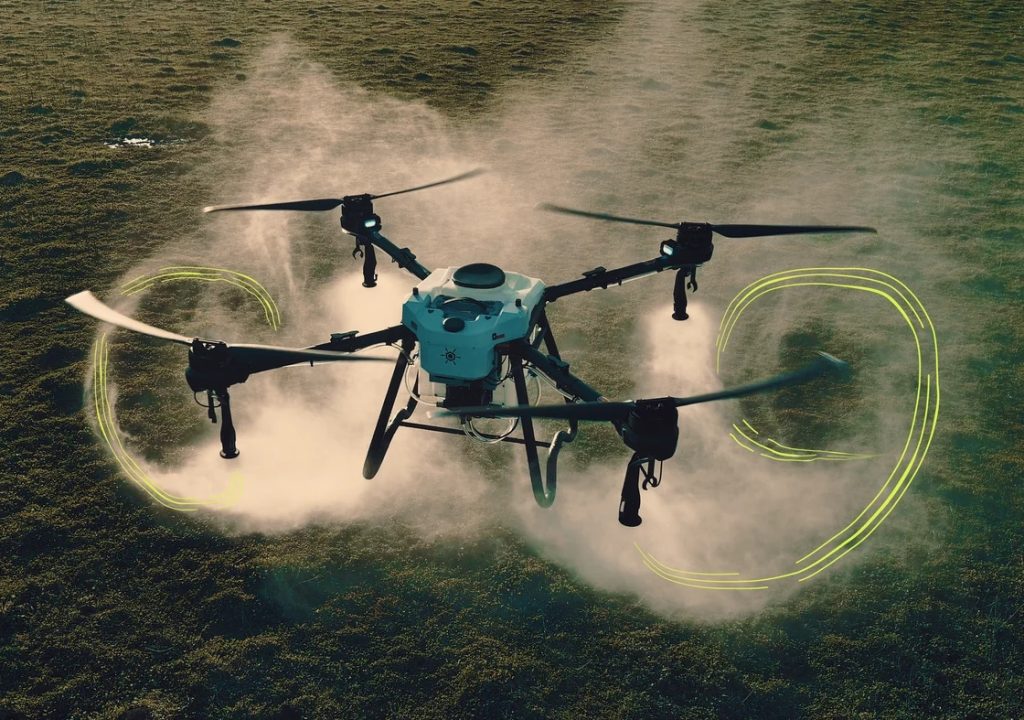
Drones can spray any acres traditional methods can as well as fields that ground rigs can’t access, all without soil compaction. They can also spot early warning signs of stress, weeds, or pests, allowing for faster, more targeted intervention.
But it’s not just about efficiency. It’s also about keeping farmers independent.
“Everything in agriculture right now is pushing toward consolidation,” Joe says. “But drones give power back to the grower. They can scout their own fields, make their own decisions, and respond in real time.”
In addition to providing drone hardware and software, Titan Pro offers growers one-on-one drone training, workflow designs and best practices to help them succeed, and compliance guidance for FAA regulations and ag chemical laws.
Joe’s favorite part of the job? Seeing growers go from skeptical to sold.
“I’ve had farmers say, ‘That’ll never work on my operation.’ Then we get out there, run a couple flights, and they’re asking how soon they can get one,” he says. “That’s the win for me—showing them what’s possible.”

How Farmers Are Using Drones Today
Joe told us his clients at Titan Pro use drones on their farms for a range of tasks, but one of the most common is spraying.
Here are the main ways he sees farmers using drones today:
Spraying & Application
- Targeted applications (often fungicides, insecticides, or micronutrients—depending on labels and local requirements)
- Spot treatments and hard-to-reach areas (odd-shaped fields, edges, and areas near obstacles)
- Multiple passes, spoon feeding the crop while eliminating soil compaction
Mapping & Scouting
- Orthomosaic maps of entire fields
- Identification of pest pressure, plant stress, and uneven emergence
- NDVI and RGB imagery to support crop-health decisions
But be aware of the law. Joe says, “Just because you can fly a drone doesn’t mean you can spray with it.”
Want to spray crops with a drone? A Part 107 certificate isn’t enough.
Here’s what Joe says farmers need to know:
- Spraying is different from mapping and collecting imagery. Part 107 is an important starting place—but spraying adds additional FAA approvals beyond a standard Part 107 operation.
- Spraying falls under Part 137. To spray legally, operators need FAA authorization tied to Part 137 (Agricultural Aircraft Operations)—typically via an Agricultural Aircraft Operator Certificate (AAOC).
- Additional FAA approval is required. In Joe’s experience, you’ll often need an FAA exemption (commonly referred to as a 44807 exemption) in addition to Part 137/AAOC requirements.
- State-level approvals may also be required. In most states, operators must have:
- A pesticide applicator license
- Approval from the state Department of Agriculture
* This is a practical overview, not legal advice. Requirements may vary by aircraft, operation, and state.
Hard Work, Big Payoff: Joe’s Advice for New Ag Drone Pilots
For Joe Encinas, success in agricultural drone work didn’t come overnight.
He had to learn everything from scratch: how to operate ag drones, interpret agricultural data, and understand the real-world needs of farmers.
And even now, he says, there’s always more to learn.
“It’s not always easy,” Joe says. “But it’s worth it. You’ve just got to be willing to get your hands dirty and figure things out.”
Here’s Joe’s advice:
1. Find Trusted Advisors
One of the first things Joe stresses is the importance of learning from people who’ve actually done the work.
Early on, he leaned heavily on experienced operators and mentors. Now, as someone farmers turn to for guidance, he sees just how much that support matters.
“You don’t want to just buy a drone from someone who’s never flown it,” he says. “You want someone who knows the real-world side of this—what works, what doesn’t, and how to troubleshoot in the field.”
2. Don’t Skip the Learning Curve
Agricultural drone work takes time to master. Joe is upfront about that.
Mistakes happen. Flights don’t always go as planned. Data doesn’t always look the way you expect. And that’s part of the process.
“You’ve got to be patient with yourself,” he says. “You don’t figure this out overnight.”
The key is sticking with it long enough to build real confidence and competence.
3. Start Small—and Stay Consistent
Another core piece of Joe’s advice: start small.
“If you try to go too big, too fast, it can be overwhelming,” he says. “But if you start with one drone, one field, one client, then you’ll build the confidence you need to grow.”
That slow, steady approach helped him learn the technology without getting discouraged. And it’s the same advice he gives farmers and new drone pilots today.
4. Be a Partner, Not Just a Provider
Joe also encourages drone pilots to think beyond the technology.
Farmers don’t need flashy tools. They need people they can trust—people who understand agriculture, timing, and the realities of a growing season.
“The relationship matters,” he says. “You’re there to help them make decisions, not just hand over data.”
5. Stick With It
Finally, Joe reminds new pilots that agriculture is seasonal, and unpredictable.
Some years are better than others. Weather changes plans. Markets shift. But persistence pays off.
For Joe, sticking with it led to a full-time role helping farmers, and to a front-row seat in shaping how drones are used in modern agriculture.
“You’ve got to keep showing up,” he says. “That’s how it works.”