A selfie drone is a compact, usually inexpensive camera drone made to take high-quality selfies and aerial shots.
A big difference between a regular consumer drone and a selfie drone is that most selfie drones are made to virtually fly themselves, allowing you to get “follow me” shots of extreme sports or other activities in which you can’t focus on flying.

The DJI Neo
Although selfie drones are usually associated with people who don’t know much about flying—thus the self-flying emphasis—they’ve been rising in popularity lately among commercial drone pilots for their ability to get quick, relatively high-quality action shots.
And this interest from professional drone pilots is only growing with the launch of the DJI Neo and the HoverAir X1 PROMAX, which are both inexpensive but really high quality selfie drones.
In this guide we take a close look at selfie drones, covering the best selfie drones on the market, how commercial drone pilots are using selfie drones in the field, and more.
Here’s a table of contents in case you’d like to jump around:
- What Is a Selfie Drone?
- Best Selfie Drones on the Market [New for 2024]
- 7 Ways Commercial Drone Pilots Are Using Selfie Drones in the Field
- Failed Selfie Drones
- Selfie Drone FAQ
What Is a Selfie Drone?
Selfie drones are small, light weight drones designed to capture aerial photos and videos semi-autonomously, often without the need for a skilled pilot. Many of them come with intelligent flight modes and are known for their portability and ease of use, making them ideal for quick, candid shots taken on the go.
[Related read: DJI Alternatives: A Comprehensive Guide for Drone Pilots]
The concept of selfie drones has been around for years, with early examples like Lily Robotics aiming to create autonomous drones that could follow users and capture footage without manual control.
However, for a long time the technology just couldn’t match the hype. In the case of Lily Robotics, the company used a promotional video—which has over 12 million views on YouTube—to collect over 60,000 pre-orders, only to reveal that it the video was a fake.
Here’s the video:
The DJI Mini 4 Pro is a versatile, high-performance selfie drone designed for both casual and professional use.
Its advanced features make it ideal for capturing stunning aerial shots, and its compact design and intelligent flight modes allow users to achieve creative and dynamic footage without needing extensive piloting skills.
Specs & Details
- Camera. 48MP with 4K video capabilities, ideal for high-quality selfie shots and videography.
- Flight time. Up to 34 minutes, giving users plenty of time for extended shooting sessions.
- Weight. Just under 249g, making it lightweight and exempt from FAA registration in the U.S.
- Obstacle sensing. Tri-directional obstacle sensing for safer, more autonomous flying.
- Selfie features. QuickShots, MasterShots, and SmartPhoto technology for optimized photography and autonomous flight modes.
Learn more about the DJI Mini 4 Pro.
7 Ways Commercial Drone Pilots Are Using Selfie Drones in the Field
While selfie drones may not be suitable for some types of commercial work, like large-scale mapping or industrial inspections, they can still serve a useful purpose for commercial drone pilots.
Their portability, ease of use, and autonomous features make them handy tools for quick, impromptu shots or for providing an additional camera angle. These drones are especially useful in smaller spaces or when discreet filming is needed, like at a wedding.
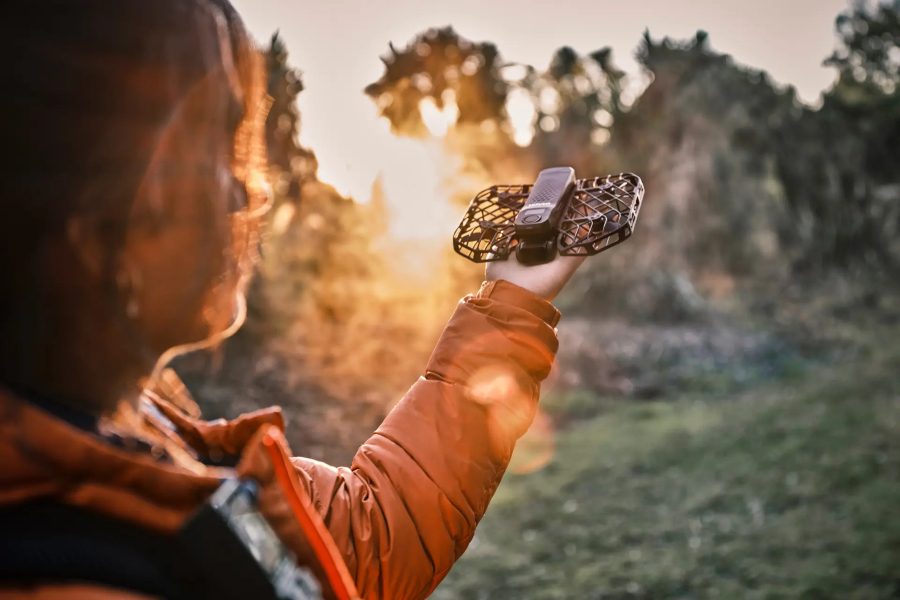
Credit: Zero Zero Robotics
Here’s a list of ways that commercial drone pilots are using selfie drones in the field:
1. Site Documentation
Selfie drones can be useful for quick documentation at job sites, capturing unique aerial shots without needing a full setup.
2. Marketing Content
Drone pilots can use selfie drones to create dynamic social media content, promoting their services with behind-the-scenes footage and captivating aerial shots.
3. Event Photography
Selfie drones can autonomously capture candid shots at weddings or public events, providing an additional perspective without the need for constant piloting.
4. Monetized Social Media Accounts
For pilots managing YouTube, TikTok, or Instagram accounts, selfie drones can be a key tool for creating engaging content. They allow for hands-free, creative shots, providing a unique angle that enhances the quality of social media posts.
5. Backup Aerial Footage
A selfie drone can act as a secondary aerial image collection device. While the main drone handles primary coverage, the selfie drone can offer additional or backup shots, ensuring diverse footage.
6. Real Estate Marketing
Selfie drones provide a quick and efficient way to capture dynamic property shots, ideal for agents seeking aerial photography for listings or property tours.
7. Outdoor Adventure Shoots
Commercial drone pilots can use selfie drones to capture footage of outdoor activities like hiking, biking, or skiing for adventure sports clients. This can result in dynamic footage with minimal setup, even in challenging terrains.
Failed Selfie Drones
The history of selfie drones is littered with failed attempts.
There are two reasons for this:
- It’s hard. Creating a truly autonomous—or at least semi-autonomous—drone is actually quite hard. Even just making a drone that’s easy to fly has taken years of testing for major drone companies.
- DJI dominates the market. When other companies try to introduce attractive consumer drone options they’re up against a giant competitor.
Here’s a short list of notable failures in the selfie drone world:
1. Lily Robotics
Year: 2015
Lily promised to make an autonomous drone with automatic take-off and landing, designed for casual users. It raised a whopping $34 million in pre-orders but never delivered the promised product. The company shut down in 2017 after it was revealed that its promotional videos used fake footage.
2.GoPro’s Karma
Year: 2016
GoPro’s first attempt to enter the drone market with a foldable drone was the Karma. The Karma faced an initial recall due to power loss mid-flight and it was eventually discontinued in 2018 due to poor sales and stiff competition from DJI.
3. Snapchat’s Pixy
Year: 2017
The Pixy was a compact drone designed for selfies and short videos, aimed at social media users. But it sold only for a short period before being discontinued due to lackluster sales and limited consumer interest.
4. DJI’s Spark
Year: 2017
The Spark was DJI’s first dedicated selfie drone, featuring gesture controls and face recognition, marking a shift toward more advanced AI-powered consumer drones from DJI.. It was discontinued in 2019 due to the release of more advanced models, though it was a market success during its run.
5. 2019 – Skydio 2+
Year: 2019
The Skydio R1, 2, and 2+ were all advanced autonomous drone with AI-driven obstacle avoidance and tracking capabilities. In 2023, Skydio shifted focus to enterprise solutions and stopped selling its drones to consumers despite strong performance reviews. This is another instance where it seemed like DJI won the consumer drone battle, pushing out a potential competitor.
Selfie Drone FAQ
Are there self-flying selfie drones?
Yes, there are drones equipped with autonomous flying capabilities. These drones use GPS, AI-powered tracking, and smart sensors to fly, hover, and track subjects without manual control.
How do you take a picture of yourself with a drone?
To take a selfie, simply position the drone in front of you using the controller or app. Many selfie drones feature gesture control or auto-shot modes, so you can signal the drone to take a photo without needing to touch the controls.
Are selfie drones legal to fly?
Yes, selfie drones are legal to fly, but you must comply with the same regulations that apply to any drone. In the U.S., this means adhering to the FAA’s Part 107 rules for commercial use or the FAA’s recreational flying guidelines.
What is a good flight time for a selfie drone?
A good flight time for a selfie drone is between 15 to 30 minutes. Longer battery life allows you to capture more footage without frequent recharging.
Do selfie drones need to be registered?
Yes, most selfie drones need to be registered with the FAA if they weigh more than 0.55 pounds. Check your drone’s weight to determine if registration is required.
Can selfie drones shoot video?
Yes, most selfie drones are capable of shooting video in addition to taking photos. Many modern selfie drones support 4K or higher resolution video recording.
Do selfie drones have follow-me features?
Yes, many selfie drones are equipped with “follow me” features. This allows the drone to autonomously track and follow you while capturing video or photos.
Can you use a selfie drone indoors?
Yes, some selfie drones are designed for indoor use. However, be mindful of their size and ensure the drone has obstacle avoidance sensors to navigate safely indoors.
What is gesture control in selfie drones?
Gesture control allows users to take photos or videos by making simple hand gestures. This feature makes it easier to operate the drone hands-free, especially for selfies.
How much does a selfie drone cost?
Selfie drones can range from $100 to $1,000 depending on the features and camera quality. Entry-level models are more affordable, while high-end models with 4K cameras and advanced tracking features tend to cost more.
Can you fly a selfie drone at night?
Flying a drone at night is regulated by the FAA, and commercial drone pilots must have a special waiver to fly after dark. Recreational users should check local regulations and ensure the drone has proper lighting for visibility.
What should I consider when buying a selfie drone?
When buying a selfie drone, consider factors like camera quality, battery life, portability, and ease of use. Features like follow-me modes, gesture control, and obstacle avoidance are also important for capturing the best shots.