A fixed wing drone is a drone that relies on fixed wings to generate lift and maintain flight.
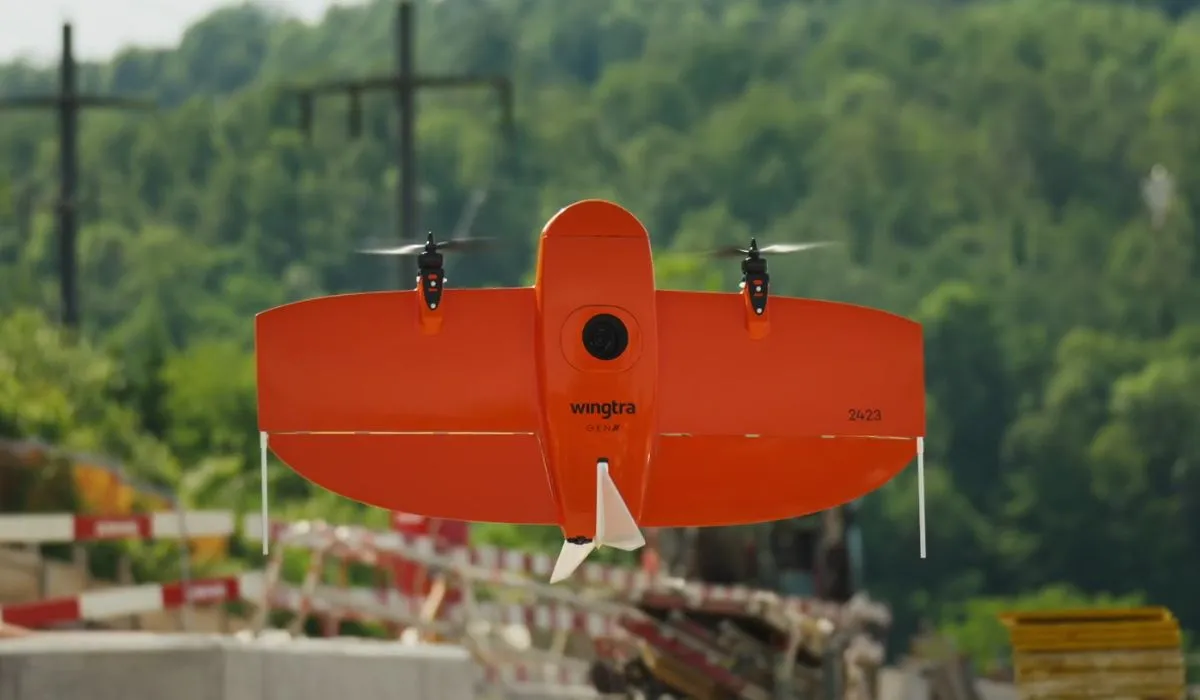
Unlike multi-rotor drones, which use multiple rotors to hover and maneuver, fixed wing drones are designed for continuous forward motion—much like traditional airplanes. This design allows them to achieve greater energy efficiency and cover longer distances with fewer power requirements.
Fixed wing drones are equipped with advanced navigation systems and payload capabilities, making them ideal for missions that require long-range coverage and high-altitude performance. They’re commonly used in industries like mapping, agriculture, and surveillance, which require endurance and efficiency for drone operations.
In this guide to fixed wing drones we’ll share the top options on the market, the different types of fixed wings, what to look for when choosing a fixed wing, and more.
Here’s a menu in case you’d like to jump around:
Types of Fixed Wing Drones
Fixed wing drones come in various designs tailored to different applications.
Each type offers unique features, making them suited for specific industries and use cases.
Comparison Chart: Types of Fixed Wing Drones
| Type | Key Features | Advantages | Limitations | Typical Use Cases |
|---|---|---|---|---|
| Traditional Fixed Wing | Aerodynamic design, requires forward motion to stay airborne, needs a runway or launcher. |
|
|
|
| Hybrid VTOL Fixed Wing | Combines vertical takeoff and horizontal flight; equipped with rotors and fixed wings. |
|
|
|
| Small Fixed Wing | Compact size, lightweight, often designed for hobbyists or light commercial use. |
|
|
|
Here’s a little more information about each type of fixed wing covered in the chart above.
[Looking for DJI alternatives? Check out our in-depth guide.]
Traditional Fixed Wing Drones
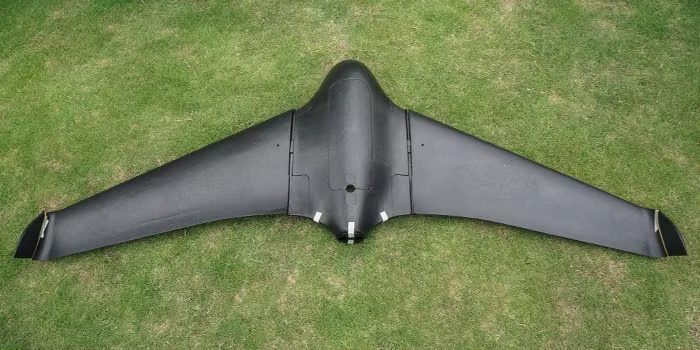
Traditional fixed wing drones are designed for long-range and energy-efficient missions.
They rely on forward motion to stay airborne and are perfect for covering vast areas with precision. These drones are widely used in industries like mapping, surveying, and environmental monitoring.
- Key Advantages. Long flight times, high energy efficiency, excellent for large-area coverage.
- Limitations. Requires a runway or launcher, cannot hover, limited maneuverability.
Hybrid VTOL Fixed Wing Drones
Hybrid VTOL drones combine the best features of traditional fixed wing drones and vertical takeoff and landing (VTOL) capabilities.
This makes them ideal for operations requiring both hovering and efficient long-distance flight.
- Key Advantages. Versatility, ability to hover, no need for a runway, suitable for complex missions.
- Limitations. Higher complexity, shorter flight times compared to traditional fixed wing models.

Small Fixed Wing Drones
Small fixed wing drones are designed for beginners or those with light commercial needs. Their compact size and affordability make them an excellent choice for hobbyists and smaller-scale operations.
- Key Advantages. Affordable, portable, easy to operate.
- Limitations. Limited range and payload capacity, less durable in harsh environments.
Key Features to Look for in a Fixed Wing Drone
Choosing the best fixed wing drone depends on your specific requirements and budget.
If you need a drone for mapping, choose a model with long flight times and high-resolution cameras. For agricultural monitoring, prioritize agriculture drones with multispectral sensors and large coverage areas.
Beginners or those on a budget might consider entry-level options, like the cheapest fixed wing drones, which still offer solid performance for less complex tasks.
Regardless of your specific needs, here are four key features to look for when trying to pick a fixed wing.
1. Flight Range and Endurance
Fixed wing drones are known for their ability to cover vast areas in a single flight, making them ideal for missions like mapping, surveying, and environmental monitoring.
When looking for a fixed wing, consider its maximum flight time and range, ensuring it aligns with your specific needs. For example, a drone with a 90-minute flight time is well-suited for large-scale agricultural monitoring or infrastructure inspections.
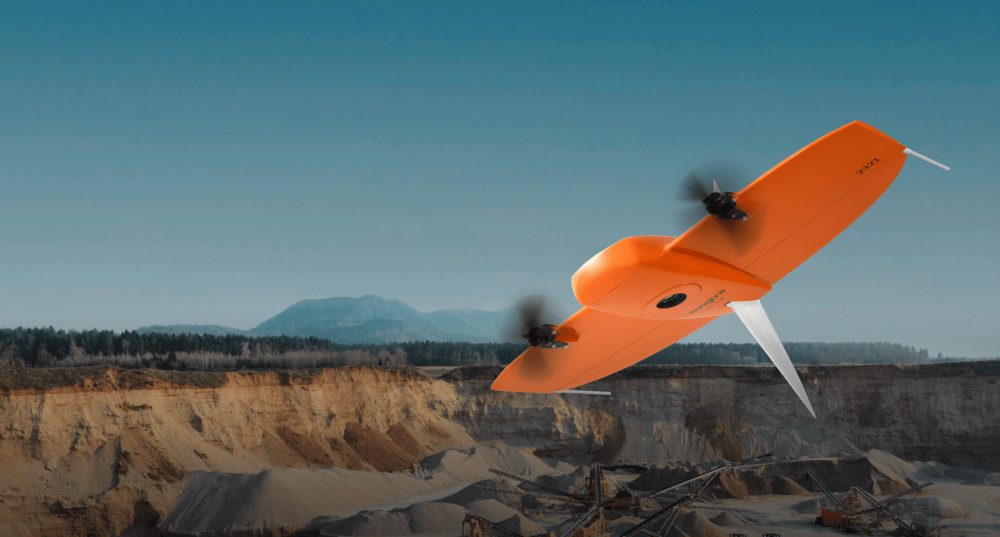
Endurance is particularly critical for tasks requiring consistent coverage, such as search-and-rescue missions or long-distance deliveries. Models like the WingtraOne Gen II excel in range and endurance, making them a top choice for professional applications.
2. Camera Quality
The quality of the camera onboard a fixed wing drone is a crucial factor for capturing high-resolution images and detailed data.
Drones used for mapping, inspections, or environmental monitoring benefit significantly from advanced imaging systems, such as LiDAR sensors or multispectral cameras. These technologies ensure precision and provide actionable insights, making them indispensable for industries like agriculture and surveying.
For instance, drones like the Autel Dragonfish come equipped with high-resolution cameras, enabling users to conduct professional-grade mapping or inspection missions.
3. Payload Capacity
A drone’s payload capacity determines its versatility and ability to handle specialized equipment. (Payload capacity = the type of sensors the drone can carry.)
Fixed wing drones with customizable payload options can adapt to a wide variety of tasks, from carrying thermal cameras for infrastructure inspections to transporting supplies for delivery missions.
4. Durability and Weather Resistance
Durability is crucial for fixed wing drones operating in challenging environments.
Whether it’s high winds, rain, or rough landings, a rugged drone ensures reliable performance under adverse conditions. This feature is especially important for outdoor applications like agricultural surveys or environmental monitoring.
Look for drones built with reinforced materials and weather-resistant designs. For example, the JOUAV CW-25E is constructed with industrial-grade materials, making it a solid choice for missions in harsh conditions.
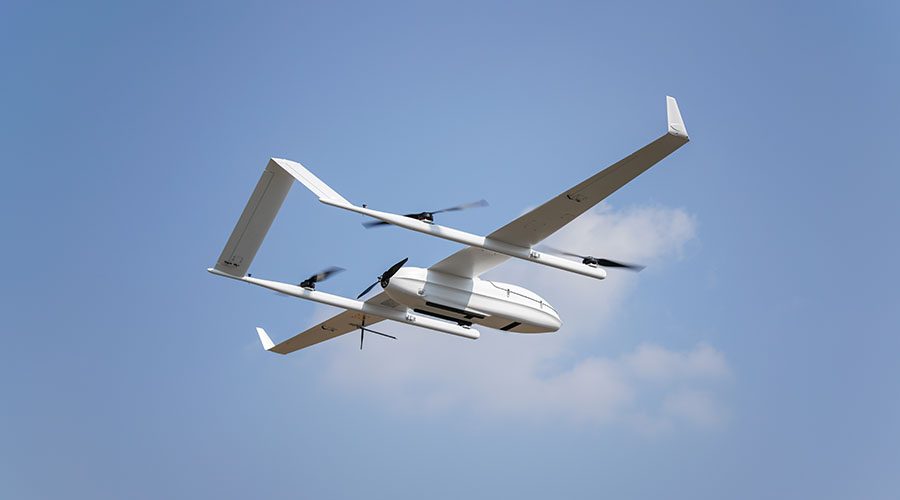
What Makes Fixed Wings Unique?
Fixed wing drones offer some unique advantages over other types of drones.
Fixed wings are known for their energy efficiency, as their aerodynamic design reduces battery consumption compared to multi-rotor counterparts.
And their long flight times and extended range allow them to cover vast areas in a single mission, which is especially valuable for large-scale projects like mapping expansive landscapes or monitoring agricultural fields.
Here are five things that make fixed wing drones stand out from other UAV designs.
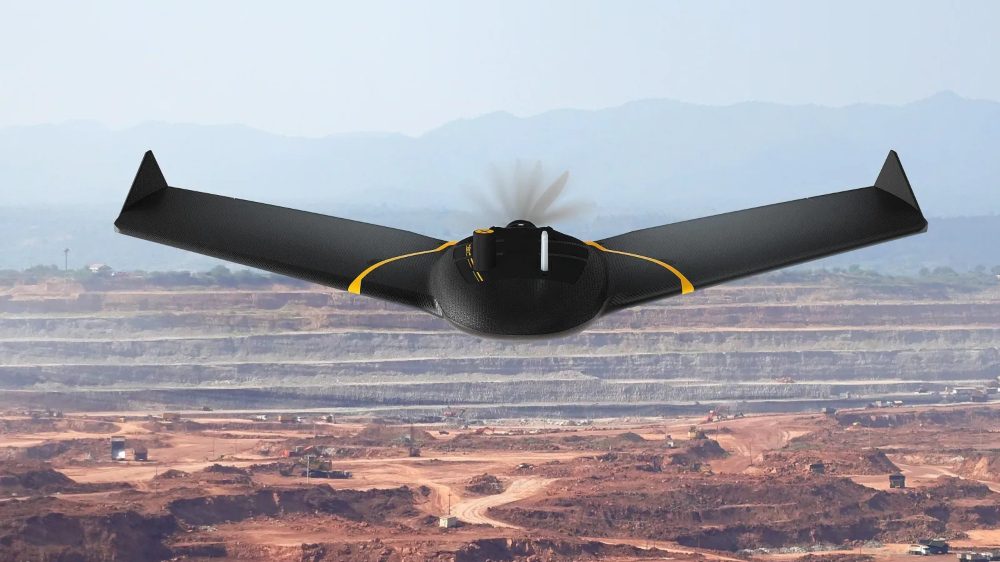
1. Extended Flight Times and Energy Efficiency
Fixed wing drones can stay airborne for hours due to their ability to glide through the air, consuming significantly less power compared to multi-rotor drones.
This makes them ideal for long-duration missions like border surveillance and pipeline inspections.
2. Large-Scale Mapping and Monitoring
Fixed wing UAVs are perfect for covering large areas with precision.
Their stable flight and ability to carry advanced sensors make them indispensable for tasks like aerial mapping, agricultural surveys, and environmental assessments.
3. Greater Coverage Per Flight
Fixed wing drones can cover significantly more ground per flight compared to their multi-rotor counterparts. This makes them a cost-effective choice for industries like forestry and large-scale infrastructure inspections, where efficiency is critical.
4. Increased Payload Capacity
Fixed wing designs can carry heavier and more specialized equipment, such as LiDAR systems or thermal cameras.
This capability allows them to perform advanced operations, including geological surveys and precision agriculture analysis.
5. Durability and Adaptability
Built for tough conditions, fixed wing drones can operate in challenging environments, including strong winds and remote areas. Their robust design and ability to launch and land in tight spaces make them well-suited for missions in rugged terrain.
6 Most Common Applications for Fixed Wing Drones
Here are the six most common ways fixed wing drones are being used today.
1. Mapping
Fixed wing drones are revolutionizing the mapping industry with their ability to cover large areas quickly and accurately.
Equipped with high-resolution cameras and advanced GPS systems, these drones can generate detailed drone maps for urban planning, infrastructure development, and land surveys. Unlike multi-rotor drones, fixed wing models excel in long-range missions, making them ideal for mapping expansive terrains with minimal downtime.
Mapping use cases for fixed wings include:
- Topographic mapping. Generate detailed 3D maps of landscapes for urban planning and land development projects.
- Construction site surveys. Provide precise aerial data to monitor progress and identify potential issues on construction sites.
- Disaster management mapping. Assess affected areas quickly and deliver actionable insights for emergency response teams.
2. Agriculture and Precision Farming

In agriculture, fixed wing UAVs are vital for monitoring crop health, irrigation patterns, and pest infestations.
Their ability to carry multispectral sensors and cover vast fields ensures that farmers can make data-driven decisions to optimize yields and reduce costs. These drones are also used for tasks such as precision spraying and soil analysis, making them a cornerstone of modern precision agriculture.
Agriculture use cases for fixed wings include:
- Crop health analysis. Detect issues like nutrient deficiencies or pest infestations using multispectral cameras.
- Irrigation monitoring. Identify areas with water stress to improve irrigation efficiency.
- Field mapping for planting. Provide detailed maps to optimize planting patterns and maximize yields.
3. Environmental Monitoring and Conservation
Environmental monitoring is another field where fixed wing UAVs shine.
Conservationists use these drones to track wildlife, monitor deforestation, and assess the health of ecosystems like wetlands and forests. With their extended flight times and capability to carry advanced sensors like LiDAR, fixed wing drones provide critical data for climate change studies and habitat preservation.
Environmental monitoring use cases for fixed wings include:
- Wildlife tracking. Monitor animal populations and migration patterns in remote areas.
- Deforestation monitoring. Track changes in forest cover and detect illegal logging activities.
- Wetlands and coastal health assessments. Evaluate ecosystem health to support conservation efforts.
4. Surveying and Infrastructure Inspection
Fixed wing drones are widely used in surveying and infrastructure inspection, especially for pipelines, powerlines, and road networks.
Their long-range flight capabilities allow them to inspect linear infrastructure efficiently, reducing the need for manual checks in hazardous or remote areas. Equipped with thermal cameras and high-resolution imaging systems, they can detect faults or damage early, ensuring timely repairs and minimizing downtime.
Inspection use cases for fixed wings include:
- Pipeline inspections. Detect leaks and structural weaknesses in long-distance pipelines.
- Powerline monitoring. Identify damage or overheating in powerline infrastructure with thermal imaging.
- Road and bridge assessments. Conduct aerial surveys to evaluate structural integrity and plan maintenance activities.
5. Search-and-Rescue Operations
Fixed wing drones play a critical role in search-and-rescue operations, especially in large or hard-to-access areas.
Their long endurance and ability to carry thermal imaging cameras enable them to locate missing persons in dense forests, mountainous regions, or disaster-stricken zones. These drones can scan vast areas in a fraction of the time required by ground teams, significantly improving the chances of a successful rescue.
Search and rescue use cases for fixed wings include:
- Disaster zone assessments. Survey areas impacted by natural disasters to locate survivors and assess damage.
- Missing person searches. Use thermal cameras to find individuals in dense forests or remote locations.
- Coastal rescue missions. Monitor vast stretches of coastline for stranded individuals or distressed boats.
6. Defense and Border Security
Fixed wing drones are commonly used in defense applications and border security operations.
Their ability to fly for extended periods makes them ideal for patrolling large areas and monitoring unauthorized activity. Equipped with advanced surveillance cameras and sensors, these UAVs provide real-time intelligence, helping security teams respond to threats effectively.
Security use cases for fixed wings include:
- Border surveillance. Monitor large border areas to detect and respond to unauthorized crossings.
- Reconnaissance missions. Gather intelligence in real-time during defense operations.
- Maritime patrols. Track activities in coastal waters to enhance security and prevent illegal activities.