Scott Fredericksen has spent his life solving complex problems.
From flying helicopters in the Army, to designing aerospace systems and developing software, he’s tackled tough challenges head-on.
So when drones emerged as a promising commercial tool over a decade ago, he didn’t just see a camera in the sky. He saw an opportunity to build a business from the ground up.
Scott started flying drones commercially in 2015, and co-founded Aerial Intelligence with his business partner Greg Bergin that same year. The company specializes in inspections for power companies, with a team of full-time staff and trusted contractors who fly in some of the toughest conditions in the U.S.
Over the years, Aerial Intelligence has grown by building a reliable, full-service inspection model for utility clients, and the company continues to expand into new regions and capabilities.
From Early Adopter to Utility Drone Pro: How Aerial Intelligence Took Off
Before co-founding Aerial Intelligence, Scott Fredericksen flew helicopters in the U.S. Army for over 20 years, achieving the rank of lieutenant colonel.
Scott brings an unusual blend of skills to the table: a degree in aerospace engineering, years of software work for aerospace applications, and a career built around aviation.
So when drones began to emerge as a commercial tool, Scott saw the opportunity quickly.
He started flying drones commercially in 2015—before the FAA’s Part 107 rules had even been released—and began helping to build a company around the idea that drones could make inspections safer, more practical, and more useful.
When the Part 107 rules were introduced the following year, Scott looked for a structured way to prepare. That’s when he first connected with UAV Coach.
“Our first email exchange was in August of 2016, right before the FAA’s Part 107 rules were released,” he says.
Even as a commercial, instrument-rated helicopter pilot, Scott says he wanted a structured way to prepare for the test.
That connection stuck. “Ever since then,” Scott says, “we’ve always recommended our pilots use Drone Pilot Ground School to get their initial FAA Part 107, and that continues to today.”
Back then, commercial drone work was largely uncharted territory. The tech was limited, regulations were evolving, and most clients only had a vague idea of what drones could actually do.
Scott says the industry kept changing—new sensors, new platforms, and new regulations—and that staying current became part of the job.
This mindset has been one of his biggest advantages.
While others treated drones as a novelty or side tool, Scott leaned in, upgrading his equipment, investing in training, and building systems that could scale with the growing expectations of clients.
Built to Last: A Company Grounded in People and Purpose
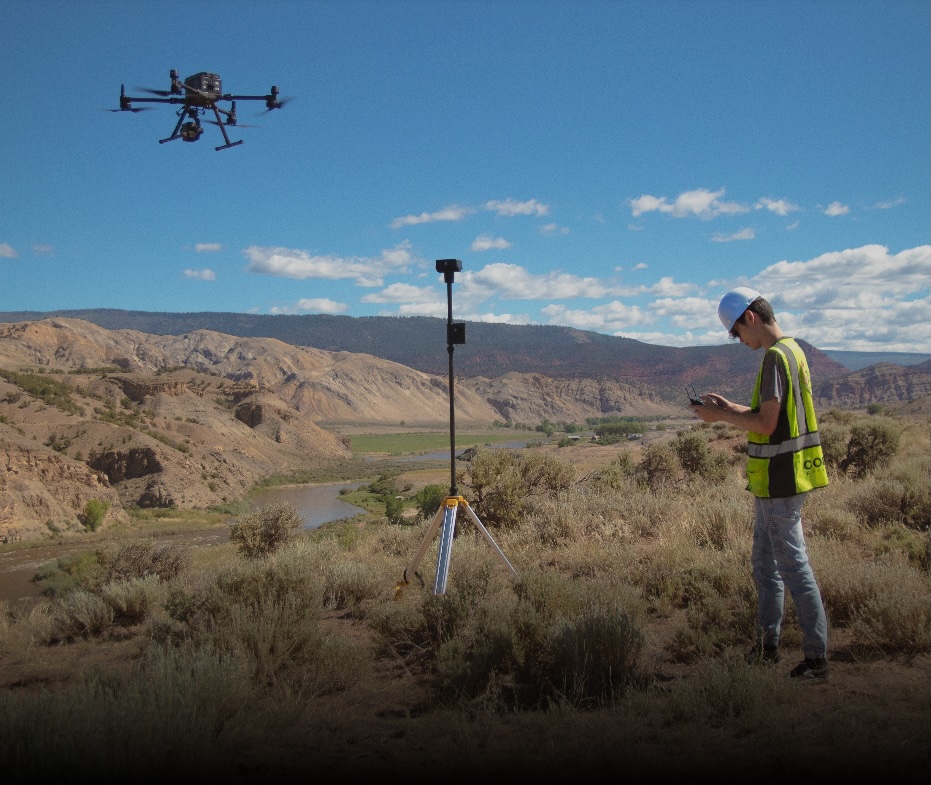
Today, Aerial Intelligence is an established utility drone inspection company, with crews flying complex inspection missions in mountainous terrain at elevations as high as 11,000 feet.
Based in Colorado, Scott’s team operates across the state and surrounding region. From transmission lines stretched across alpine terrain to other utility infrastructure in remote mountain environments, they use drones to deliver inspection data that helps utilities prioritize repairs and reduce risk.
The company’s high level of performance comes from the people behind the work. In talking to Scott, you can quickly tell how proud he is of the Aerial Intelligence team and of what they’ve accomplished together.
Scott has intentionally built Aerial Intelligence as a long-term company, with the staffing and systems needed to support utility clients consistently over time, while also providing stability for employees.
Aerial Intelligence now has seven full-time employees and 12 contractors. Full-time team members receive competitive benefits, including a 401(k), health insurance, and paid time off.
“I’ve built a company that I’d want to work at,” Scott says. “That way, people stick around, grow with us, and help us deliver consistent value to our clients.”
And that kind of reliability isn’t just a bonus in his line of work. It’s essential.
“It’s a very different flying environment,” Scott says. “You’ve got cold temperatures, wind, steep terrain—it’s not something you can do without serious planning and experience.”
But for Scott, that’s part of the appeal. He started Aerial Intelligence to do critical work, bringing his experience to bear in a growing industry, where it could be deeply impactful.

Delivering More Than Data: Aerial Intelligence’s Client-Focused Inspection Model
Most drone inspection companies stop at data collection. Some go a step further and also analyze the data to flag defects.
But Aerial Intelligence goes further than simple data collection, combining flight operations, review, and reporting to give utilities a more actionable inspection workflow.
That approach helps ensure that issues like hardware degradation, damaged conductors, or faulty insulators aren’t just spotted—they’re organized, documented, and delivered in a format clients can use.
Once reviewed, the imagery is organized, annotated, and delivered through Aerial Intelligence’s reporting workflow, giving utilities a clear way to review findings and take action.
Here’s how the process works:
- Capture. The Aerial Intelligence team flies missions to collect high-quality inspection imagery of power lines and related utility infrastructure.
- Review. The imagery is reviewed, organized, and prepared for client use so the right issues can be flagged clearly.
- Annotation & reporting. Once the images are reviewed, they’re annotated and delivered through Aerial Intelligence’s reporting workflow, with interactive access and PDF reporting available.
- Rapid assessment support. In urgent situations, Aerial Intelligence can support fast-turn inspection workflows that help utilities assess damage and prioritize next steps.
- Coordination. The team handles mission coordination, inspection workflow, data organization, and delivery so utilities can move from findings to action more quickly.
This full-service model is key to the value Aerial Intelligence provides, and an important part of how the company has built strong, long-term relationships with its utility clients.
“We’re not just providing data,” Scott says. “We’re organizing it and giving clients a clear way to review the results and act on them.”
When it comes to drone data, the company’s typical deliverables include:
- High-resolution inspection imagery
- Annotated findings tied to specific poles or structures
- Interactive access to inspection results
- PDF reports for review and work-order use
- In some cases, extracted image data for additional analysis
Scott’s Advice for New Drone Service Providers
After over a decade in the drone industry, Scott Fredericksen’s advice for new drone service providers is straightforward: flying is part of the work—but building a real business takes a lot more than being able to fly.
Here’s what he says matters most.
1. Don’t Get Distracted by the “Fun Part”
Scott’s first piece of advice is to look past the excitement of flying the drone.
As he puts it, there’s “a lot more to it than just the fun part of flying the drone,” if you want to make money or build something sustainable. For him, that means treating drone work like a real business—not just a cool skill.
2. Focus on Solving Real Problems
Scott says the real key to building a drone services business is solving a problem for the client you want to serve.
In his case, that meant building inspection workflows that utility companies could actually use—not just collecting images and handing over raw data. The technology matters, but only if it helps someone do their job better.
3. Pick a Niche and Work to Become the Best at It
In Scott’s telling, Aerial Intelligence started to improve once the company narrowed its focus.
“We would take a lot of different kinds of aerial work when we first got started,” he says. But once they focused on one particular area and worked to become the best at it, things got “a lot better” for both the business and its clients.
4. Make the Data Useful
Scott emphasizes that collecting images isn’t enough.
The real value comes from organizing the data, identifying faults, and delivering results in a format clients can actually use to take action.